


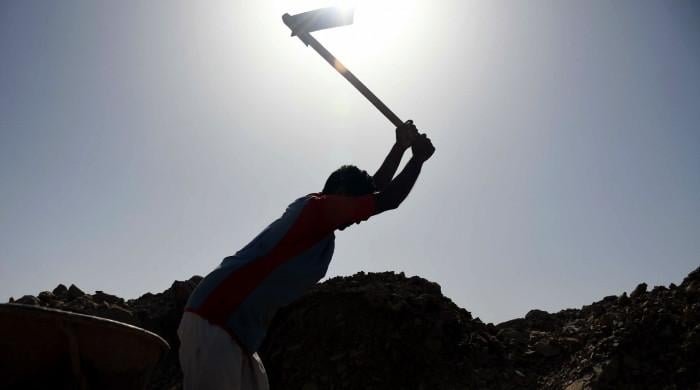
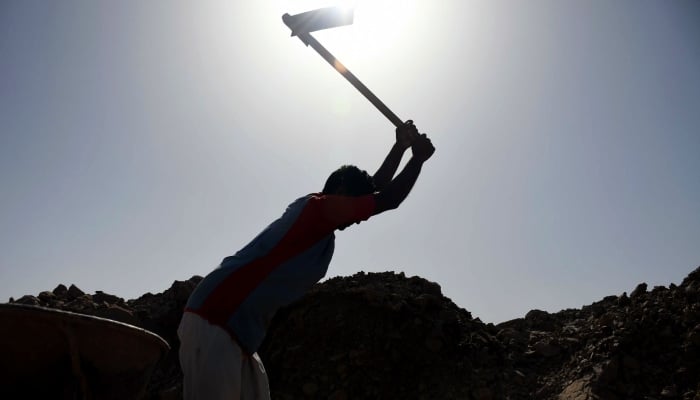
What we now call “rights” were once fought for in the streets by ordinary workers with extraordinary courage — Labour Day is their legacy.
It commemorates both the struggles endured and the rewards earned during the years-long labour movement that gained traction after the Haymarket Affair in Chicago, Illinois.
The movement kicked off with a nationwide general strike on May 1, 1886, when over 300,000 workers — including 35,000–40,000 in Chicago — came out to demand an eight-hour workday, saying no to the utter exploitation they have been subjected to for so long.
Days later, on May 4, a smaller protest of 1,000–3,000 people at Haymarket Square was met with unspeakable brutalities after a bomb exploded, marking a tragic turning point in the fight for workers’ rights.
The day reminds us of the countless sacrifices rendered in the long-drawn fight for fair wages, safer working conditions, and fundamental worker rights. Pakistan, like many other countries, recognises this day to honour labour dignity and safeguard these rights. But while offices close and social media fills with tributes, the very people this day is meant to celebrate continue to toil in silence — underpaid, unprotected, and unheard. Ironically, we celebrate labour while doing little to uphold its rights.
To better understand the current reality, Pakistan spoke to representatives from various labour organisations working across the country. Here’s what they had to say.
A broken system
Chaudhry Saad, General Secretary of the Pakistan United Workers Federation (PUWF), highlighted a wide range of issues: “Minimum wage laws are not fully enforced, nor is social security implemented properly. The benefits promised under the Basic Worker Welfare Fund Act are often delayed by 10 to 15 years.”
He pointed to a persistent disregard for safety:
“Have you ever seen construction workers following proper safety protocols? Safety laws are blatantly ignored, and violations are rampant.”
According to the PIRA (Punjab Industrial Relations Act), workers have the right to form unions. But nationwide, only 2% of approximately 61 million workers are unionised.
The PUWF official continued: “I don’t think a single law is being implemented fully. Under the IRA (Industrial Relations Act), every worker should receive an appointment letter — but most don’t. Many aren’t given gratuity either. If there’s no appointment letter to begin with, gratuity is a non-starter. There are so many issues, one could write an entire book. Courts are our only option, but we all know how slow the judicial system is. Workers suffer endlessly as their cases drag on.”
Saad recalled how the Punjab Labour Minister ran a campaign urging workers to report non-payment of minimum wage.
“But what came of it? We’ve heard nothing about any companies being penalised.”
Fake unions, real exploitation
Chaudhry Yaqoob, Chairman of the Muttahida Labour Federation (MTF), echoed these concerns.
“The state of labour law enforcement is dismal,” he said. “Appointment letters are missing. Minimum wages are enforced only where unions exist. And gratuity? Rarely given.”
He explained that while every worker should be registered with Social Security and EOBI (Employees’ Old-Age Benefits Institution), the majority are not.
“Before terminating a worker, the law requires a proper process: a show-cause notice, a hearing committee. But here, it’s simple — they just say, ‘don’t come from tomorrow.’”
To prevent genuine unions, many employers create fake ones.
“If workers try to form a third union, they must show 20% membership support. Employers don’t allow it. And if they find out, they fire those workers overnight.”
According to him, the condition of women workers is even worse. “Even the educated ones barely scrape by. Most earn no more than Rs20,000 a month.”
ILO’s take: A chain with weak links
Rabia Razzaque, Senior Programme Officer at the International Labour Organization (ILO), addressed gaps in wage implementation and broader governance.
“It’s not just the employer’s responsibility. Supply chains have multiple tiers — the main company often isn’t directly overseeing contractors or subcontractors. So governance quality varies across levels.”
She raised alarm over retaliation against the organisers of unions.
“Workers have the legal and constitutional right to form and join trade unions under both IRA and ILO conventions. But this right is routinely suppressed — structurally and informally.”
Fear, intimidation, and dismissals keep workers from organising.
“These cases end up in labour courts, reflecting the ongoing crisis of weak enforcement.”
Any way forward?
Saad believes no meaningful change will come until workers are directly represented in Parliament.
“Only industrialists and feudal lords sit there. Laws might be passed for show, but without workers at the table, there’s no real implementation.”
He stressed the importance of political will.
“Look at how the government recently demolished shops belonging to powerful people. They decided to act — and they did. No mafia stands above the state. All it takes is willpower.”
Yaqoob agreed: “Labour inspections are the key. But currently, they’re non-existent. And if they happen at all, inspectors first seek the employer’s permission, then cut deals behind closed doors. The workers’ voices never reach anyone.”
“The government does not represent the common man. In this system, the dominant class only protects its own interests,” he added.
ILO’s strategic shift
Razzaque outlined the ILO’s efforts to support enforcement in countries with limited resources.
“Our Strategic Compliance Plan works around the lack of inspectors by fostering social dialogue — between workers, employers, and government — on enforcement benchmarks and how they’re measured.”
She said the ILO is helping employers build compliance frameworks. “This includes keeping transparent records — of who works where, what they’re paid, whether they’re evaluated, and whether they have paths for growth.”
In Punjab, labour inspections have been digitised, resulting in “notable improvements.” The ILO is also working with labour departments in Balochistan, Khyber Pakhtunkhwa, and Sindh to develop compliance plans tailored to local realities.
But she warned that the labour market’s problems were complex. “We want them solved without investing in actual solutions. The state must step in — build worker capacity, raise awareness about rights. This education should begin in school so children grow up knowing their rights and responsibilities.”
More than a hashtag
As we mark another Labour Day, let’s think beyond hashtags and office holidays. Think of the security guard standing in the sun all day for Rs20,000. Think of the bonded labourers at brick kilns. Of garment workers sewing for global fashion brands — without contracts, without timely pay. Of construction workers without helmets, gloves, or safety ropes. Workers are the foundation of the economy; if they crumble, we all collapse.
