 Pakistan · World · Independent Digital Newsroom
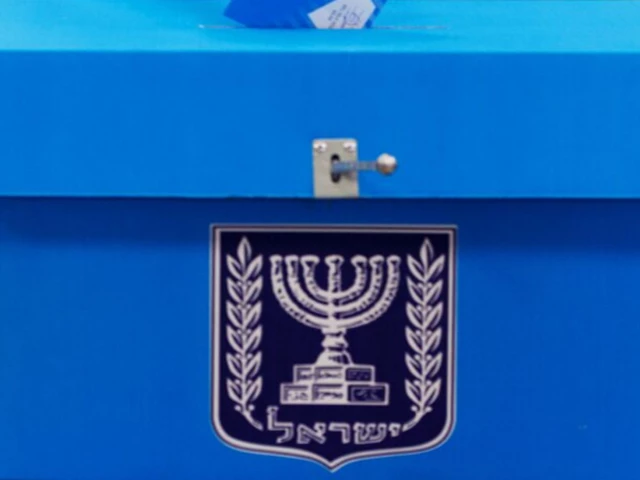
With four hours remaining before polling stations closed, more people had voted than during the entire previous election, reflecting the high stakes of the contest.Netanyahu, Israel's longest-serving prime minister with more than 19 years in office, faced his main challenger, former military chief Gadi Eisenkot, in a closely fought race.
Opinion polls showed neither side with a clear path to power in Israel's fragmented political system.The election was the first since the Hamas-led October 7 assault, which killed 1,200 people in Israel and saw 251 others taken hostage to Gaza.
The attack triggered wars across the region, including devastating Israeli military operations that resulted in genocide in Gaza, fighting in Lebanon and a conflict with Iran.Netanyahu has presented himself as the leader best equipped to protect Israel, highlighting his security credentials and close relationship with US President Donald Trump.
His opponents, however, have accused him of failing to accept responsibility for the security failures that preceded the October 7 attack.Eisenkot has pledged to establish an independent state commission of inquiry into those failures, which Netanyahu's government has resisted.
He has also criticised the government's conduct of the Gaza war, arguing that Hamas remains in control despite the destruction and loss of life.Eisenkot has promised to dismantle or destroy Hamas' military and administrative power in Gaza within 18 months of forming a government.
He cast his vote after visiting Kibbutz Nir Oz, one of the communities attacked on October 7, alongside Gadi Mozes, a former hostage taken to Gaza during the assault.Arab voters could play a crucial role in determining the outcome.
Israel's Arab minority accounts for about a fifth of the population, and stronger turnout could limit gains by Netanyahu's right-wing coalition and increase the likelihood of an alternative government relying on Arab parties.Ahmed Tibi, an Arab party candidate, said record participation by Arab voters could open the way for a different government.
Eisenkot has ruled out joining a coalition with Arab parties, although they could potentially support a minority government seeking to keep Netanyahu out of office.Netanyahu urged his supporters to vote, warning that high participation among opposition and Arab voters could threaten his coalition.
His Likud Party also mobilised supporters through vehicles carrying loudspeakers, urging people to turn out as reports of strong Arab participation emerged.The campaign exposed deep divisions over Israel's political direction, its increasingly powerful far-right and ultra-Orthodox parties, and its military and diplomatic policies.
Opposition parties criticise Netanyahu's allies over efforts to preserve exemptions for ultra-Orthodox religious students from military service.Netanyahu's government has also faced criticism over Israel's international isolation following its military campaign in Gaza, expanding settlements and rising settler violence in the occupied West Bank.
Eisenkot opposes the creation of a Palestinian state but has pledged to act against violent settlers.Around 7.3 million Israelis were eligible to vote, including more than half a million young people voting for the first time.
Polling stations were scheduled to close at 10pm local time, although final results could take days to emerge.No single party was expected to secure the 61 seats required for a majority in the 120-member parliament.
Forming a government could therefore require weeks or months of negotiations, with another election possible if rival political blocs fail to assemble a viable coalition.If neither Netanyahu nor Eisenkot can form a governing coalition, Netanyahu could remain as caretaker prime minister until another election is held.