


Refusing to see the roots of insurgencies, using ‘terrorism’ labels, and scapegoating neighbours are not winning strategies.
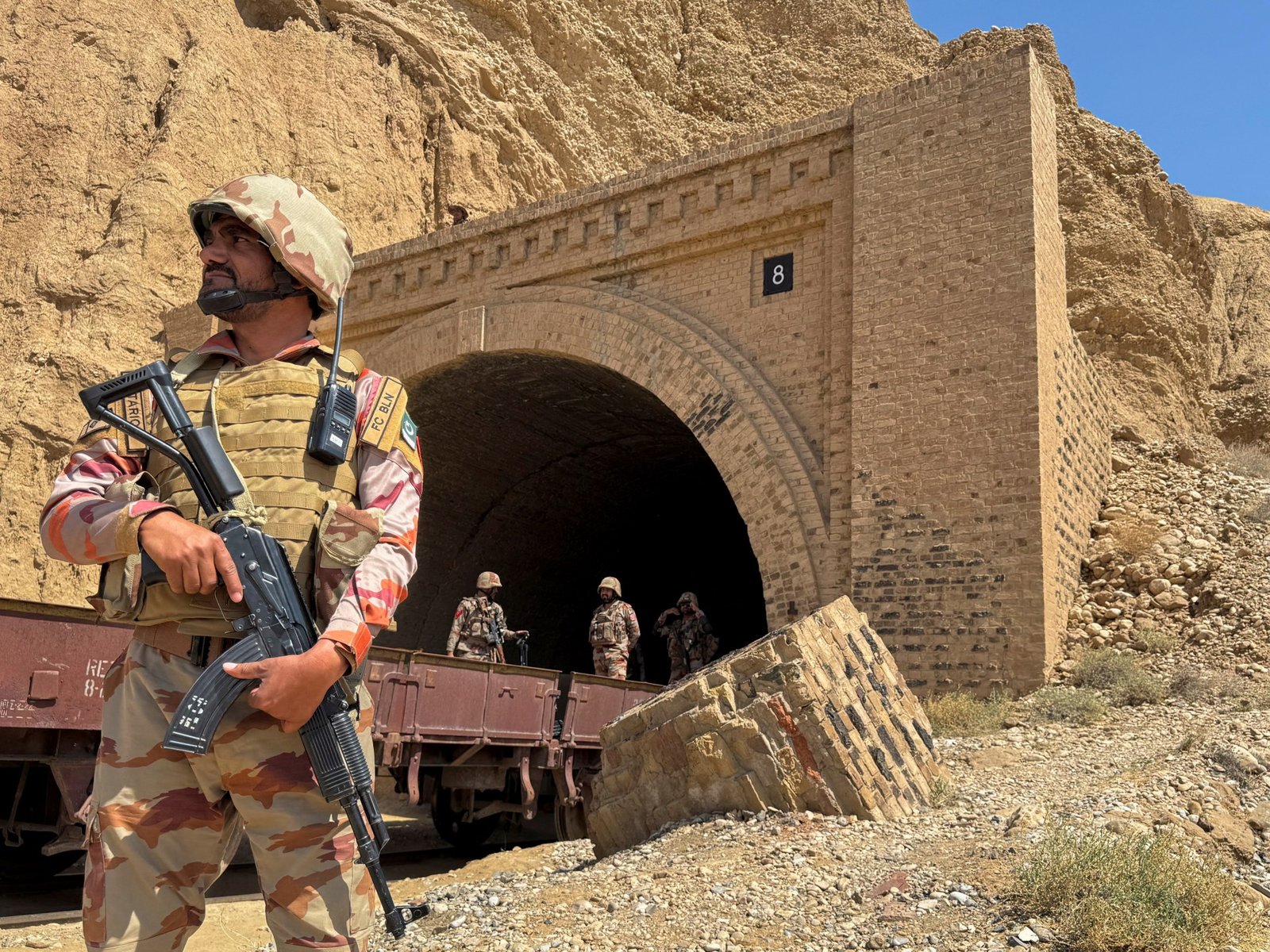
On March 11, fighters from the Balochistan Liberation Army (BLA) hijacked a Jaffar Express train travelling from Quetta to Peshawar. After a 36-hour standoff, the Pakistani security forces were able to kill the BLA operatives and release hundreds of hostages. According to the government, at least eight civilians lost their lives during the operation.
Pakistani officials were quick to blame Afghanistan and India for what they called a “terrorist incident”. This is the latest example of how the Pakistani authorities increasingly deflect responsibility and frame Pakistan’s relationship with Afghanistan in the language of “war on terror”.
Almost three months before the train hijacking, Pakistani fighter jets bombarded Afghanistan’s Khost and Paktika provinces, killing at least 46 people, including women and children. Many of the casualties were displaced people from Pakistan’s Khyber Pakhtunkhwa region.
Pakistan justified its violation of Afghan sovereignty and international law by claiming that it is targeting Tehreek-e-Taliban Pakistan (TTP) fighters hiding on Afghan territory. Over the past two years, Islamabad has been accusing Kabul of harbouring “terrorists” who have carried out attacks on Pakistani territory.
This is the same logic the United States employed to conduct air raids, kidnappings, targeted killings, etc throughout the Muslim world during its so-called “war on terror”. In doing so, the US trampled over all the conventions the world had endorsed affirming state sovereignty, the distinction between civilians and combatants, proportionate response and the rights of prisoners of war.
The US army and intelligence saw civilians as active combatants or “collateral damage” that was inevitable when a “high-value target” was pursued. Whole countries and civilian populations paid the price for “terrorist” strikes conducted by armed groups – and they still do. That is because the US may have withdrawn from Afghanistan and Iraq, but the legacy of its practices remains and is readily embraced by governments in the region. Pakistan’s government is one of them.
Throughout the 20-year US occupation of Afghanistan, Pakistan refused to see the Afghan Taliban as “terrorists” and continued sheltering and supporting the group. Yet today, the Pakistani authorities label the TTP and BLA as “terrorist” groups and the Afghan Taliban government as sponsors of “terrorism”.
They refuse to see these local insurgencies as politically motivated rational actors who could be reasoned with or whose grievances should be heard.
How Pakistan chooses to deal with these groups is an internal matter, but there are a few lessons from the recent American adventurism that ought to be heeded.
The US cast a wide definition of “terrorism” in which Muslims at home and abroad became suspect. In Afghanistan, it lumped its enemy al-Qaeda with the Taliban and at times Afghan civilians.
The imprisonment and torture of alleged Taliban members only fed the fervour of Taliban fighters and led to an escalation in violence. Indiscriminate drone strikes on civilian communities in Afghanistan and Pakistan not only violated sovereignty, but also encouraged young men to join the Afghan Taliban and TTP.
Several attempts by the Taliban to negotiate with the US did not bear fruit until 2021, when, exhausted by a two-decade occupation and war, Washington decided to withdraw, basically accepting defeat.
It is easy to dismiss movements as “terrorist” and refuse to see any path of reconciliation. But as the American example shows, this approach does not end well.
Instead of trying to drag the US into another war on “terror” – as US media outlet Drop Site has reported – the Pakistani authorities should learn from the American experience. They cannot feign ignorance about groups like TTP and BLA; they are dealing with their own citizens, who have clear grievances.
The Pakistani government has to hear the demands of these groups and find a way to negotiate with them. It has to recognise the suffering of the civilian populations in the regions where BLA and TTP operate. It also needs to put an end to violating Afghanistan’s sovereignty and scapegoating the Taliban government for their own security failures under the guise of “war on terror”.
If the Pakistani military decides not to learn from recent history and follows in the footsteps of the United States, it is quite likely it is to meet its fate.
The views expressed in this article are the author’s own and do not necessarily reflect Al Jazeera’s editorial stance.
