


- Gulf allies lose faith in apathetic, unpredictable American support.
- Pakistan offers nuclear cover amid regional insecurity, realignment.
- India, Iran, Israel uneasy as new alliances reshape regional order.
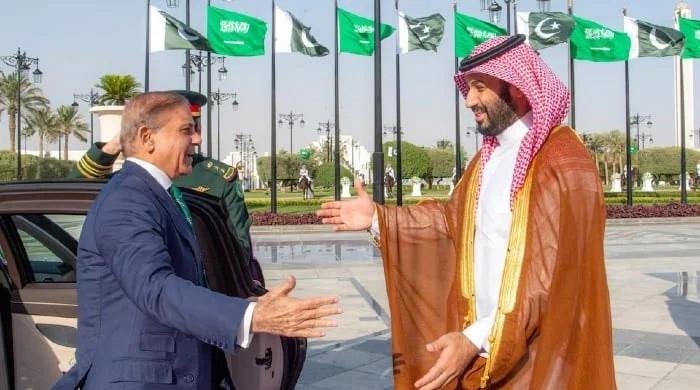
With decades of collaboration behind them, Pakistan and Saudi Arabia’s recent announcement of a mutual security agreement might seem like just a formality confirming their ongoing partnership. However, it represents something far more significant.
According to Bloomberg, this pact serves as the first tangible sign of what a post-American world could entail, one characterised by increased insecurity, instability, and uncertainty.
The two nations were indeed close for decades. In 1967, two months after Israel’s victory in the Six-Day War, they signed a security agreement in which the country’s battle-hardened military promised training and support to the Kingdom. Two years later, Pakistani pilots flew for Saudi Arabia in its war against communist South Yemen.
By the 1980s, the generals in Rawalpindi had sent their ally 15,000 soldiers to help protect a regime unnerved by the siege of Mecca in 1979. There were even Pakistani tanks stationed at Tabuk near the Kingdom’s northwest border, a short drive from Israel’s Red Sea port of Eilat. But such closeness seemed consigned to the history books in 2015 after Pakistan’s National Assembly unexpectedly defied Riyadh — and perhaps their own military — by refusing to send soldiers to fight the Houthis.
The Saudis were outraged, especially since they had long been bankrolling their increasingly improvident friends: They’d sent over a “gift” of $1.5 billion the previous year. But Chinese money had begun to flow as well, and the petrodollar was no longer the only game in town. The civilian politicians in Islamabad felt they could take a few risks, and reclaim a bit of sovereignty.
In the decade that followed, Saudi Arabia instead developed an ever-closer relationship with India. Its grants to Pakistan became loans that have to be paid back or rolled over. The Chinese, meanwhile, are now focused on buying Russia’s loyalty.
Pakistan’s leaders know that they have not been able to fix the fundamental reason their country constantly teeters on the edge of bankruptcy: It buys more from the world than it has to sell. All they’ve invested in for decades is the military — and so, today, they have nothing else to offer a partner.
But that is an attractive enough offer for a Riyadh that is as uncertain today as it was in the 1970s. For decades, the Gulf monarchies have relied on the US for protection, support, and weapons. They have gone out of their way to woo the current president, as well. Qatar famously gave him a $400 million jet to use as Air Force One.
But that didn’t stop the emirate, home to the largest US base in the Middle East as well as a hotel housing Hamas leaders, from being bombed earlier this month by Israeli jets. The Qataris insisted that any American warnings about the attack came 10 minutes after the strikes had already begun.
This was the second time that Qatar has been attacked this year; in June, Iran launched missiles at the US’s Al Udeid airbase. In other words, they were successively bombed by America’s adversary and its ally, while Washington itself did nothing in either case.
Countries naturally think now that an apathetic US may be more trouble than it’s worth, and look for help elsewhere. That’s led the Saudis back to Pakistan, which can offer worried former American satellites something few others will: A nuclear umbrella.
Riyadh’s other partners aren’t too pleased. New Delhi, in particular, has rejoiced in recent years at Pakistan’s “isolation” from its old friends in the Gulf. Policymakers here will have been informed of the Saudis’ decision in advance and understand the reasoning behind it.
But it still stings, especially as India’s own choices have led it here. It has grown as close to Israel in the past decade as it has to Saudi Arabia, perhaps closer. That reduces its usefulness to either. The limits of this hedging strategy have become painfully clear. It tried to enhance its relationship with Iran, Israel and Saudi Arabia simultaneously — and so, in the current crisis, none of them feels they can rely on New Delhi. A friend to all, it turns out, is a friend to none.
This once applied to Pakistan as well, which has tried to embrace the Taliban, the Chinese, the Americans, and the Gulf. But it is now at odds with Kabul, and the US has turned away from the region. Paradoxically, that’s made Islamabad’s strategic choices much easier.
Nobody is entirely happy. The Saudis are tired, like all Pakistan’s patrons, of a government that over-promises and under-delivers. The Israelis recognise their “normalisation” with Saudi Arabia will be further delayed. The Pakistanis have had to give up the autonomy they achieved in 2015; the Indians worry that Islamabad is no longer shunned; and the Iranians feel encircled. And when sense returns to Washington, policymakers will regret allowing a fresh alliance between the Middle East’s richest country and Beijing’s most loyal client.
That’s what the post-American world will look like. Without the US, others will make whatever makeshift security arrangements they can. Some may be unpalatable, even destabilising. Nobody will feel better off — including Washington.
