
 Pakistan · World · Independent Digital Newsroom
These systems commonly harbor large amounts of warm dust close to the star in a region comparable to where rocket planets orbit in our solar system.According to an estimate, roughly only 1% of young stars exhibit the extreme infrared brightness of this phase based on data collected from the swirling cloud and disk of material that formed our own solar system.The team studied the mineralogical constitution of the disks in….
However, they observed that their sample could be partitioned into silica-rich and silica-poor disks.It has been observed that about one-third is silica-rich, indicating these disks originated from high-velocity collisions between Mars-sized bodies where a significant portion of the material is vaporized.The remaining two-thirds of their sample is silica-poor indicating that the collisions are on a more modest scale like grazing between Moon-sized objects.A co-author of the study, Attila Moor of….
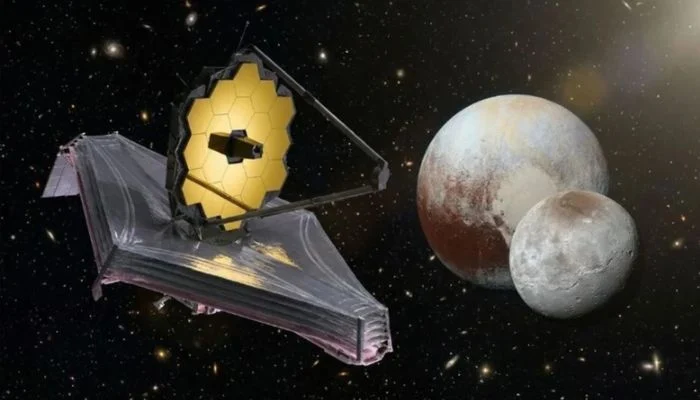
We only have three disks in our sample that fit that age criteria, so it’ll be nice to observe more of these systems to confirm our hypothesis.”The James Webb Space Telescope is the premier space science observatory solving mysteries in our solar system looking beyond distant worlds and probing the origins of our universe.
NASA’s Webb Telescope uncovers clues to moon-forming collisions around distant stars October 1, 2026.