


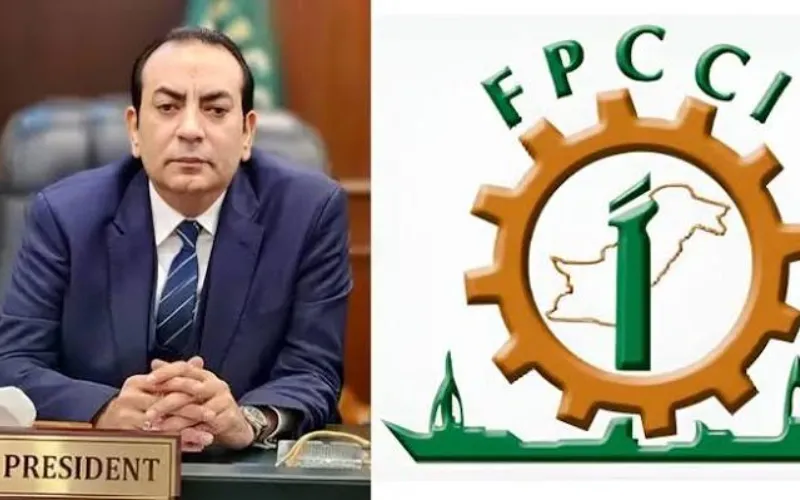
Karachi: Mr. Atif Ikram Sheikh, President of the Federation of Pakistan Chambers of Commerce & Industry (FPCCI), has strongly urged the federal government to adopt a realistic approach in rationalizing petroleum prices, with a specific focus on high-speed diesel (HSD), to significantly reduce the exorbitant cost of doing business in Pakistan.
Mr. Atif Ikram Sheikh highlighted that the current pricing mechanism for fuel is disproportionately inflating logistics, transportation, and agricultural supply chain costs across the country. Diesel is the lifeblood of our transport, agriculture, and manufacturing sectors – and, the compounding inflationary effect of high diesel prices is staggering, he added.
Mr. Atif Ikram Sheikh emphasized that if the country wants its industries to remain competitive regionally and its exports to grow, the government must adopt a realistic approach to fuel pricing rather than relying on it as a primary revenue collection tool through petroleum development levy (PDL).
The FPCCI President elaborated that while global crude oil price fluctuations play a role, the heavy imposition of PDL and taxes at the local level has made the cost of doing business unsustainable for Small and Medium Enterprises (SMEs) and large-scale manufacturers alike.
Mr. Atif Ikram Sheikh, in his appeal to the Ministry of Finance and the Ministry of Energy, pointed out that rationalizing diesel prices will directly lower the cost of goods transportation, providing immediate relief to both producers and end-consumers facing inflationary pressures. Furthermore, lowering tractor and tube-well operational costs by reducing diesel rates will help stabilize domestic food prices.
Addressing the critical issue of export competitiveness, FPCCI Chief noted that Pakistani exporters are being placed at a severe disadvantage compared to regional counterparts. Recent comparative data indicates that fuel prices in Pakistan have surged past regional averages – primarily on the back of excessive PDL.
Mr. Atif Ikram Sheikh stressed that competitor countries in exports like India, Bangladesh, and Vietnam have managed their domestic energy price pressures far more effectively; successfully shielding their industries from drastic fuel price hikes. Without a regionally competitive cost of doing business and affordable logistics overheads, Pakistani manufacturers risk widespread closures and a severe loss of global market share, he added.
Mr. Atif Ikram Sheikh explained that economic growth is simply not possible without facilitating the business community. He urged the government to review the existing tax margins on petroleum products and pass on the maximum possible relief to the industry. The FPCCI remains committed to working alongside the government to formulate business-friendly economic policies that promote industrial growth, enhance exports, and create jobs.
