


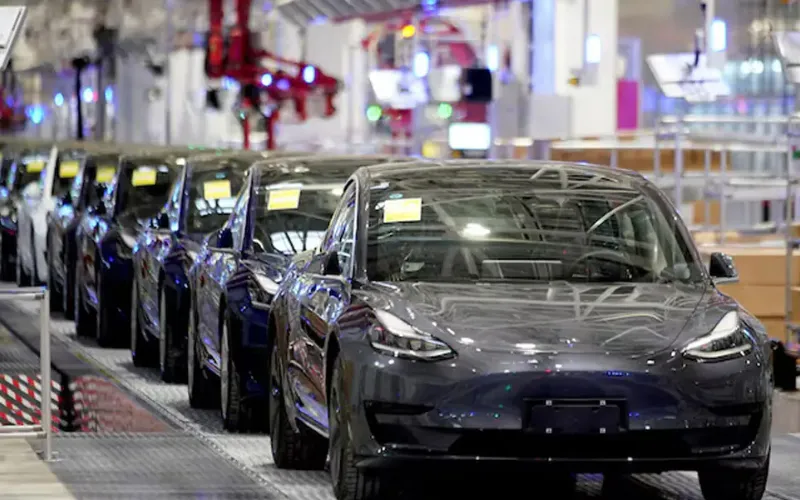
Eleven carmakers, including Tesla and Xiaomi, have announced software updates and vehicle recalls in China’s largest-ever automotive recall campaign. The action comes as Chinese regulators increase scrutiny of emergency door-release systems in electric vehicles.
Most of the recalls focus on concerns that emergency mechanical door-release handles may be difficult to find or operate during an emergency.
Nine of the 11 automakers, including Tesla and Xiaomi, will provide warning labels free of charge to help identify the emergency handles. Most of the companies will also introduce over-the-air software updates.
The large-scale campaign comes as Beijing increases oversight of the EV industry and introduces stricter safety requirements. Automakers are also introducing new technologies amid a fierce price war in the world’s largest auto market.
Tesla will recall 2.98 million imported and China-made Model 3, Model Y, Model S and Model X vehicles starting September 25, according to a statement from China’s State Administration for Market Regulation.
The U.S. automaker said emergency mechanical door-release handles may be difficult to find after a serious collision and electrical system failure. This could make it harder for people inside the vehicle to escape or for rescuers to gain access.
Tesla’s solution includes warning labels and an over-the-air update that will automatically lower the vehicle’s windows after a collision.
At least six car brands, including Tesla, Xiaomi, Leapmotor, Xpeng, Zeekr and Lynk & Co, announced their largest recalls on record Friday, according to filings with China’s State Administration for Market Regulation.
China is set to ban concealed, or “hidden,” door handles from 2027, becoming the first country to phase out the design popularized by Tesla and widely used by domestic EV makers.
The design allows doors to be opened using a key fob, smartphone or press-operated mechanism. However, it has raised concerns among regulators in China and the United States because the handles may be difficult to access during emergencies.
