


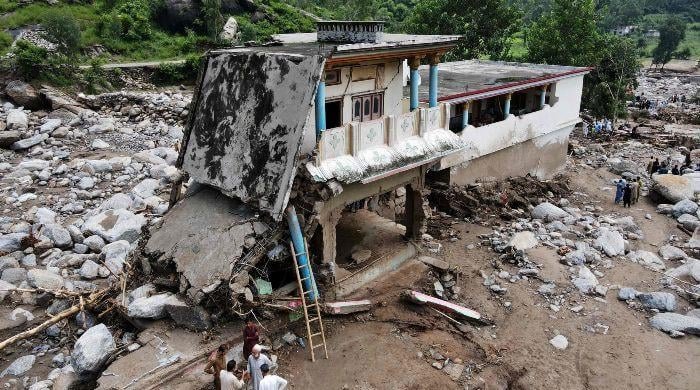
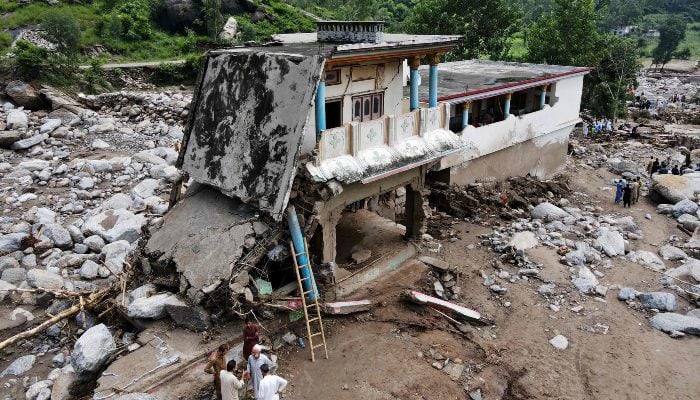
Pakistan is once again reeling from catastrophic monsoon floods, with the death toll since late June now above 800 — half of them in August alone.
Authorities have warned of a high flood in the River Ravi at Shahdara tonight (Wednesday), as Punjab faces an “exceptionally high” risk due to heavy rains and the excess water India has released from dams in Indian Illegally Occupied Jammu and Kashmir (IIOJK).
All major dam gates in the region have been opened, and Pakistan has been warned of downstream flooding.
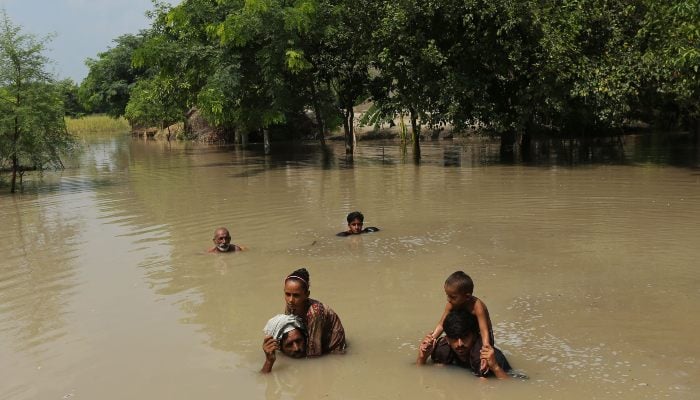
More than 167,000 people forced from their homes in Punjab, including nearly 40,000 who evacuated voluntarily after early warnings issued on August 14.
Villages have been washed away in the north, and major cities like Karachi paralysed in the south. Experts, officials, and residents agree: the destruction is the result of both nature and mismanagement.
Climate change intensifies monsoons
Climate change has made Pakistan’s monsoon rains more erratic and extreme.
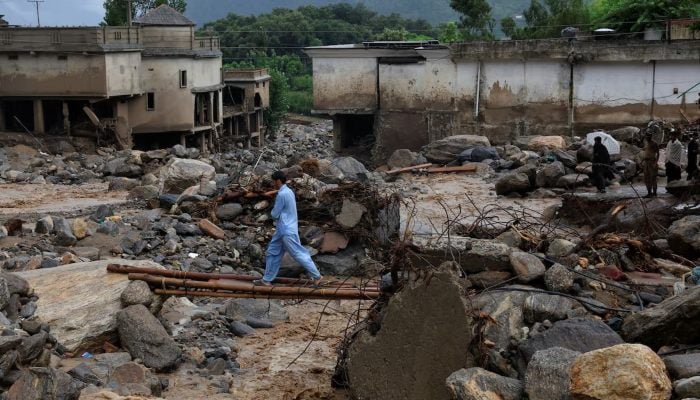
Rising global temperatures allow the atmosphere to hold more moisture, producing heavier downpours over short periods. In Buner, Khyber Pakhtunkhwa, more than 150mm of rain fell in a single hour, triggering sudden floods and landslides that flattened homes on mountain slopes.
The Pakistan Meteorological Department has warned that monsoon intensity will increase in the coming decades, leaving little room for “one-year fixes.” In the north, rising temperatures are also accelerating glacier melt, raising the risk of glacial lake outburst floods (GLOFs). Earlier in August, the Shisper Glacier burst into the Hassanabad nullah in Hunza, destroying farmland and infrastructure.
Although Pakistan is responsible for less than one percent of global greenhouse gas emissions, it is among the countries most vulnerable to the climate crisis.
As one provincial lawmaker told the BBC, Pakistan is “paying a big price for international sins.”
Former climate minister Sherry Rehman echoed this frustration, saying the global community has been slow to provide real support even though Pakistan’s lives and livelihoods are repeatedly destroyed by climate disasters.
Cloudbursts and flash floods
The 2025 floods have been intensified by cloudbursts — sudden, localised downpours caused by moist air rapidly rising and condensing.
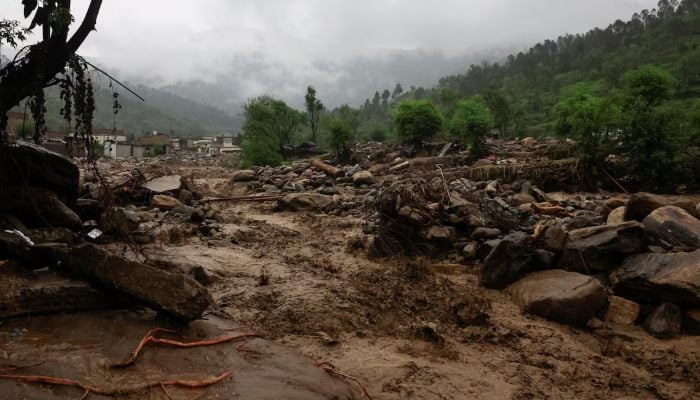
These events overwhelm rivers and soil alike, triggering flash floods, mudslides, and deadly collapses.
With heavy rains cutting off access roads, even emergency teams with ambulances and excavators could not reach the affected villages in time.
Man-made vulnerabilities
Human mismanagement has magnified the impact of natural hazards. Residential areas continue to be built along riverbeds, blocking natural storm drains.
Laws such as the River Protection Act, which prohibits construction within 200 feet of a river, are routinely ignored.
In the Swat Valley, residents have seen their homes destroyed multiple times — in the 2010 floods, the 2022 deluge, and again this year — each time rebuilt too close to the river.
Deforestation and extractive industries have also undermined natural defences. Pakistan has only 5% forest cover left, the lowest in South Asia. Logging and mining in mountainous terrain have stripped slopes of their protective barriers. Without tree cover, floods accelerate down valleys with devastating force. Dense forests once slowed torrents; now little stands in their way.
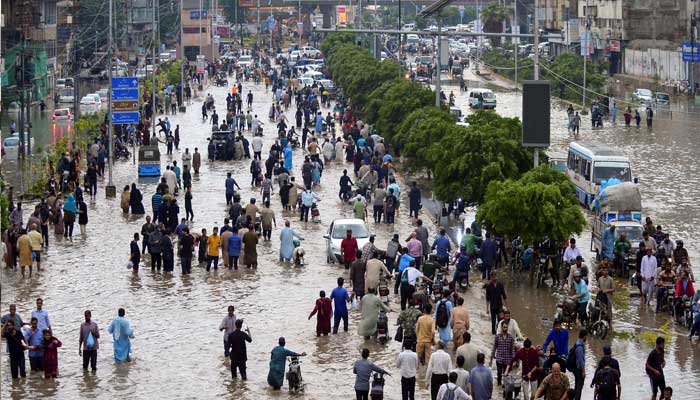
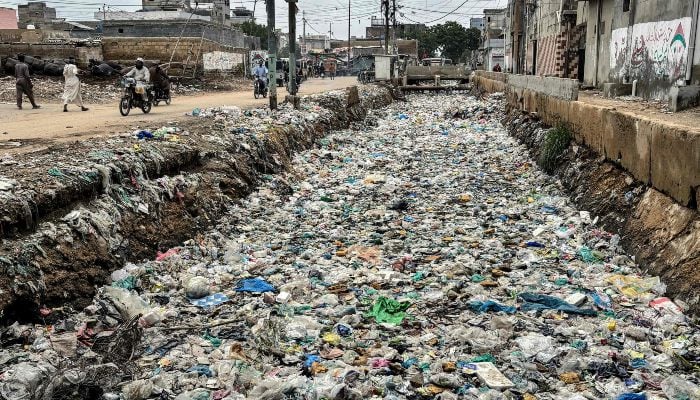
In urban areas, poor planning and clogged drains have turned rain into disaster. Karachi, a megacity of more than 20 million, repeatedly grinds to a halt after storms. Nullahs meant to carry stormwater are choked with more than 20,000 tonnes of solid waste generated daily, while illegal construction has narrowed or blocked drainage channels.
Informal settlements and elite housing schemes alike discharge sewage into these drains, worsening blockages. A Human Rights Commission of Pakistan (HRCP) report described how floods in Karachi are as much about “clogged drains, inadequate solid waste disposal, poor infrastructure, encroachments, elitist housing societies” as about rainfall.
Governance and preparedness failures
Pakistan’s vulnerability is worsened by weak governance and poor preparedness.
Villagers in Swabi asked why no early warnings were given before floods struck, and why equipment could not reach them.
The Pakistan Meteorological Department (PMD) acknowledges its limitations: while it can forecast heavy rainfall, predicting sudden cloudbursts remains difficult, and communication gaps mean rural communities often do not receive timely alerts. Siren systems have been installed in some glacial valleys, but these are far from comprehensive.
At the urban level, governance failures run deep. Karachi’s stormwater management is fragmented between overlapping authorities. Development projects are chronically underfunded or delayed; opposition lawmakers recently accused the city of spending only 10% of funds earmarked for a five-year flood resilience plan backed by international donors.
The city’s mayor admitted he has asked Islamabad for years to finance drainage upgrades, but said the costs are so high they could consume “the entire national budget.”
Funding, political choices and water security
Pakistan’s struggle to adapt is also a question of priorities.
This year, the federal government slashed the Ministry of Climate Change’s budget to about $9.7million, while increasing defence spending to nearly $9billion.
Critics argue that if Pakistan does not invest in its own resilience, international donors will be reluctant to help. While the government points to IMF-linked allocations of over $2 billion for climate-related projects, experts note these often include existing dams or hydropower schemes rather than new adaptation measures.
The crisis is further complicated by the future of the Indus Waters Treaty (IWT), the 1960 World Bank–brokered agreement that regulates river sharing between India and Pakistan.
India suspended its participation in the pact earlier this year, saying it would keep it “in abeyance” until Pakistan renounced cross-border militancy. Islamabad rejected the move as illegal, warning that any attempt to stop or divert Pakistan’s water share would be treated as an “act of war.”
Analysts caution that with climate-driven floods and droughts already intensifying, politicisation of river flows could severely undermine Pakistan’s food security.
Farmers’ representatives warn that erratic water supplies could slash yields of wheat, rice, and sugarcane, drive up food prices, and push small-scale growers — already squeezed by thin margins — deeper into crisis.
Meanwhile, more than 1,000 development projects across sectors remain unfinished. Experts argue that instead of relying solely on “top-down” projects, Pakistan should focus on educating communities, promoting flood-resistant housing, and building a “poverty escape ladder” at the grassroots. Without such initiatives poverty will remain the country’s greatest barrier to resilience.
This year’s floods have killed hundreds and displaced thousands, but they are not an anomaly. Pakistan’s geography makes it uniquely vulnerable to climate change, yet decades of mismanagement, corruption, and neglect have made a natural hazard into a man-made catastrophe.
Unless deforestation is reversed, construction regulated, urban drains unclogged, and climate adaptation prioritised in policy and budgets, Pakistan will remain condemned to repeat the same tragedy year after year.
