
 Pakistan · World · Independent Digital Newsroom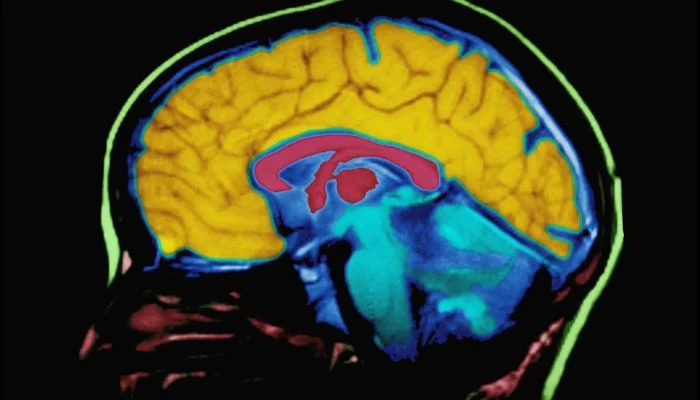
On the contrary, it existed as two separate organs in space before moving together, showing similarity with jellyfish who possessed two different nervous systems in different parts of their body.The researchers believe that the human brain came into existence as one after merging two separate organs.
They have evolved independently over millions of years.The discovery challenges a prevailing model of brain development as the scientists believed that a single progenitor cell gives rise to the entire brain.
In reality, it consists of two ancient nervous systems packaged together.Kyle Loh, Ph.D., associate professor of developmental biology, "We've shown for the first time that the front of the brain arises from a totally different progenitor cell than the back of the brain.”"Our discovery means that we can now grow neurons from the back of the brain, the hindbrain, in a Petri dish and study their functions."Researchers have identified two….
One is forebrain and midbrain progenitors which is characterised by the expression of the Otx2 gene.
These cells are meant to form the anterior and middle regions of the brain.The second is hindbrain progenitors, characterized by the expression of the Gbx2 gene.
These cells form the hindbrain."Our research suggests that evolution took two existing neural systems and pushed them together spatially."These findings could solve the mystery related to difficulty in growing certain types of brain cells in the lab along with opening new avenues for studying diseases such as ALS and spinal muscular atrophy.
Was the human brain once two separate organs?
Scientists find new clues September 18, 2026.





Comments & Discussion
Join a respectful, on-topic conversation. Personal attacks, hate speech and spam may be removed.