
 Pakistan · World · Independent Digital Newsroom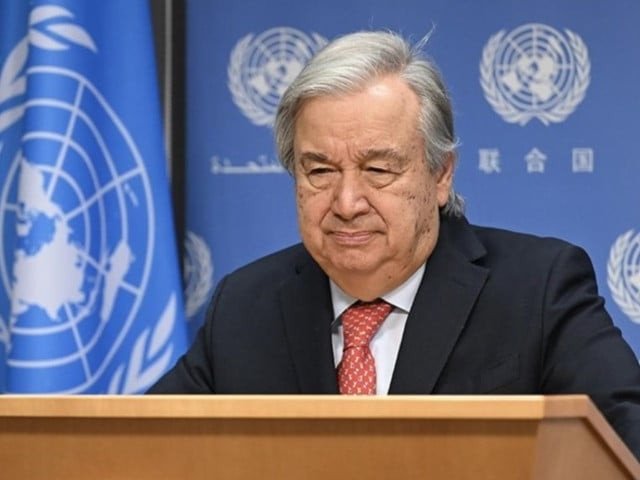
But it is absolutely essential that that dialogue is established.”He recalled that things were moving in the right direction, noting the Memorandum of Understanding and then, all of a sudden, “everything got put in question again,” with the situation “enlarged”.“It’s not only a question between the US and Iran.
We have also a number of countries in the Gulf that are being attacked, and of course, with a dramatic impact in their economies and on the global economy, which is also unacceptable,” Guterres said, adding that the complex set of problems required a serious dialogue between the US and Iran, between Iran and the countries of the Gulf, including the mediators.Read: Trump to hold Iran talks with Gulf leaders….
He urged all parties involved to rely on diplomacy to prevent further catastrophic escalation in the region.The US-Iran war began on February 28, with fighting involving the United States, Israel and Iran and quickly creating wider regional risks, including disruption around the Strait of Hormuz.
Pakistan stepped into a mediation role as the conflict intensified.
In late March, Islamabad hosted foreign ministers from Pakistan, Türkiye, Egypt and Saudi Arabia to discuss proposals including reopening the Strait of Hormuz.Pakistan’s efforts subsequently produced the Islamabad Talks in April, when US and Iranian delegations came to Islamabad for negotiations.
Pakistan’s role was described as facilitating direct engagement after decades without such talks.
The process culminated in an Islamabad Memorandum of Understanding (MoU) and an interim ceasefire that was intended to provide a 60-day window for negotiations towards a permanent agreement.Türkiye, Egypt and Saudi Arabia worked alongside Pakistan through the R-4 framework, while Qatar also supported the negotiations.
The four countries welcomed the Islamabad MoU at a Cairo meeting in June and praised Pakistan’s role in helping secure the agreement.
Saudi Arabia, Türkiye and Egypt also maintained diplomatic contacts with the parties and coordinated with Islamabad on regional de-escalation efforts.The ceasefire subsequently came under pressure, with renewed US-Iran hostilities and the collapse of indirect talks in Qatar.
Pakistan continued diplomatic contacts, including with Saudi Arabia and Iran, while Pakistan and Qatar later worked on a de-escalation formula.
By July, the Foreign Office said negotiations were still ongoing, but acknowledged that renewed military escalation had complicated the mediation process.
UN chief to visit Pakistan 'soon', hails Islamabad's role in US-Iran mediation Updated 3 minutes ago.


Comments & Discussion
Join a respectful, on-topic conversation. Personal attacks, hate speech and spam may be removed.