


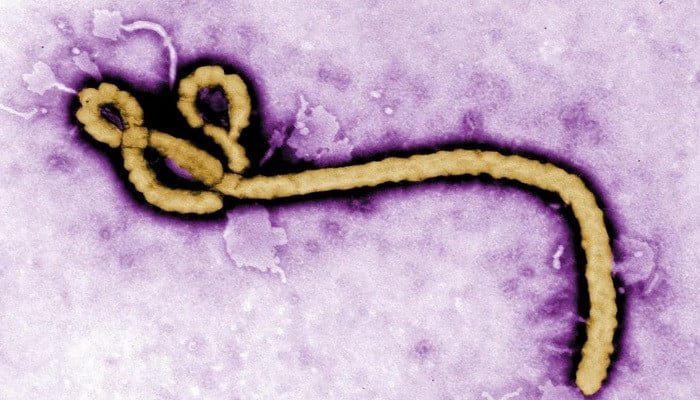
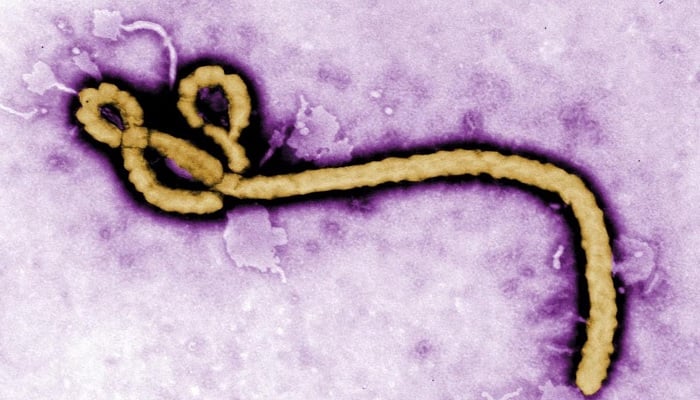
Ebola, which has killed more than 80 people in a fresh outbreak in the Democratic Republic of Congo and one person in Uganda, has been wreaking havoc in Africa for 50 years now.
During that time, it has claimed more than 15,000 lives, and despite the development of treatments and vaccines for some strains, it remains a lethal threat.
Here are the basic facts about the deadly virus.
Where it comes from
The Ebola virus — or Orthoebolavirus zairense, to give it its full scientific name — was first identified in 1976 in DR Congo, then known as Zaire.
It comes from the filoviridae family of viruses, which are characterised by high fevers. It owes its name to the river in the north of the country near where the first epidemic broke out.
So far, six distinct strains of Ebola have been identified: Zaire, Sudan, Bundibugyo, Reston, Tai Forest and Bombali.
The Zaire species has caused the vast majority of cases since 2014.
How it spreads
The virus is spread by fruit bats, which are considered Ebola´s natural hosts and do not themselves develop the illness.
Other animals, such as the great apes, antelopes and porcupines, can also carry the disease and pass it on to humans.
During epidemics, Ebola is passed on by direct, close contact with infected humans. A healthy person can be infected by the body fluids — blood, vomit or faecal matter — of a sick person.
People can also be infected during funeral rites if they come into direct contact with the body of a victim of the virus.
But because Ebola cannot be caught by airborne transmission, it is less contagious than other viral illnesses.
But there is a very high mortality rate among those who catch the disease: between 40 and 70% in recent epidemics in the DR Congo, according to the World Health Organisation (WHO).
A study published in the science journal Nature said the virus could remain dormant in survivors only to revive years later, setting off a fresh outbreak.
The symptoms
After an incubation period of between two and 21 days, the first symptoms can appear suddenly: a fever, fatigue, malaise, muscle pain, headache and sore throat.
Those symptoms are followed by vomiting, diarrhoea, abdominal pain, rash, and symptoms of impaired kidney and liver functions.
That can sometimes be accompanied by internal and external bleeding.
Survivors frequently suffer from arthritis, vision problems, eye inflammations and hearing difficulties.
Vaccines, treatments
Only the Zaire species of the disease has vaccines: Ervebo from Merck and Sabdeno from Johnson & Johnson.
Three possible vaccines have been tested for the Sudan strain of the virus since late 2022, following a green light from the WHO.
Two monoclonal antibodies, which significantly reduce deaths, are also available against the Zaire strain.
But in any case, rehydration and transfusion are used to treat patients showing symptoms.
The worst epidemic (2013-16)
The deadliest Ebola outbreak started in southern Guinea in December 2013, spreading across West Africa.
It killed more than 11,300 people out of 29,000 recorded cases, mainly in Liberia, Sierra Leone and Guinea.
The WHO finally declared the epidemic over in March 2016.
Outbreaks in DR Congo
The Democratic Republic of Congo, a vast country spread across central Africa with more than 100 million people, has suffered more than 15 Ebola epidemics since 1976, which, between them, have killed more than 3,000 people, according to WHO data.
The deadliest outbreak, between 2018 and 2020, killed nearly 2,300 people from 3,500 infected. The most recent outbreak there, declared in August 2025, killed at least 34 people.
While DR Congo has the most experience facing outbreaks of the disease, the challenge is often containing it.
Containing the current outbreak in Ituri province in the east of the country is complicated by the constant movement of people there.
There is a lot of gold mining activity in the province, which also suffers regular attacks by the armed groups active in the region.
