


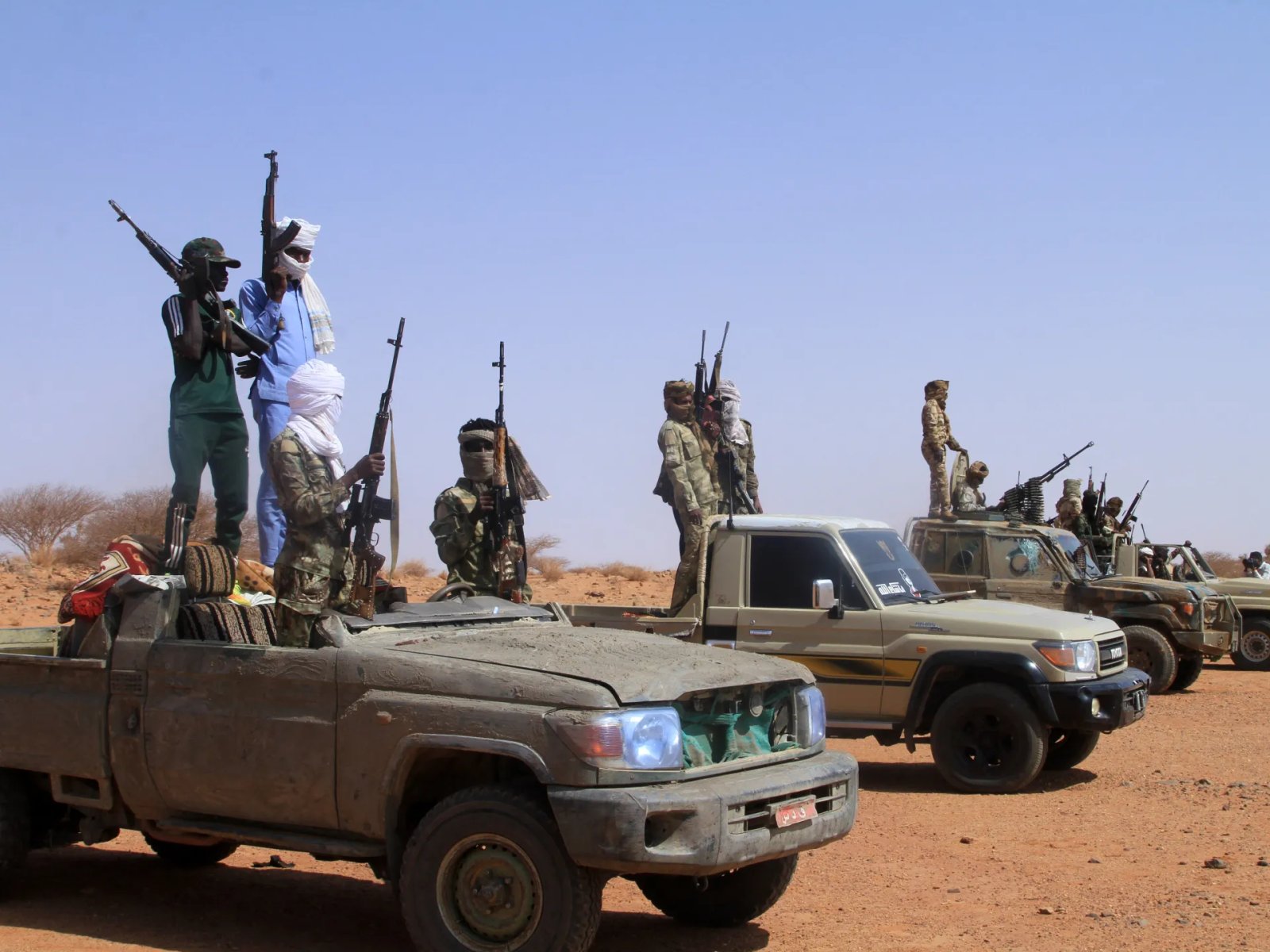
Sudan’s army has had a good summer. Last month, the Sudanese Armed Forces (SAF) recaptured several towns along the strategic Export Road, known locally as Sadirat, which connects the central Nile valley to the country’s west, and pushed the paramilitary Rapid Support Forces (RSF) into a defensive crouch across much of the centre of the country.
On the back of these gains, SAF leaders are now speaking more confidently of defeating the RSF entirely, rather than merely containing it.
But look east, to Sudan’s Blue Nile state, and the picture inverts. In mid-August, the RSF and its ally, the Sudan People’s Liberation Movement-North (led by Abdulaziz al-Hilu), retook Kurmuk and seized Geisan within days, in attacks that Sudanese military sources said were launched from across the border in Ethiopia. Drone attacks on multiple army-controlled cities this month also showed that the RSF’s reach extends well beyond Darfur, its main territorial stronghold.
The lesson of the summer, then, is not that the SAF is on the verge of decisive victory. It is that military victory and political resolution are becoming two very different things. Even a full RSF defeat may not end Sudan’s war so much as fracture it into several smaller conflicts.
A look at the coalitions doing the fighting helps explain why. The anti-RSF coalition is coordinated and led by the SAF, but the army also relies on allied armed movements, including Darfuri factions that signed the 2020 Juba Peace Agreement (JPA). These include Finance Minister Gibril Ibrahim’s Justice and Equality Movement (JEM) and the Sudan Liberation Movement, led by Darfur Governor Minni Minnawi. The JPA required their forces to be integrated into Sudan’s military and security services, but they have been reluctant to give up the military autonomy that underpins their political leverage.
Yasser al-Atta, then assistant commander-in-chief and now army chief of staff, announced in March that the army would activate mechanisms to organise and integrate allied irregular groups into the formal military and security services, but little has happened since.
Al-Atta wasn’t even the first to promise to address the problems of the proliferation of weapons and armed groups. Two years earlier, deputy commander-in-chief Shams al-Din Kabbashi told a graduation ceremony for Minni Minnawi’s Sudan Liberation Movement fighters that the army had “begun enacting a law and structures to control the many popular resistance groups”, warning that the array of semi-autonomous militias, tribal coalitions and volunteers backing the SAF’s war efforts, the “popular resistance” as it is called, would “become the next danger if we continue this way”.
More than two years on from Kabbashi’s speech, the underlying problem remains largely unresolved.
Then there is the RSF’s own coalition, which is actively fragmenting. A string of senior figures, al-Nour al-Qubba, al-Savanna, and more recently, the RSF-appointed governor for the Kordofan region, Hamad Khalifa, have defected, amid reports of Saudi financial inducements as well as tribal grievances.
When al-Nour al-Qubba left, he took dozens of combat vehicles and a large contingent of fighters with him. Given that the RSF is a franchise more than a unified fighting force, these defections should worry the SAF as much as they comfort it: defectors often arrive as intact forces loyal to their commanders, not soldiers used to reporting to a chain of command. In a way, the SAF inherits the RSF’s structural weakness with each defection.
Another example is Abu Aqla Keikel, an SAF-trained officer who initially fought on the army’s side after the war erupted in 2023, before defecting to the RSF later that year and then back to the SAF in October 2024. His Sudan Shield Forces remain, in practice, more under his own command than the army’s, even as he appears alongside SAF leadership and Darfuri commanders at recent battlefield-victory photo ops.
Many commanders inside the anti-RSF camp maintain a fairly wide margin of operational independence and consequently their own political calculations. This will become far more apparent once the war ends and there is no longer a common enemy to paper over the differences.
Sudan’s Islamists, meanwhile, occupy a strange position. Brigades like al-Baraa ibn Malik, affiliated with Sudan’s Islamic Movement, which underpinned Omar al-Bashir’s former ruling National Congress Party (NCP), supplied thousands of fighters and were instrumental in retaking Khartoum from the RSF. The United States has sanctioned al-Baraa ibn Malik, while the European Union has sanctioned its leader, al-Misbah Abu Zaid. Amid this international pressure and SAF battlefield gains, some Islamist fighters and leaders have begun pulling back, in what one Sudan Tribune report described as a “tactical withdrawal”. Al-Misbah recently posted that “we have returned to our civilian lives”.
But retreating from the battlefield is not the same as retreating from politics. Ahmed Haroun, chairman of the former ruling NCP, told Reuters news agency last year that the Islamic Movement could support an extended period of army rule, with an eye towards returning to government through “the ballot box”, as Haroun put it.
Indeed, another potential flashpoint for the SAF is that the war has given fighters in Islamist brigades like al-Baraa ibn Malik years of battlefield experience. There is little reason to think fighters who helped recapture the capital will disarm and disband the moment the war is over, at least not without a political settlement that creates a path for demobilisation.
This is the context in which SAF chief and de facto president General Abdel Fattah al-Burhan’s recently announced national dialogue should be read, less as a comprehensive resolution to the country’s militia problem than as a political process that could convert the army’s wartime alliances into post-war influence.
Burhan has explicitly ruled out the return of RSF leaders to power, promising there would be no “incomplete peace” that allowed Hemedti or other RSF leaders back into government. Given the RSF’s abysmal human rights record during the war, the exclusion is defensible, but the broader armed-group problem remains unresolved: namely, how the RSF’s remaining forces would actually be dismantled or integrated, particularly in Darfur, and how the SAF’s own allied militias would be brought under a single chain of command once the shooting slows down.
Another structural problem that is older than this war reinforces why claims of total victory remain elusive. The Sudanese army has long struggled to project sustained power across the country’s peripheries. Under Omar al-Bashir, the government relied on Janjaweed militias to help the army fight the rebellion in Darfur. In 2013, many Janjaweed fighters were brought into the newly created RSF.
There is little reason to think a hollowed-out, cash-poor SAF, dependent on volunteer recruits, Islamist militias and Juba Peace Agreement signatory forces, can now succeed where the pre-war state repeatedly struggled: in Darfur, a region roughly the size of France, where the RSF continues to use cross-border supply routes.
Even if the RSF is somehow eventually broken, its weapons and its fighters will not simply disappear. They will pass to whichever political entrepreneur is best positioned to pick them up. Meanwhile, in Khartoum, the questions of the day after will pry open conflicts that the war has, for now, kept closed.
The views expressed in this article are the author’s own and do not necessarily reflect Al Jazeera’s editorial stance.
