


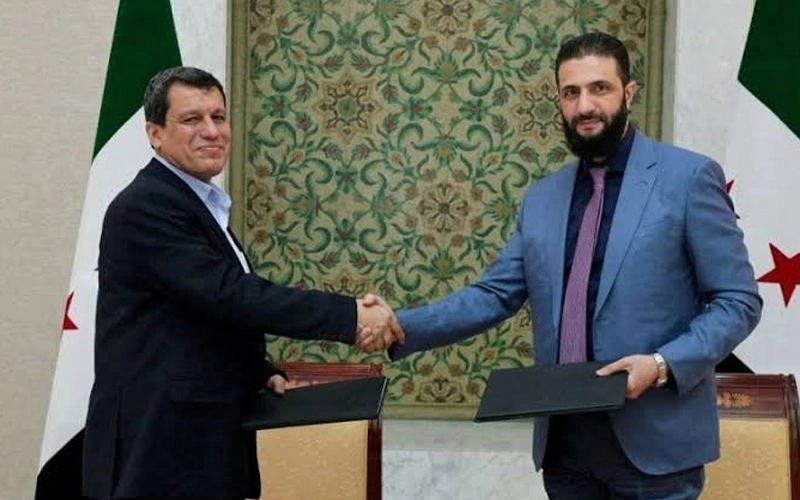
DAMASCUS: Syria took a major step toward bringing its Kurdish-led northeast under central government control Friday, as President Ahmed al-Sharaa appointed longtime Syrian Democratic Forces commander Mazloum Abdi as an adviser to the presidency.
The appointment came days after Abdi announced the end of the SDF’s independent military role, marking a significant shift in Syria’s postwar political and security landscape and opening a new path for Kurdish participation within the central government.
The state-run Syrian Arab News Agency, or SANA, reported that al-Sharaa signed Decree No. 164 of 2026, formally appointing Abdi under his official name, Mustafa Khalil Abdi, as an adviser to the Presidency of the Republic.
Abdi announced the SDF’s transition Tuesday during a televised address at the People’s Palace in Damascus. His announcement followed an agreement between Damascus and Kurdish leaders to integrate military and civilian institutions in northeastern Syria into the central state.
Under the agreement, between 10,000 and 12,000 former SDF fighters have been reorganized into brigades within Syria’s national army. Oil fields, border posts and municipal institutions in Hasakah and Qamishli have also been transferred to the Defense and Interior ministries.
Read More: Syrian Foreign Minister meets Field Marshal Asim Munir, agrees to boost defense cooperation
The developments represent a major change for northeastern Syria, where Kurdish-led authorities had exercised broad military and administrative control for years amid the country’s prolonged conflict.
U.S. Special Envoy to Syria Tom Barrack welcomed the transition, saying the inclusion of key Kurdish figures in formal government positions recognizes their leadership and contribution to efforts against extremism, according to reports by Shafaq News and Al Jazeera.
The integration process also includes measures intended to address Kurdish political and cultural rights. Reports by SANA and Roya News said accompanying decrees guarantee Kurdish national rights and recognize the Kurdish language, providing a framework for greater Kurdish participation within a unified Syrian state.
Abdi has said Kurdish leaders will continue working through national political institutions to seek constitutional protections for Kurdish communities.
His appointment places a former Kurdish military commander within Syria’s central political structure as Damascus seeks to consolidate state authority and reshape relations with communities that had operated with significant autonomy during the conflict.
