

Close Menu

    Subscribe to Updates

    Get the latest creative news from FooBar about art, design and business.

    What's Hot

    DR Congo releases 15 prisoners to M23 rebels as part of Doha peace process | Conflict News

    August 7, 2026

    US appeals court blocks Trump’s $400 million White House ballroom project

    August 7, 2026

    Kanye West daughter North shocks fans with eerie new music video

    August 7, 2026
    Facebook X (Twitter) Instagram
    • Home
    • Politics
    • News
    • Magazines
    Facebook X (Twitter) Instagram
    Login
    22Media22Media
    Subscribe
    • Home
    • News
      • Pakistan News
      • World News
      • Amazing News
      • Only On 22
    • Sports
    • Bussiness
    • Innovation
      • Health & Sciences
      • Technology
    • Culture
      • Crime & Justice
      • Entertainment
    • Politics
    • Magazines
    • Weather
    • Video
    • Live
    22Media22Media
    Home»News»Amazing News»Smoke-dried bodies could be world’s ‘oldest mummies’: study
    Amazing News

    Smoke-dried bodies could be world’s ‘oldest mummies’: study

    22febdm@gmail.comBy 22febdm@gmail.comSeptember 16, 2025No Comments3 Mins Read
    Facebook Twitter Pinterest LinkedIn Tumblr Email
    Share
    Facebook Twitter LinkedIn Pinterest Email

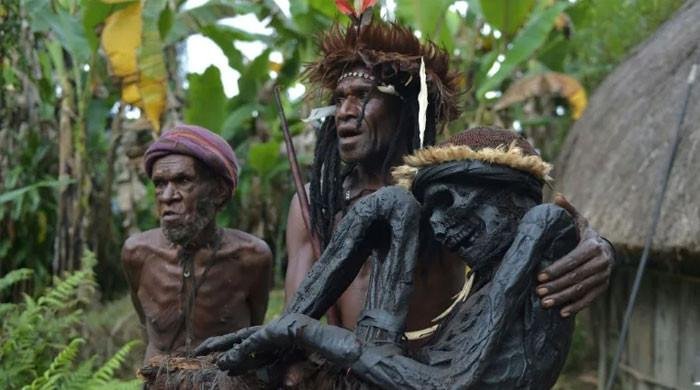
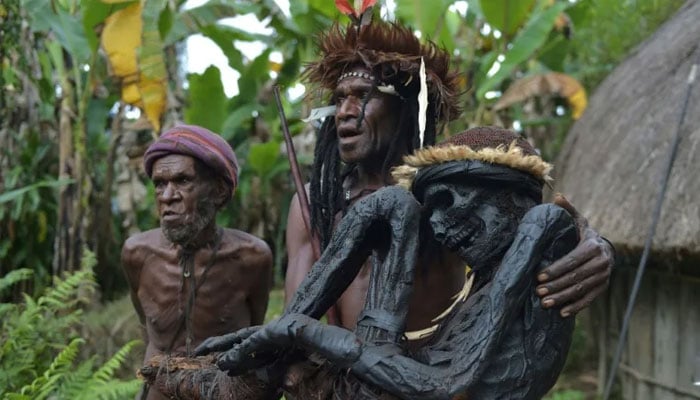
    A tribesman in Papua, Indonesia, holds a smoke-dried mummy of an ancestor—part of a centuries-old mummification tradition preserved by some communities in this undated image – AFP
    A tribesman in Papua, Indonesia, holds a smoke-dried mummy of an ancestor—part of a centuries-old mummification tradition preserved by some communities in this undated image – AFP

    BANGKOK: Some ancient societies in China and southeast Asia appear to have smoke-dried their dead, effectively mummifying them thousands of years earlier than their Egyptian counterparts, new research has found.

    While the bandage-bound bodies of ancient Egypt date back perhaps as far as 4,500 years ago, the oldest previously known examples of mummification are from ancient Chilean societies.

    There, the dry air of the Atacama coastline allowed for natural mummification by drying.

    But the bodies retrieved by researchers from China and southeast Asia came largely from humid regions.

    The scientists were initially intrigued by the contorted positions of skeletons found in burial sites in China, Vietnam, the Philippines, Laos, Thailand, Malaysia and Indonesia.

    The remains appeared to have scorch marks in some places, but in patterns inconsistent with attempts at cremation.

    They theorised that the contorted burials might have been possible because no soft tissue remained on the bodies –the result of mummification by drying, a practice known in parts of Indonesia’s Papua.

    They tested this by analysing the composition of bone samples from the sites against control samples taken from ancient burial sites in Japan and found evidence of exposure to mostly low-temperature heat.

    The intact nature of the skeletons suggested there was no attempt to cremate the bodies, and preservation was the goal.

    The samples include some dating back more than 10,000 years, suggesting societies were practicing forms of mummification thousands of years earlier than previously known.

    The results were “a great surprise,” said Hsiao-chun Hung, senior research fellow at Australian National University.

    “The bones are so ancient, and it is remarkable to discover that this tradition is so old, connecting the practices of ancient peoples with those still found in some communities today.”

    While the scientists said smoking was probably the “most effective option for preserving corpses in tropical climates,” the process also likely held cultural significance.

    Several societies in Indonesia and Australia are known to have smoke-dried bodies by binding them tightly and placing them above a continuously burning fire, often for several months.

    The process allowed relatives to maintain contact with the deceased, and in some cases was believed to allow the spirit to roam freely during the day and return to a body at night.

    “I believe this reflects something deeply human — the timeless wish that our loved ones might never leave us, but remain by our side forever,” Hung told AFP.

    The researchers theorise that the practice may have been common in ancient Asian civilisations.

    “This tradition may have been known among hunter-gatherer societies across a vast region, for many millennia,” they wrote in the study, published Monday in the Proceedings of the National Academy of Sciences journal.

    Share. Facebook Twitter Pinterest LinkedIn Tumblr Email
    22febdm@gmail.com
    • Website

    Related Posts

    Indonesia traps monkey to end rampage that wounded 18 people

    August 7, 2026

    ‘We can see your washing’: NZ politician joins meeting from bathroom

    August 5, 2026

    Britain’s Royal Mint strikes gold in electronic waste

    August 4, 2026
    Add A Comment
    Leave A Reply Cancel Reply

    Demo
    Our Picks
    • Facebook
    • Twitter
    • Pinterest
    • Instagram
    • YouTube
    • Vimeo
    Don't Miss
    World News

    DR Congo releases 15 prisoners to M23 rebels as part of Doha peace process | Conflict News

    By 22febdm@gmail.comAugust 7, 20260

    ICRC facilitates first known transfer of detainees between Congolese government and M23 rebels in North…

    US appeals court blocks Trump’s $400 million White House ballroom project

    August 7, 2026

    Kanye West daughter North shocks fans with eerie new music video

    August 7, 2026

    JI plans march to Punjab CM House over rising petrol prices

    August 7, 2026

    Subscribe to Updates

    Get the latest creative news from SmartMag about art & design.

    22Media
    Facebook Instagram YouTube WhatsApp
    • Home
    • Politics
    • News
    • Magazines
    © 2026 22Media. Designed by AleemSoft Hub.

    Type above and press Enter to search. Press Esc to cancel.

    Sign In or Register

    Welcome Back!

    Login to your account below.

    Lost password?