


In our earlier reflection on Pakistan’s failing governance architecture, we diagnosed how the absence of functional local governments has eroded democratic accountability.
But to fully understand why local governance has collapsed, we must probe deeper into a more systemic failure – of fiscal and economic decentralisation within provinces.
Much of our national discourse remains preoccupied with the federal-provincial tug-of-war over the National Finance Commission (NFC) Award. Yet a more urgent and underexplored question lies within: how do provinces govern themselves, and why have they failed to empower the very districts and tehsils meant to deliver basic services to citizens?
The 18th Amendment promised to bring the government closer to the people. It devolved many subjects from the federal to the provincial level, but the devolution stopped there.
Instead of empowering districts and tehsils, provinces consolidated power in their own capitals. As a result, provincial bureaucracies and legislators control development budgets, while local governments remain stripped of authority and resources.
The tragedy is that while Pakistan continues to debate Article 160 and the NFC Award, its provinces have failed to operationalise their own Provincial Finance Commissions (PFCs) effectively. Without fiscal transfer mechanisms to local governments, governance remains lopsided and undemocratic.
Punjab last held an interim PFC award in December 2016, based on a formula that included population, poverty, education and access to safe drinking water. Yet it has not been updated since then, despite the 2023 census and the persistent development disparities across its regions.
In Sindh, the last PFC award was in 2007, over 16 years ago, rendering the entire intra-provincial resource distribution landscape arbitrary and non-transparent.
Khyber Pakhtunkhwa announced its last PFC award in 2020, which was implemented partially. And Balochistan’s last known PFC award was made in 2007, with negligible fiscal decentralisation to local councils since then.
The failure to update these PFCs means that provincial governments continue to distribute resources through ad hoc decisions, political patronage, or centrally approved ‘development schemes’ tied to legislators, rather than through any formula-based, need-sensitive allocation.
Local government departments across all provinces now operate as shadows of what they once promised. In Punjab, the Local Government and Community Development Department (LG and CDD) has undergone multiple structural changes, but without elected local councils in place until recently, most powers remained with administrators.
Across the board, elected local governments still have no fiscal autonomy, as budget allocations, hiring, and development schemes remain controlled by provincial authorities.
In Sindh, the Sindh Local Government Department exists primarily to execute centrally controlled schemes in urban areas, especially Karachi. Its municipal corporations are underfunded, unable to raise revenue independently, and heavily politicised.
KP’s Local Government Department has perhaps come closest to introducing some structural reform, especially with the implementation of the Local Government Act 2013 and its further amendments in 2019 and 2021, but it too suffers from irregular elections, limited fund transfers, and overlapping authority with provincial departments.
In Balochistan, the local government structure is the weakest. With limited revenue-generating capacity and virtually no block transfers from the province, elected representatives at the local level struggle to perform even basic municipal functions.
The revenue streams for local governments remain severely constrained across the board. The major sources of property tax, licence fees, local tolls and market fees are either retained by the provincial government or poorly administered. Property tax, a potentially robust source of urban financing, is still collected by provincial departments in Punjab and Sindh.
In KP and Balochistan, capacity gaps mean their actual collection is minimal, even when some taxes are nominally assigned to local bodies. Local councils are left chasing grants or special favours without meaningful revenue assignments or predictable fiscal transfers.
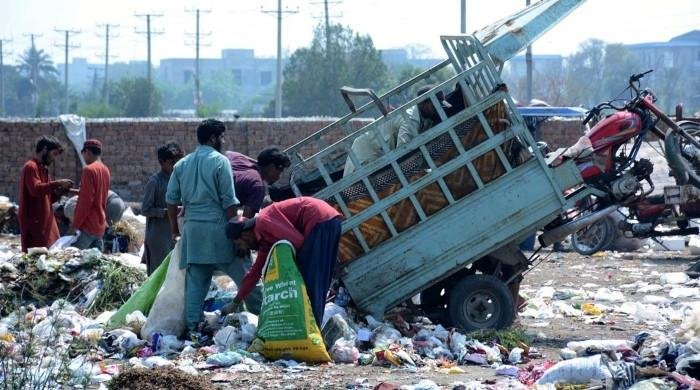
The result is a hollowed-out system of governance. Local governments are expected to respond to service delivery needs, such as solid waste management, drinking water and local infrastructure, without the tools or funds to do so.
Elected mayors or chairpersons become figureheads, constrained by provincial control over finances, postings, and planning. Bureaucratic administrators parachuted during periods without local elections further alienating citizens from governance.
These gaps are not just administrative but deeply political. In all provinces, legislators perceive empowered local governments as a threat to their development control. When fiscal and administrative authority flows down to elected local representatives, it disrupts the prevailing model of patronage politics.
This explains why PFCs are either delayed or rendered toothless, why elections are routinely postponed, and why provincial departments retain control over even municipal-level decisions.
To reverse this slide, a set of reforms is urgently needed. Provinces must activate their PFCs and update their formulas in light of the latest census, poverty mapping and development needs. The PFCs should not be symbolic committees; they must have independent technical input, parliamentary oversight, and public transparency.
At the same time, local governments should be given their due share of revenue instruments, such as property tax, user fees and local business taxes, with capacity-building support to manage them efficiently. Budget-making, development planning, and service delivery must be decentralised in practice, not just in principle.
The federal government can also nudge this process by linking future NFC awards to performance indicators on intra-provincial equity, transparency, and local government empowerment. If provinces want a greater share of the national pie, they must show how they distribute their own slice equitably.
Local governance is not a secondary issue; it is the first point of contact between citizen and state. When a garbage pile is not lifted, a waterline bursts, or a school remains closed, it is the local state that is missing. And when the local state is absent, the legitimacy of the entire system erodes.
Democracy is not just about elections. It is about institutions that serve people in their everyday lives. To save governance from the brink, Pakistan must decentralise politically, fiscally and economically. The answers do not lie in Islamabad, or even Lahore, Karachi, Quetta or Peshawar. They lie in the council halls of tehsils and towns – if we choose to empower them.
The writer is associated with the Sustainable Development Policy Institute (SDPI), Islamabad. The article does not necessarily represent the views of the organisation.
Disclaimer: The viewpoints expressed in this piece are the writer’s own and don’t necessarily reflect Geo.tv’s editorial policy.
Originally published in The News
