


- Sanaullah says any referendum must go parliament first.
- Marri rejects provinces based on ethnic wishes.
- Kamal says Karachi was split into seven districts.
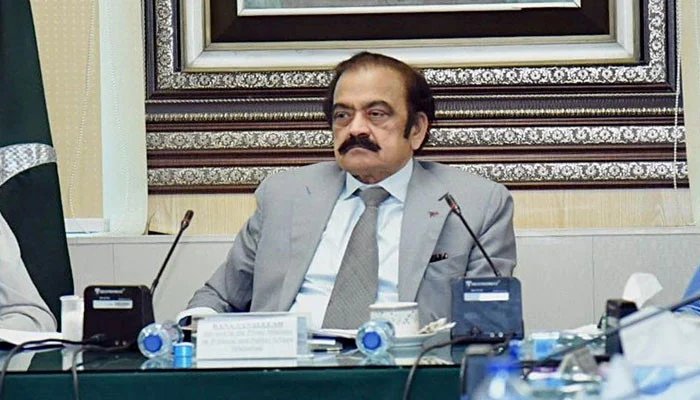
Prime Minister’s Adviser on Political Affairs Rana Sanaullah said the PML-N believes debate on new provinces is premature, as the issue continues to fuel political debate.
His remarks came after the Sindh Assembly passed a resolution rejecting suggestions to divide the province, alter its boundaries or create new administrative units amid a boycott by the MQM-P — PML-N’s coalition partner in the Centre.
Speaking on Geo News’ programme “Aaj Shahzeb Khanzada Kay Saath”, Sanaullah said the resolution passed by the Sindh Assembly was similar to ones adopted previously.
“The heat and intensity created over the issue of provinces yesterday was unnecessary,” he said, adding that the National Assembly was unnecessarily targeted during speeches in the Sindh Assembly.
Sanaullah said the PML-N would take a position when the time came, but believed that discussing new provinces at this stage was premature.
However, Planning and Development Minister Ahsan Iqbal has proposed the creation of 12 to 15 new provinces, urging Prime Minister Shehbaz Sharif to constitute a committee to review the country’s administrative structure.
The discussions come as a decades-old debate over Pakistan’s provincial structure has resurfaced, with Interior Minister Mohsin Naqvi raising the issue in July, saying that the current system had “collapsed”.
“If there is to be a referendum on provinces, it would first have to go to parliament,” he said.
He also criticised the PPP over its approach to the issue, saying the party was doing “all this” to remain politically relevant.
However, Sanaullah acknowledged that the division of Sindh was an important issue for the PPP’s politics.
Referring to the 26th constitutional amendment, Sanaullah rejected his cabinet colleague Mustafa Kamal’s claim that the MQM-P had not been aware of the consultations.
He said consultations had taken place and that the party had spent around a month and a half outside Jamiat Ulema-e-Islam-Fazl chief Maulana Fazlur Rehman’s residence.
Sanaullah also drew a comparison with the controversy over canals, saying protests had taken place in Sindh over that issue as well.
“We had dealt with Murad Ali Shah […] on the canals issue,” he said, adding that the matter was not solely the PPP’s but also “the voice of the people of Sindh”.
Sanaullah said the PPP had initially delayed joining the protests over the canals issue before eventually becoming part of them.
He accused the PPP of presenting the resolution and making speeches to gain political advantage and connect with the people.
‘Hypocrisy’
Meanwhile, PPP spokesperson Shazia Marri said the assembly was the appropriate forum for debate on provinces.
Speaking on Geo News’ programme Naya Pakistan, Marri said opposition members had not adopted a clear position on the issue in the assembly, while PPP lawmakers had clearly stated their stance.
She said opposition members had also said during their speeches that they did not want Sindh to be divided.
“I do not want to say anything bitter about Khawaja Asif’s statement,” Marri said.
Addressing the federal minister, she added: “Khawaja Asif sahib, Pakistan is not a colony. The federation’s units strengthen the federation.”
Marri said provinces were not created according to anyone’s wishes or on linguistic grounds.
She pointed out that the first resolution for the creation of Pakistan had been passed by the Sindh Assembly.
She also highlighted Sindh’s local government system, saying it was the only province where a local government system currently existed.
Marri criticised those who spoke about strengthening local governments but signed proposals that did not provide for a local government system in Islamabad, calling this “hypocrisy”.
“They should clearly explain what they want,” she said, adding that such sensitive issues could not be used for political point-scoring.
MQM-P senior leader and Federal Health Minister Mustafa Kamal, meanwhile, said all stakeholders in Pakistan had reached the conclusion that the country could no longer be run under the existing system.
Speaking on Naya Pakistan, Kamal said his party had twice attempted to bring a constitutional amendment concerning local governments.
He questioned what options remained if such efforts did not succeed.
Kamal also criticised the PPP’s administrative structure in Karachi, saying the city had once been a single district but was divided into seven districts by the PPP for political reasons.
He questioned why Prime Minister Shehbaz Sharif remained silent on the issue of provinces.
