


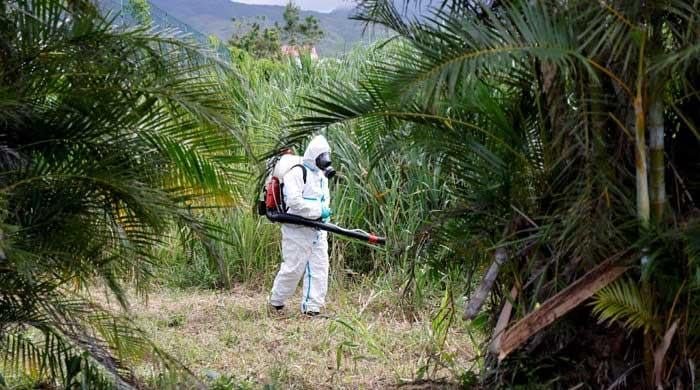
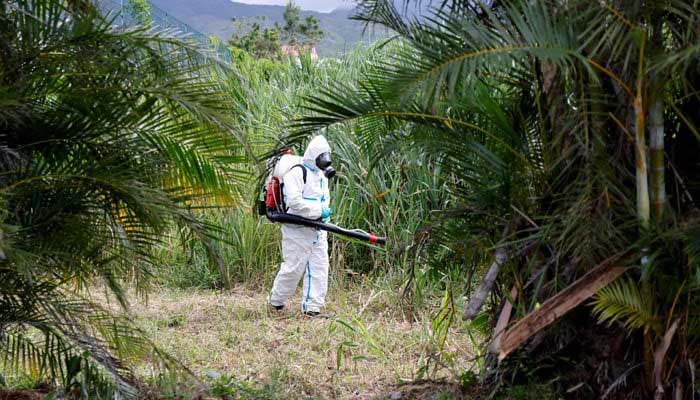
ISLAMABAD: The World Health Organisation (WHO) has warned of a significant risk of chikungunya spread in many countries, including Pakistan, as over 445,000 cases and 155 deaths have been reported from 40 countries in 2025 so far.
Officials and experts warn that Pakistan, which is already dealing with post-monsoon outbreaks of dengue and malaria, remains vulnerable due to a large population of Aedes mosquitoes. The country lacks routine screening facilities for chikungunya, and its healthcare infrastructure has been weakened by the devastating floods that occurred in Sindh, Punjab, and Khyber Pakhtunkhwa in 2025, The News reported.
According to the WHO’s latest Disease Outbreak News, chikungunya transmission surged in several regions this year, with hotspots reported in the Americas, South Asia, and the Indian Ocean territories.
While Pakistan has so far recorded case rates comparable to 2024, officials confirmed a sharp rise between May and June 2025, when more than 100 suspected cases per week were reported.
Health experts say the overlap of symptoms with dengue often leads to misdiagnosis, while limited laboratory testing capacity means most patients are treated only on a symptomatic basis. “Chikungunya is underdiagnosed in Pakistan simply because our hospitals do not routinely test for it.
Patients present with high fever, rash, fatigue, and joint pain, and they are either treated as dengue cases or sent home with painkillers. This is dangerous because the virus can cause long-term joint damage and affect vulnerable groups like newborns, the elderly, and those with diabetes,” said a senior physician at Karachi’s Jinnah Postgraduate Medical Centre.
The risk has been heightened by unprecedented flooding during the 2025 monsoon, which left vast pools of stagnant water across urban and rural areas of Sindh, Punjab, and Khyber Pakhtunkhwa — ideal breeding grounds for Aedes aegypti and Aedes albopictus mosquitoes, the same vectors responsible for dengue and Zika transmission.
Public health officials fear that the surge in mosquito density could pave the way for undetected chikungunya outbreaks in the coming months.
WHO noted that chikungunya typically causes “high population attack rates,” with up to three-quarters of a susceptible population affected in some outbreaks, placing immense strain on healthcare systems. Pakistan, where vector control remains weak and health spending is low, is considered ill-prepared for such a scenario.
Unlike dengue, chikungunya is rarely discussed in official advisories, and national surveillance systems do not capture its true burden.
Globally, chikungunya has re-emerged in areas previously unaffected, driven by climate change, unplanned urbanisation, poor water management, and increased international travel. India, Bangladesh, and Sri Lanka have all reported significant caseloads in 2025, underlining the regional threat to Pakistan.
In Pakistan, doctors warn that prolonged joint pain caused by chikungunya can last weeks or even months, leading to lost productivity and income, particularly in already struggling flood-hit communities.
“For a daily wage earner who cannot walk because of joint swelling, chikungunya is an economic disaster as much as a health one,” said a Lahore-based infectious disease expert.
There is currently no specific antiviral treatment for chikungunya. Patients are advised to rest, stay hydrated, and use pain relief paracetamol, being the preferred option until dengue is ruled out. Non-steroidal anti-inflammatory drugs (NSAIDs), commonly used for joint pain, are discouraged due to bleeding risks in possible dengue co-infections.
Although two vaccines have received approval in some countries, they are not yet widely available. WHO has urged nations to strengthen surveillance, prepare hospitals for case management, and expand vector control to reduce the risk of outbreaks.
For Pakistan, experts say this means learning from dengue missteps by investing in better diagnostics, raising public awareness about household mosquito control, and integrating chikungunya into the national vector-borne disease strategy.
“The global resurgence of chikungunya is a reminder that Pakistan cannot afford to limit its focus to dengue and malaria. The same mosquitoes spread all three diseases. Unless we address stagnant water, waste disposal, and urban mosquito control, we will see repeated cycles of outbreaks,” warned a public health official in Islamabad
