


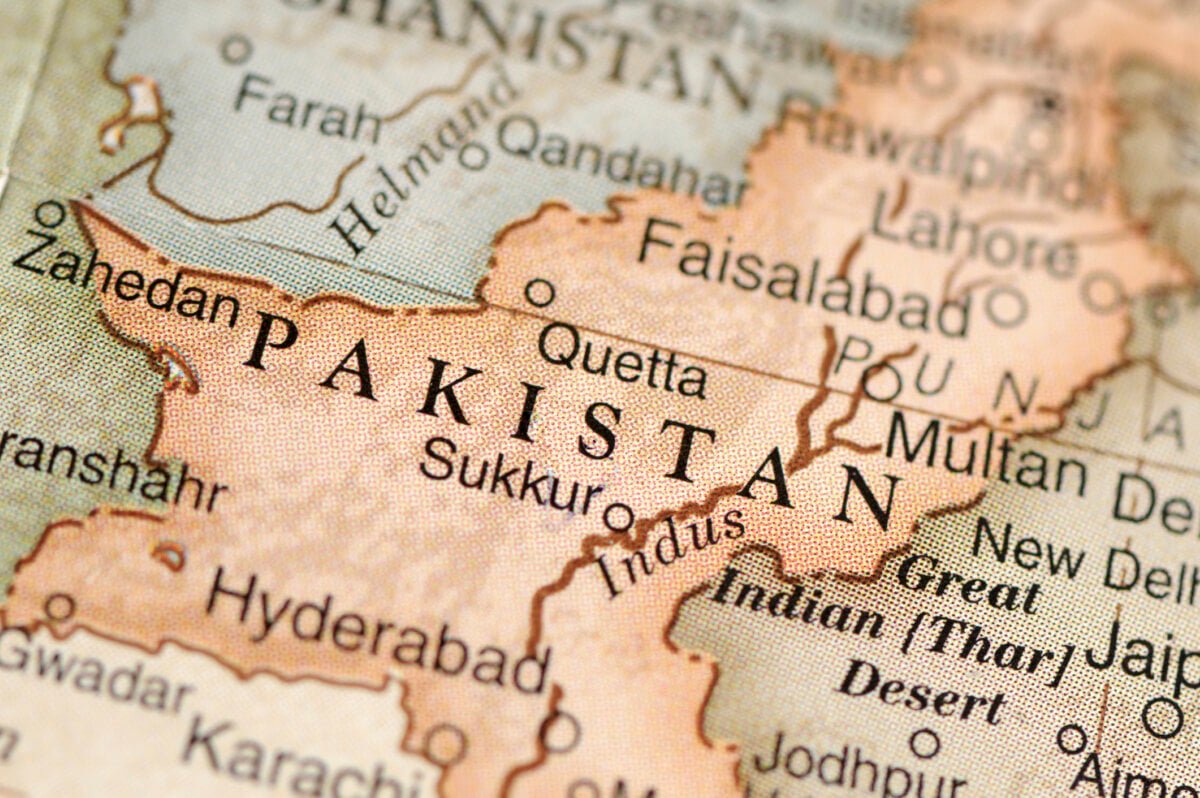
As the nation celebrates its 79th anniversary, the story of Pakistan remains one of profound complexity. Born from the partition of British India in 1947, the country has navigated a path defined by resilience in the face of war, political upheaval, economic challenges, and a relentless struggle for democratic and constitutional stability.
This timeline of Pakistan’s history serves as a reminder of its journey from a nascent state to a nuclear-armed nation of over 240 million people, still grappling with its identity and place in the world.
The Birth of a Nation (1940s)
Pakistan’s inception was a monumental event in modern history. On August 14, 1947, the new nation was born, with Quaid-e-Azam Muhammad Ali Jinnah becoming its first Governor-General.
The accompanying partition triggered one of the largest mass migrations in history, involving approximately 10 million people. Pakistan quickly established itself on the world stage, joining the United Nations in September 1947.
However, its foundational years were marred by the first Indo-Pakistani War over the princely state of Kashmir, a conflict that would define a century of hostility. A UN-ordered ceasefire in January 1948 and the establishment of the UN Cease-fire Line on January 1, 1949, created a de facto border that remains a flashpoint today. The decade also saw the inauguration of the State Bank of Pakistan, a vital step for the new country’s economy.
Shaky Foundations and Cold War Alliances (1950s)
The 1950s were a period of political instability, with the assassination of the first Prime Minister, Liaquat Ali Khan, in 1951. Sectarian violence, such as the 1953 Lahore riots against the Ahmadiyya community, tested the state’s authority.
To secure its borders, Pakistan forged key alliances with the West, joining the Baghdad Pact (later CENTO) and SEATO. This decade was also marked by a constitutional crisis that saw Governor-General Ghulam Muhammad dissolve the first Constituent Assembly in 1954, culminating in the country declaring itself the Islamic Republic of Pakistan in 1956.
The decade closed with the country’s first military coup in 1958, led by General Ayub Khan, which began a long history of military intervention in politics.
War, Development, and Disintegration (1960s & 1970s)
The 1960s opened with the signing of the Indus Waters Treaty in 1960, a vital agreement with India that continues to govern water distribution today. General Ayub Khan became the country’s first elected president and implemented a new constitution in 1962.
The 1965 Indo-Pakistani War, which included the famous Operation Grand Slam and the naval Operation Dwarka, ended in a UN-ordered ceasefire. The humiliating defeat in the Bangladesh Liberation War in 1971, which resulted in the loss of East Pakistan, was a national trauma that reshaped the country’s politics.
Zulfikar Ali Bhutto took over as President in 1971 and subsequently became Prime Minister under Pakistan’s third constitution, enacted in 1973. Bhutto’s government was defined by a populist agenda, the nationalization of major industries, and a bold announcement to begin a nuclear weapons program in 1972.
He also faced significant challenges, including widespread labour unrest in Karachi and a major insurgency in Balochistan. Bhutto’s tenure was cut short in 1977 when he was ousted and later executed by General Zia-ul-Haq, who would rule for over a decade.
The Soviet-Afghan War and the Rise of Extremism (1980s)
General Zia-ul-Haq’s regime was defined by its Islamization policies and its pivotal role in the Afghan conflict. Following the Soviet invasion of Afghanistan in 1979, Pakistan became a frontline state, channeling billions of dollars in U.S. and Saudi aid to Mujahideen fighters.
This period saw a massive influx of Afghan refugees and the proliferation of weapons, which had lasting consequences for the region. Amid this, Pakistan was secretly advancing its nuclear program, conducting the “Kirana-I” cold test in 1983.
The decade also saw the rise of ethnic political movements, such as the Muhajir Qaumi Movement (MQM) in 1984, and the beginning of the Siachen conflict with India in the same year. Zia’s death in a plane crash in 1988 ended an era and paved the way for a return to a shaky democracy.
A Decade of Political Instability and Nuclear Assertion (1990s)
The 1990s were a revolving door of governments, with Benazir Bhutto and Nawaz Sharif alternating power, often dismissed before completing their terms. Despite this political chaos, Pakistan formally incorporated Islamic Shariah law into its legal code in 1991 and embarked on an economic liberalization program.
The country remained deeply entangled in Afghanistan’s civil war, providing extensive support to various factions. The nuclear rivalry with India escalated, culminating in tit-for-tat nuclear tests in May 1998, making Pakistan a declared nuclear power.
The decade ended with the Kargil War in 1999, a conflict that ended in a Pakistani withdrawal and paved the way for another military takeover, this time by General Pervez Musharraf.
War on Terror and Domestic Militancy (2000s)
The 2000s began with Pakistan’s pivotal decision to ally with the United States in its “War on Terror” following the September 11 attacks. This decision led to a massive influx of U.S. aid but also fueled a virulent domestic insurgency by groups like the Pakistani Taliban. Pakistan experienced a relentless wave of terrorism, including attacks on military bases, mosques, and hotels.
The period also saw the military’s direct confrontation with militants, most notably in the 2007 First Battle of Swat and the ongoing Operation Al-Mizan. The assassination of Benazir Bhutto in December 2007 was a defining moment, plunging the country into further chaos and political uncertainty.
A New Era of Challenges (2010-2026)
The 2010s and 2020s saw Pakistan attempt to stabilize itself. The 18th Amendment in 2010, which stripped the President of key powers, was a landmark move toward parliamentary democracy.
However, the country continued to face persistent terrorism, as seen in the horrific Lakki Marwat suicide attack in 2010 and the 2014 school massacre in Peshawar. The military launched large-scale operations like Zarb-e-Azb to clear militant strongholds.
Pakistan’s democratic processes matured, with Shehbaz Sharif taking office for a second term in March 2024. The country celebrated the completion of the New Gwadar International Airport in 2025, a major infrastructure project under the China-Pakistan Economic Corridor (CPEC).
However, separatist violence continues, particularly in Balochistan, as seen in the BLA attacks in early 2025. Tensions with Afghanistan’s Taliban government have also escalated in late February 2026, threatening regional stability.
Even as full-scale conflict with India was averted in 2026 over the Indus Waters Treaty, significant civil unrest broke out in Azad Jammu and Kashmir, highlighting the fragile internal peace. As Pakistan celebrates its 79th year, its journey remains one of a nation caught between its potential and its persistent challenges.
The threads that run through this history, military intervention in civilian rule, unresolved tension with India, the long shadow of Afghanistan, and simmering unrest in Balochistan and Kashmir, remain unbroken even today.
Still, moments of institutional growth, from constitutional reform to infrastructure milestones like Gwadar, suggest a country capable of adapting even amid crisis. Pakistan at 79 stands not as a finished project but as an ongoing negotiation between fragility and resilience, its next chapter as uncertain and consequential as those that came before it.
