
 Pakistan · World · Independent Digital Newsroom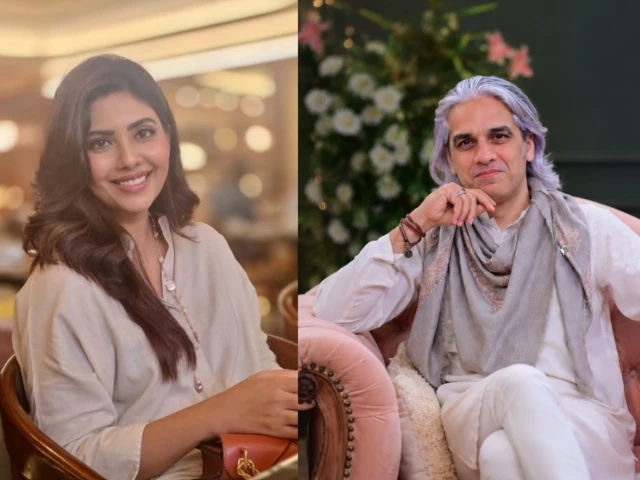
Marshall was direct about the impact, saying, “It signals a fundamental lack of regard for one’s partner rather than harmless humour.”She pointed to the gap between what people say and how they behave, noting that a wife may be described as the “respect of the house” while not being treated with that same respect in practice.The panel traced the behaviour to a deeper societal belief that women are somehow “lesser”….
That conditioning, they argued, can leave men feeling entitled to treat their partners as targets for mockery rather than as equals.Marshall and the other guests said the cycle persisted largely because women were not taught to set boundaries early.
They advised addressing such behaviour as soon as it happened and explaining plainly how the “jokes” felt, rather than allowing silence to leave the behaviour unchallenged.A recurring theme throughout the discussion was the way Pakistani men are conditioned to suppress vulnerability.The panel said boys were raised as “hunters”, taught to treat feeling and softness as weakness, leaving anger and frustration as the only emotions they were culturally permitted to express.Rana….
Breaking that cycle, the panel said, partly began at home, with mothers playing a crucial role in raising sons capable of empathy.Responding to a viewer’s letter, the panel was unambiguous that men were entitled to be vulnerable with their wives too, describing mutual, respectful vulnerability as “a cornerstone of a healthy, long-term partnership”.
As Marshall put it, “vulnerability means showing that you are human.”For couples navigating everyday friction, Rana offered a communication tool he called the “Three H’s”.
Before venting to a partner, he suggested saying plainly whether you want them to Hear you out, Help you solve the problem or simply Hug you.
The framework, he said, “heads off a lot of unnecessary conflict by removing the guesswork from what a partner actually needs in the moment”.That philosophy tied into what the panel described as the real foundation of a lasting marriage: not a transactional “give-and-take”, but a “give-and-give” commitment in which both partners actively contributed to each other’s growth.“A good relationship is not one of give and take; it is one of….
Instead, they argued that women needed to build their own sense of self-worth and independence.They flagged the double standard surrounding working wives, noting that women were frequently discouraged from holding jobs even when dual incomes were an economic necessity.
The guests called on men to respect a wife’s career as a “working place” in the same way they respected their own.The guests noted that the same rigid scripting could work against men, too.
Many were taught that their worth depended solely on their ability to provide, a pressure the panel linked to serious emotional distress when men felt unable to meet that expectation.On extended family tension, a perennial flashpoint in South Asian marriages, the panel warned husbands against turning the home into a “court” in which they were expected to rule on who was right between a mother and a wife.“Doing so only….
Instead, a husband should stay composed and encourage the two women to work through issues directly, without playing favourites,” they said.The guests also pushed for parents to be viewed as people capable of making mistakes rather than as untouchable authority figures, arguing that this shift allowed for greater accountability at home.On sharing the domestic load after children arrive, the panel said men were typically handed a “script” to provide financially….
\n22Media International — Pakistan, world and bilingual digital newsroom coverage.




Comments & Discussion
Join a respectful, on-topic conversation. Personal attacks, hate speech and spam may be removed.