

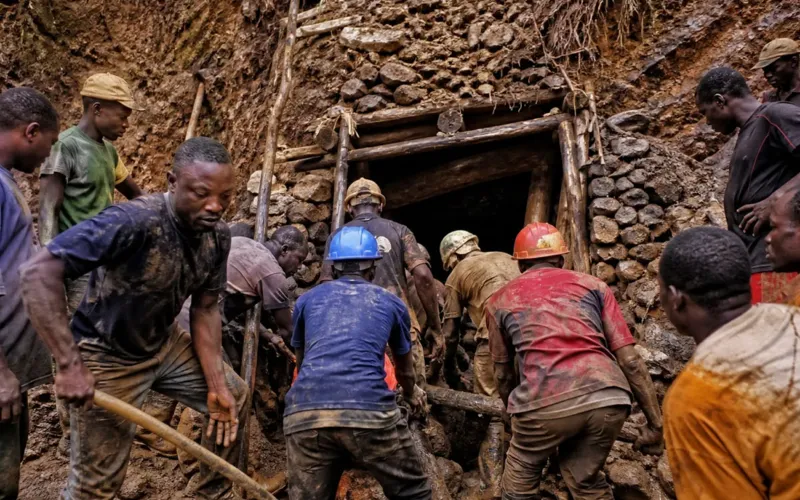
The mine collapsed in the village of Zimbolé, near the Cameroonian border. Rescue teams are continuing operations.
More than 100 people were killed after a gold mine collapsed in the Central African Republic near the border with Cameroon, according to local officials and international media reports.
The mine collapsed in the village of Zimbolé, near the Cameroonian border. Rescue teams are continuing operations to locate and save people who remain trapped, while officials warned that the death toll could rise.
Authorities have launched an investigation to determine the cause of the collapse and identify those responsible for operating the mine.
Cameroon has offered medical assistance to treat people injured in the accident.
The mine collapsed Tuesday after a landslide. Local officials and the Red Cross said Wednesday that more than 100 people had died and warned the toll was likely to rise.
Mines Minister Rufin Benam Beltoungou expressed condolences to victims’ families and warned miners about the dangers of unsafe mining practices, according to a statement posted by the ministry.
Some of the victims were from neighboring Cameroon. Cameroon’s Mines Ministry said both Cameroonian and Central African miners were believed to be among the dead and deployed a team to assess the situation along the border. The state-run Cameroon Tribune reported at least four Cameroonians were killed.
Artisanal mine collapses are common in Central African Republic, where thousands of people work in small-scale mining, often with little protection. Pits are frequently dug by hand and can reach several meters deep.
Without adequate reinforcement, shifting ground can cause tunnels to collapse suddenly, burying miners within seconds.
Researchers and local media reported earlier this year on unsafe and unregulated mining associated with a rapidly expanding gold rush around Zamboye, where the mine collapsed.
More read, Tragic mine collapse in Congo claims at least 32 lives
A 2025 report by U.N. experts documented illicit mining in the area, including the involvement of armed groups and the use of extraction methods that posed health and environmental risks.
