

Close Menu

    Subscribe to Updates

    Get the latest creative news from FooBar about art, design and business.

    What's Hot

    Gary Oldman teases who the upcoming James Bond actor is

    September 8, 2026

    Eiffel Tower closed in row over women removed for Hindu group | Gender Equity News

    September 8, 2026

    Iran threatens US warships with new missiles and plans Gulf exclusion zone

    September 8, 2026
    Facebook X (Twitter) Instagram
    • Home
    • Politics
    • News
    • Magazines
    Facebook X (Twitter) Instagram
    Login
    22Media22Media
    Subscribe
    • Home
    • News
      • Pakistan News
      • World News
      • Amazing News
      • Only On 22
    • Sports
    • Bussiness
    • Innovation
      • Health & Sciences
      • Technology
    • Culture
      • Crime & Justice
      • Entertainment
    • Politics
    • Magazines
    • Weather
    • Video
    • Live
    22Media22Media
    Home»News»World News»Indian top court suspends parts of controversial Muslim property law
    World News

    Indian top court suspends parts of controversial Muslim property law

    22febdm@gmail.comBy 22febdm@gmail.comSeptember 16, 2025No Comments3 Mins Read
    Facebook Twitter Pinterest LinkedIn Tumblr Email
    Share
    Facebook Twitter LinkedIn Pinterest Email

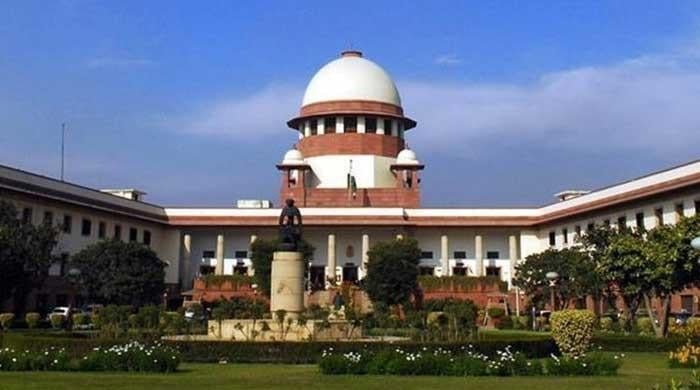
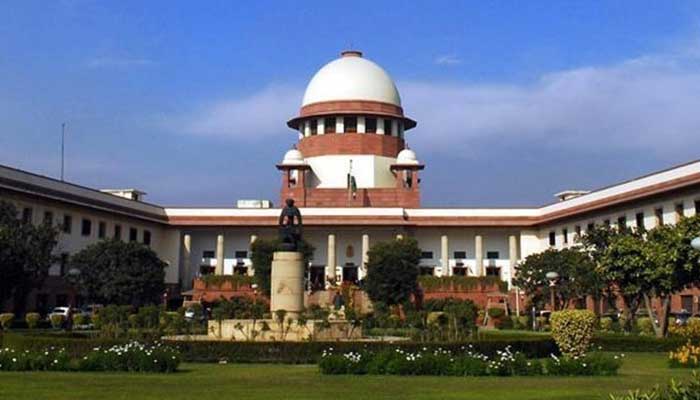
    An undated image showing the outside view of the Indian Supreme Court in New Delhi. — AFP/File
    An undated image showing the outside view of the Indian Supreme Court in New Delhi. — AFP/File
    • SC upholds law for inclusion of non-Muslims in waqf boards.
    • Top court limits non-Muslim members to four in federal board.
    • Suspends provision empowering govt to decide fate of properties.

    India’s Supreme Court has suspended certain provisions of the contentious Waqf (Amendment) Act 2025 which governed how properties donated by Muslims were owned and managed in the country.

    After hearing multiple pleas filed by Muslim groups and opposition parties contending that the law infringed Muslims’ rights, Chief Justice of India BR Gavai and Justice AG Masih suspended a provision which empowered the government to decide whether any disputed property was waqf or not, the BBC reported.

    The court, however, refused to strike down the entire law as sought by the appellants and said that the stay was only granted in “rarest of rare category”.

    The land and properties which fall under the “waqf” category, which means “to stay” in Arabic, and are endowed by a Muslim for religious, educational or charitable purposes. Such land cannot be transferred or sold.

    Government and Muslim organisations estimate that over 25 waqf boards hold nearly 85,1535 properties and 900,000 acres of land, putting them among the top three landowners in India.

    Such properties in India were governed by the Waqf Act, 1995, which provided for state-level waqf boards.

    However, in April, the ruling Bharatiya Janata Party (BJP) tabled the Waqf (Amendment) Bill which proposes inclusion of non-Muslim members in the central Waqf Council and waqf boards and will enable the government to determine ownership of disputed waqf properties.

    Although many such properties, donated via oral declarations or by following the community traditions, were legitimised due to their continuous use by Muslims, the new law tabled by Prime Minister Narendra Modi’s government requires the waqf boards to provide valid credentials to claim a property as waqf and in case of a dispute, the government is to decide on the fate of the property concerned.

    This provision has now been struck down by the Indian SC over the issue of separation of powers — between the executive and the judiciary — if the government were to decide on citizens’ rights instead of the latter.

    Furthermore, the country’s apex court also suspended another clause that required a waqf donor to be a practising Muslim for at least five years.

    Nevertheless, the judges have refused to provide a stay against a provision allowing nomination of non-Muslims to the waqf board, and instead, limited the number of non-Muslims members to a maximum of four in the 22-member federal waqf board and to three in the 11-member state boards.

    “Efforts should be made to appoint the chief executive officer of the board from amongst the Muslim community,” it said.


    — With additional input from Reuters

    Share. Facebook Twitter Pinterest LinkedIn Tumblr Email
    22febdm@gmail.com
    • Website

    Related Posts

    Eiffel Tower closed in row over women removed for Hindu group | Gender Equity News

    September 8, 2026

    Iran threatens US warships with new missiles and plans Gulf exclusion zone

    September 8, 2026

    EU pledges more than $200m to Greenland amid Trump threats | European Union News

    September 8, 2026
    Add A Comment
    Leave A Reply Cancel Reply

    Demo
    Our Picks
    • Facebook
    • Twitter
    • Pinterest
    • Instagram
    • YouTube
    • Vimeo
    Don't Miss
    Entertainment

    Gary Oldman teases who the upcoming James Bond actor is

    By 22febdm@gmail.comSeptember 8, 20260

    Gary Oldman teases who the upcoming James Bond actor isGary Oldman claims the search for…

    Eiffel Tower closed in row over women removed for Hindu group | Gender Equity News

    September 8, 2026

    Iran threatens US warships with new missiles and plans Gulf exclusion zone

    September 8, 2026

    Millie Bobby Brown, Jake Bongiovi share sweet Italy vacation with baby girl

    September 8, 2026

    Subscribe to Updates

    Get the latest creative news from SmartMag about art & design.

    22Media
    Facebook Instagram YouTube WhatsApp
    • Home
    • Politics
    • News
    • Magazines
    © 2026 22Media. Designed by AleemSoft Hub.

    Type above and press Enter to search. Press Esc to cancel.

    Sign In or Register

    Welcome Back!

    Login to your account below.

    Lost password?