


- Taliban’s efforts fail to control arms circulation.
- Prices of NATO weapons rise in Afghanistan’s border regions.
- Smuggling routes impact weapon prices in Pakistan, Afghanistan.
The illicit proliferation of small arms and light weapons continues to be a significant concern along the Afghanistan-Pakistan border, according to a new report by the Small Arms Survey, a Geneva-based organisation.
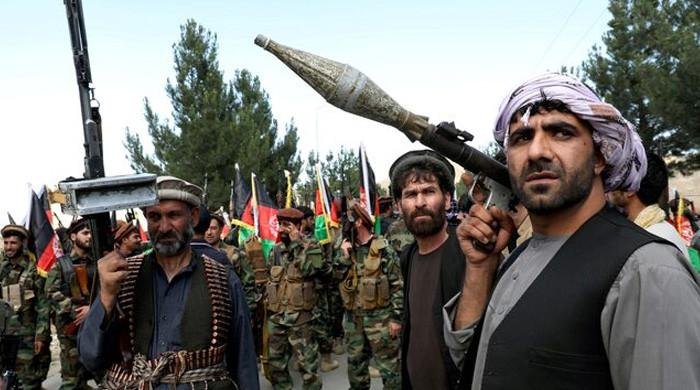
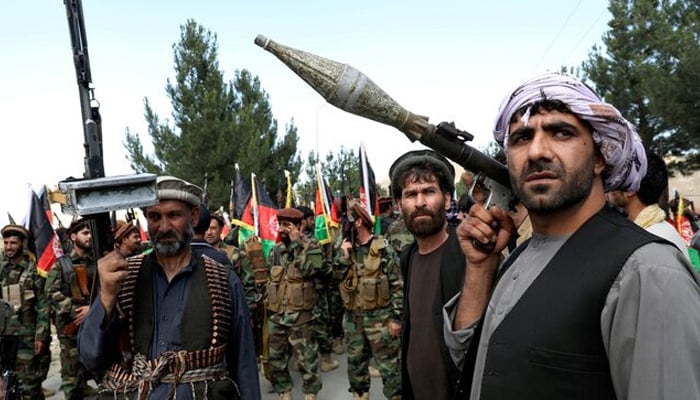
The report, titled “Documenting Arms Availability in Afghanistan”, highlights the ongoing arms trafficking in the region, revealing that both Soviet-era and NATO-pattern weapons remain accessible in informal markets despite efforts by the Taliban to control arms distribution.
Field investigations conducted between 2022 and 2024 focus on arms availability, prices, and trafficking dynamics in Afghanistan’s eastern provinces and Pakistan’s tribal districts.
The findings show that, while the Taliban have attempted to tighten civilian arms possession, weapons continue to circulate, often with the tacit approval of local Taliban officials.
These weapons are regularly diverted to non-state armed groups, including the Tehreek-e-Taliban Pakistan (TTP) and al-Qaeda, raising concerns about regional security.
As per the report, the availability of small arms, light weapons, and ammunition in the border regions has shifted significantly since the Taliban’s takeover in 2021.
The report found that NATO-pattern weapons, such as M4 and M16 rifles, have seen a substantial price increase, with M4s rising by 13% and M16s by 38% in Afghanistan’s Nangarhar and Kunar provinces.
These increases could indicate reduced supply or increased demand for these weapons in the region. In comparison, Soviet-pattern weapons, including AK-47 rifles, have remained more affordable and relatively stable in price.
While the price of NATO-pattern weapons in Afghanistan has risen, they remain cheaper in Pakistan. For instance, M4 rifles in Pakistan cost between $3,325 and $3,700, which is cheaper than in Afghanistan’s Khost and Nangarhar. M16s, on the other hand, are priced lower in Pakistan, averaging between $1,245 and $1,400, compared to $1,824–3,065 in Afghanistan.
The report highlights that the variation in prices is likely due to factors such as the weapon’s condition, origin, and whether it is a locally made or high-quality replica. These price discrepancies underscore the ongoing dynamics in the informal arms market, with different regions having varying levels of access to and demand for different types of weapons.
Research conducted between June and September 2024 focused on the areas of Khost, Kunar, Bajaur, Khyber, and North Waziristan, which are known for active smuggling routes. The study found that while prices in Pakistan remained relatively stable, the price of NATO-pattern weapons in Afghanistan fluctuated, particularly in areas like Khost and Nangarhar, where prices were higher due to increased demand from armed groups such as the TTP and the Haqqani Network.
In regions like Durbaba in Nangarhar, close to the Pakistani border, M4 rifles were sold for $3,722, significantly more expensive than the same weapon in Khyber Pakhtunkhwa in Pakistan, where it could be bought for between $3,325 and $3,700. The prices of AK-pattern rifles and RPG launchers, however, remained more stable, with slight fluctuations observed during the monitoring period.
While the Taliban’s restrictions on civilian arms possession appear to have had little impact on the availability of weapons in informal markets, the ongoing stability in arms prices in Pakistan is attributed to a combination of factors.
Local arms dealers are reportedly taking precautions to avoid detection by authorities, refraining from openly displaying NATO weapons to avoid seizures. This has led to some price stability in Pakistan, despite the backdrop of ongoing insurgent activities and counterterrorism operations such as Pakistani’s “Azm-e-Istehkam”.
A deeper look at the prices in Afghanistan and Pakistan reveals several important trends. In Afghanistan, regions like Khost and Nangarhar, which have strong militant presences, tend to have the highest prices for NATO-pattern weapons, including M4s and M16s. This may be due to the demand from armed groups operating in these regions. Conversely, in areas like Paktika and Paktia, the prices are lower, suggesting these regions may have better access to weapons or face less intense demand.
The disparity in prices between Afghanistan and Pakistan is also linked to differences in supply chains, local market conditions, and the influence of various armed groups.
For example, the Haqqani Network’s control over Khost and its smuggling routes contributes to higher prices in the region, as weapons are diverted for militant use.
