
The nuclear danger today is greater than at any time since the Cold War. The world faces the prospect of a renewed arms race, this time unconstrained by the agreements that for decades kept catastrophe at bay. It is estimated that there are now 12,241 nuclear warheads worldwide. Arms control is unravelling before our eyes: Inspections under the New START treaty, the last remaining arms control agreement between the United States and Russia, remain suspended, and with its expiration in February 2026, there is no successor in sight. The Intermediate-Range Nuclear Forces Treaty is gone, the Treaty on Open Skies has been abandoned, and the Comprehensive Nuclear-Test-Ban Treaty has still not entered into force. At the same time, the world’s geopolitical landscape is more volatile than ever.
Deep down, everyone knows nuclear weapons are a danger. We know their destructive power: Instant annihilation, radiation sickness, cancers, poisoned land, and generations of suffering. Yet the international community increasingly accepts the idea that nuclear weapons make countries safe. It is true that, at the level of geopolitics, they can provide a shield of deterrence. But on a global scale, they are a sword of Damocles hanging over all of humanity. The longer we pretend they guarantee security, the greater the danger that one day deterrence will fail. This danger is becoming even more disturbing with the growing reliance on artificial intelligence in military technologies.
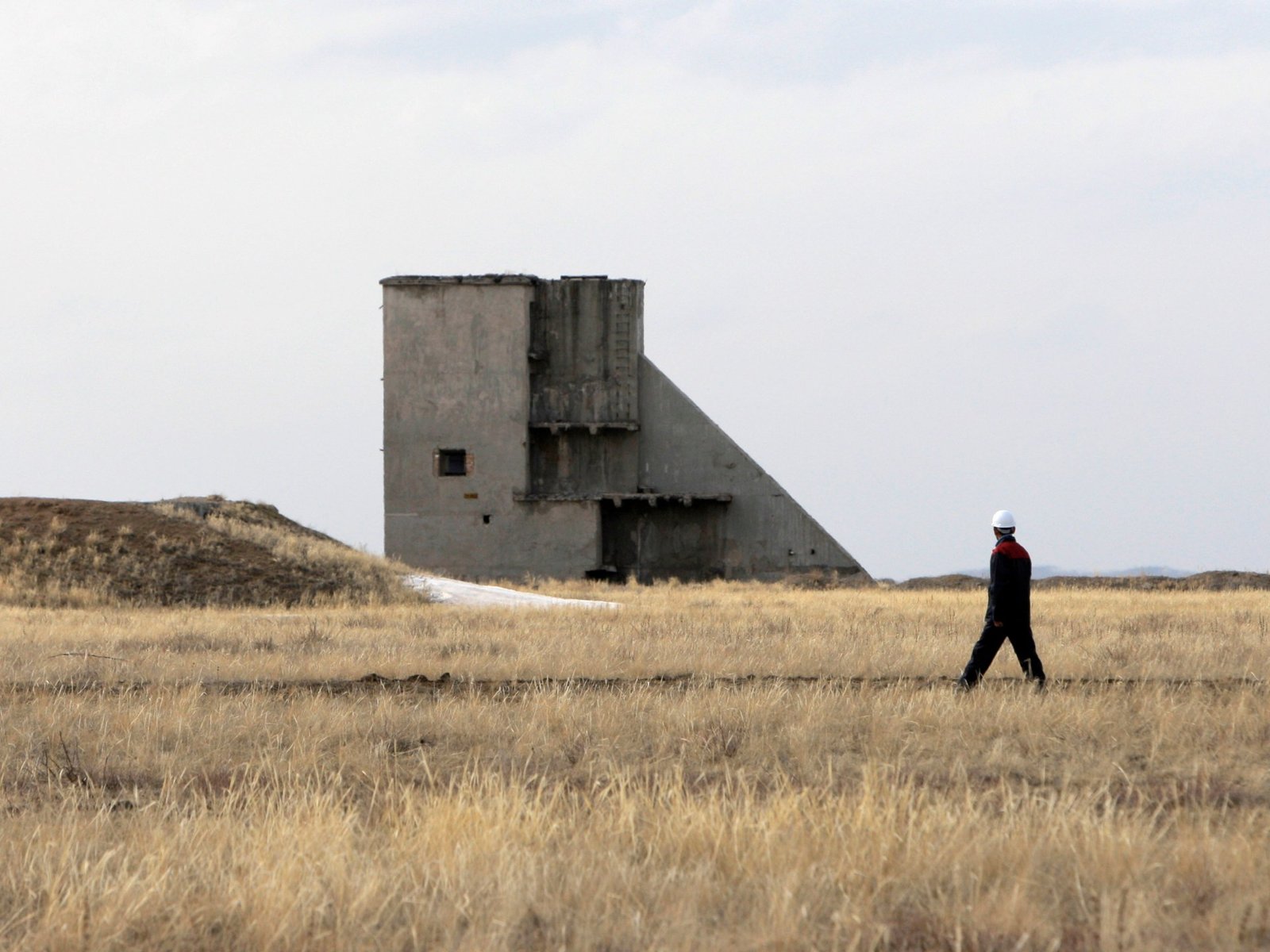
I know this danger all too well, not in theory, but in my body and in my country’s history. I was born without arms, a legacy of nuclear testing carried out by the Soviet Union in my homeland of Kazakhstan. From 1949 to 1989, more than 450 nuclear tests were conducted at the Semipalatinsk test site. More than a million people were directly exposed to radiation, and the consequences are still felt today in the third and fourth generations: Cancers, birth defects, environmental destruction, and intergenerational trauma. My own life is a testimony to the human price paid for so-called “national security”. I became an artist, painting with my mouth and feet, and an activist so my country’s tragedy will not be repeated anywhere else.
What Kazakhstan went through is the reason why, since independence, my country has been a leading proponent of nuclear disarmament. We inherited the world’s fourth-largest nuclear arsenal and chose to give it up voluntarily. We shut down the Semipalatinsk test site permanently. We established the International Low-Enriched Uranium Bank in cooperation with the International Atomic Energy Agency, creating a global backstop against nuclear fuel crises. And today, Kazakhstan is preparing to build its first nuclear power plant. This is an important distinction: Our country is not against nuclear energy, which can be harnessed peacefully to meet the growing demand for electricity and reduce carbon emissions. But nuclear weapons are a different matter entirely. They do not light homes; they only destroy them. That is why it was Kazakhstan’s initiative at the United Nations that led to the proclamation of August 29, the date on which the Semipalatinsk test site was officially closed, as the International Day against Nuclear Tests.
Kazakhstan has done its part. But this fight is bigger than us. The world needs much wider support if we are to reduce the risk posed by nuclear weapons. I acknowledge that the dream of a world free of nuclear weapons may feel distant today. But there are concrete steps the international community can take right now to reduce the danger, if only the will can be found.
First, we must address the madness of keeping thousands of warheads on hair-trigger alert. About 2,100 nuclear weapons remain on short-notice alert, with leaders given only minutes to decide whether to unleash them. In such a compressed timeframe, the risk of false alarms, technical glitches, or even AI-driven misjudgments grows intolerably high. De-alerting these weapons is the most obvious near-term risk-reduction step. Human survival should not rest on a rushed decision made in mere moments.
Second, nuclear-armed states must publicly reaffirm their moratorium on nuclear testing, regardless of treaty politics. If they cannot yet ratify the Comprehensive Nuclear-Test-Ban Treaty, they should at least pledge never to test again. That is the bare minimum owed to the victims of past testing, from Semey to the Pacific and beyond.
Third, we must reaffirm the humanitarian principle that nuclear weapons are inhumane by their very nature. That is the moral heart of the Treaty on the Prohibition of Nuclear Weapons. Even if governments cannot yet sign or ratify it, they can embrace its spirit, recognising that no state, no people, can ever respond adequately to the detonation of a nuclear device in a populated area.
Fourth, the world must prevent new frontiers of nuclear danger. We must reaffirm the ban on nuclear weapons in orbit, ensuring that outer space remains free of these doomsday devices. And all states should commit that decisions on nuclear use will never be delegated to artificial intelligence.
Finally, we must fight the greatest danger of all: Forgetting. Each August 29, we should not only mark the International Day against Nuclear Tests but also commit to education and remembrance. Every schoolchild should know what happened at Semey, at Hiroshima and Nagasaki, at Bikini Atoll. Only when the world remembers our suffering will it choose never to repeat it.
The vision of a world free of nuclear weapons is not naive, and it is not impossible. Kazakhstan showed what is possible when it closed the Semipalatinsk test site and renounced its nuclear arsenal. If a nation that endured hundreds of nuclear tests could choose a nuclear-weapon-free path, others can too. The question is whether humanity has the courage to do it.
The views expressed in this article are the author’s own and do not necessarily reflect Al Jazeera’s editorial stance.
