

Close Menu

    Subscribe to Updates

    Get the latest creative news from FooBar about art, design and business.

    What's Hot

    David Krumholtz is quitting acting after decades in Hollywood: ‘Fed up’

    August 19, 2026

    Jonas Brothers reignite ‘Burning Up’ era with 45-city tour

    August 19, 2026

    CDA moves to unlock Islamabad’s property revenue

    August 19, 2026
    Facebook X (Twitter) Instagram
    • Home
    • Politics
    • News
    • Magazines
    Facebook X (Twitter) Instagram
    Login
    22Media22Media
    Subscribe
    • Home
    • News
      • Pakistan News
      • World News
      • Amazing News
      • Only On 22
    • Sports
    • Bussiness
    • Innovation
      • Health & Sciences
      • Technology
    • Culture
      • Crime & Justice
      • Entertainment
    • Politics
    • Magazines
    • Weather
    • Video
    • Live
    22Media22Media
    Home»News»Pakistan News»Hunza’s differently-abled artisans keep ‘Sharma’ tradition alive — a rug woven from goat hair
    Pakistan News

    Hunza’s differently-abled artisans keep ‘Sharma’ tradition alive — a rug woven from goat hair

    22febdm@gmail.comBy 22febdm@gmail.comNovember 14, 2025No Comments4 Mins Read
    Facebook Twitter Pinterest LinkedIn Tumblr Email
    Share
    Facebook Twitter LinkedIn Pinterest Email

    A dedicated team of intellectually disabled individuals sorts goat hair to create traditional rugs the Sharma way at Hunarkun Foundation in Hunza.— Reporter
    A dedicated team of intellectually disabled individuals sorts goat hair to create traditional rugs the Sharma way at Hunarkun Foundation in Hunza.— Reporter

    In the mountains of Hunza, a group of special artisans is quietly preserving a vanishing piece of the region’s heritage — the Sharma, a traditional hand-woven rug made from goat hair.

    Sharma, once a common household item in Hunza, is now becoming rare, with only a handful of people still keeping the craft alive.

    When Geo Digital explored this fading tradition, it discovered a small centre in Hunarkun, Hunza, where people with disabilities are working tirelessly to protect it.

    Established in 1966 by a local organisation, the centre trains special individuals in different crafts to help them become self-reliant and confident. They are also paid for their work — a gesture of appreciation for their skills and dedication.
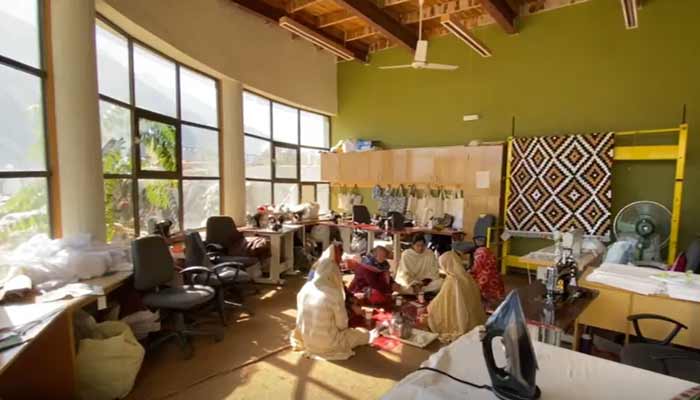
    Differently-abled women engage in their daily tasks at the KADO Rehabilitation Centre in Hunza. — Reporter
    Differently-abled women engage in their daily tasks at the KADO Rehabilitation Centre in Hunza. — Reporter

    Among them is 52-year-old Karim, who lives with an intellectual disability and plays a key role in making the Sharma, shared how proud he feels to contribute to his culture.
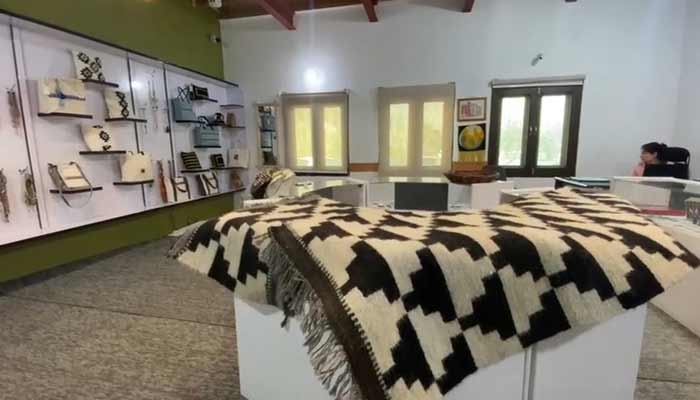
    Sharma, Hunza’s traditional goat hair rug, is displayed alongside hand embroidered cultural pieces.— Reporter
    Sharma, Hunza’s traditional goat hair rug, is displayed alongside hand embroidered cultural pieces.— Reporter

    “I feel happy when I work with my hands,” he said, adding, “The money is nice, but the real joy comes from knowing I’m helping to keep our culture alive. If we don’t protect it, this heritage will disappear.”

    Sultan Azam, who supervises the artisans, explained that making a Sharma is a detailed process.

    “It starts with collecting goat hair, which is then washed, dried, and sorted. After that, it’s spun into thick yarn — called Talow in the local Burushaski language — by a blind craftsman named Ishaq,” he said.
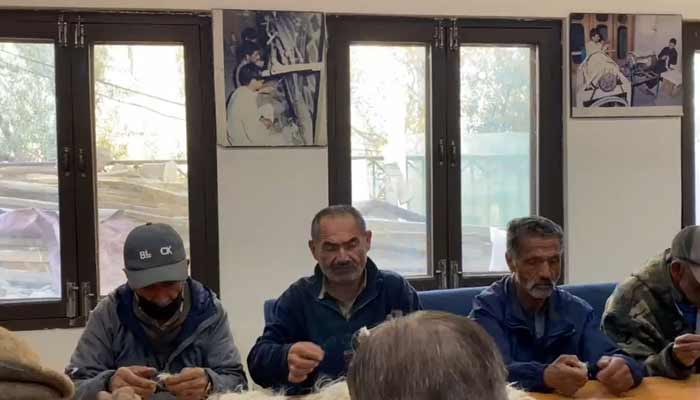
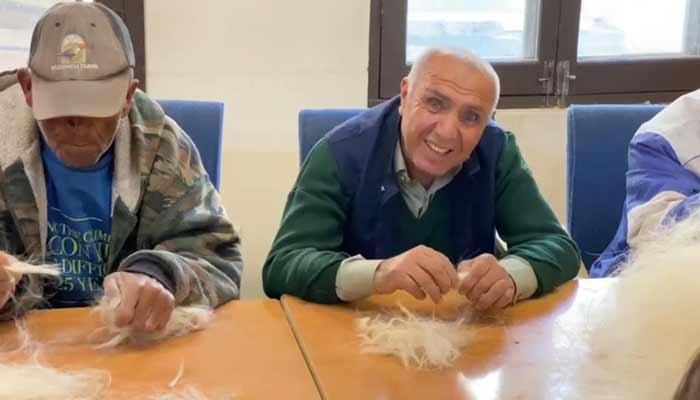
    Intellectually disabled men engage in their daily tasks at the KADO Rehabilitation Centre in Hunza.— Reporter
    Intellectually disabled men engage in their daily tasks at the KADO Rehabilitation Centre in Hunza.— Reporter

    Once the yarn is ready, the spinning and weaving stages begin. Each person is assigned a role based on their abilities.

    “Every person’s weakness becomes their strength here,” Azam explained. “For instance, blind artisans have such sensitive hands that they can work as precisely as sighted craftsmen. Those with intellectual disabilities help with sorting and handling materials, while trained artisans handle the weaving tools.”

    Azam shared that the Sharma rugs are a big part of Hunza’s cultural identity.

    “In the old days, every home had a Sharma — used as a floor rug, placed under tables, or at doorways to welcome guests. Some were even hung on walls as a decorative piece. You can still see them in Hunza’s historic Altit and Baltit forts.”
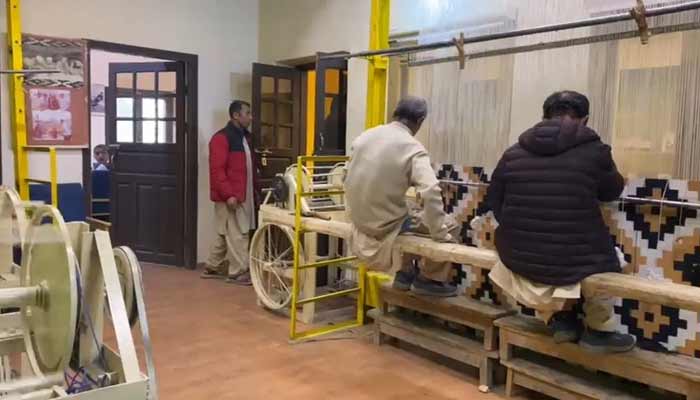
    Men make rug with processed goat hair.— Reporter
    Men make rug with processed goat hair.— Reporter 

    Made from black, brown, and white goat hair, these rugs are known for their durability and beauty — often selling for thousands, sometimes even hundreds of thousands of rupees.

    “The demand for brown and black Sharma is especially high,” Azam said. “That’s because goats with such hair are becoming rare, and finding their hair is a challenge.”

    Women also play a vital role in preserving Hunza’s traditional crafts. Many create intricate hand embroidery pieces displayed alongside Sharma rugs at the centre.

    Khushhan Bano, 44, who also lives with an intellectual disability, takes immense pride in her delicate hand embroidery.
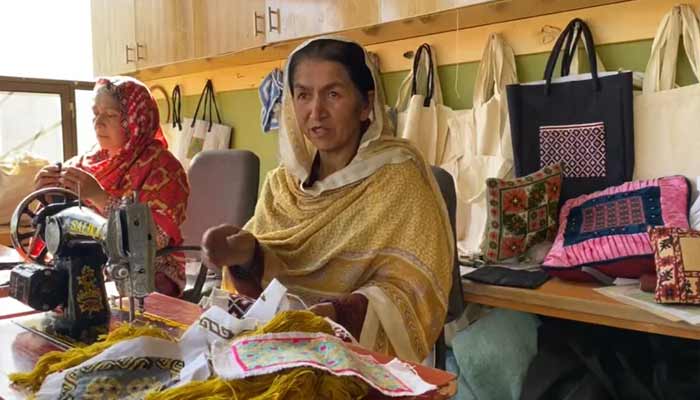
    Khushan Bano, an intellectually disabled woman, earns her livelihood through hand embroidery while helping preserve her cultural heritage.— Reporter
    Khushan Bano, an intellectually disabled woman, earns her livelihood through hand embroidery while helping preserve her cultural heritage.— Reporter 

    “People often say, ‘Why do this by hand when machines can do it?’ But the designs I make can’t be created by a machine,” she said. “It’s very fine, detailed work — and I love doing it.”

    She added that being able to contribute to her culture gives her a deep sense of joy and purpose.

    Today, their handmade rugs and embroidered pieces are displayed for tourists visiting the centre — each item telling a story of resilience, creativity, and pride.

    These special artisans of Hunza are more than just craftspeople — they are the heartbeat of a culture that refuses to fade away.

    Share. Facebook Twitter Pinterest LinkedIn Tumblr Email
    22febdm@gmail.com
    • Website

    Related Posts

    Govt to seek review of SC order on Imran’s hospital transfer: law minister

    August 18, 2026

    Mir Raza case: No ‘major progress’ as police await further details of chemical report

    August 18, 2026

    PM Shehbaz inaugurates Google’s Pakistan office, calls it ‘beautiful new journey’

    August 18, 2026
    Add A Comment
    Leave A Reply Cancel Reply

    Demo
    Our Picks
    • Facebook
    • Twitter
    • Pinterest
    • Instagram
    • YouTube
    • Vimeo
    Don't Miss
    Entertainment

    David Krumholtz is quitting acting after decades in Hollywood: ‘Fed up’

    By 22febdm@gmail.comAugust 19, 20260

    David Krumholtz is quitting acting after decades in Hollywood: ‘Fed up’David Krumholtz says he’s walking…

    Jonas Brothers reignite ‘Burning Up’ era with 45-city tour

    August 19, 2026

    CDA moves to unlock Islamabad’s property revenue

    August 19, 2026

    Attackers go ‘house to house’ killing 25 villagers in central Nigeria | Newsfeed

    August 19, 2026

    Subscribe to Updates

    Get the latest creative news from SmartMag about art & design.

    22Media
    Facebook Instagram YouTube WhatsApp
    • Home
    • Politics
    • News
    • Magazines
    © 2026 22Media. Designed by AleemSoft Hub.

    Type above and press Enter to search. Press Esc to cancel.

    Sign In or Register

    Welcome Back!

    Login to your account below.

    Lost password?