

Today, as we mark World Humanitarian Day, we must reflect on the state of humanitarianism. Humanitarian work has always been framed upon the collective assumption that there are lines that should never be crossed, even in wars.
For a generation, we had binding international agreements that treated the act of protecting a child in need of food or a medic treating the sick and wounded as a fundamental legal right.
Today, the consensus and meaning behind these laws are gone.
Too many governments are no longer consistently defending the rules-based order that they helped create. When it suits them, some are openly disregarding international law. Others are applying it selectively, condemning their adversaries for violations while tolerating the same behaviours by their allies. Many more are simply remaining silent at times when condemnation and action are required.
When governments feel that their own geopolitical and domestic interests are more important than their legal obligations, our rules-based humanitarian system becomes diminished and corrupted. Enforcement becomes inconsistent. Tolerance of excessive civilian casualties becomes routine. And anything becomes permissible, including the unthinkable.
Today, impunity is being allowed to flourish. Bad actors feel more empowered to break the laws that exist to make us all safer because they know they won’t be held to account.
This matters because humanitarian crises do not emerge in a vacuum. Instead, they are the direct results of these kinds of transactional political choices.
In this worldview, the protection of civilians and aid workers is no longer understood as a universal obligation as much as a commodity – something that can be bargained, withheld or selectively applied. Protection becomes a political investment that demands a political return.
We can measure the consequences of this in people’s lives.
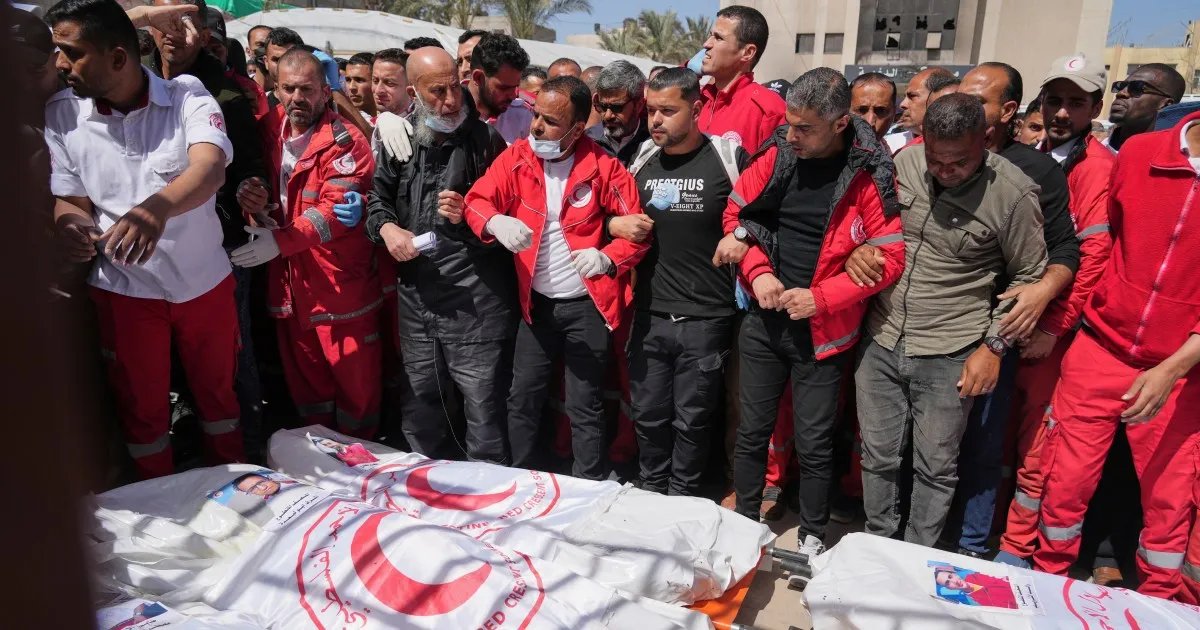
At least 1,000 aid workers have been killed in the past three years, nearly triple the toll of the previous three. In 2025, there were hundreds of attacks on humanitarian operations and 350 aid workers killed, 322 injured and 235 kidnapped according to the UN.
At Oxfam, we have lost five colleagues and partner staff in eight years and had more than 1,300 of our people caught up in at least 1,200 security incidents.
The killing of aid workers often happens in places where the belligerents are armed, funded or shielded by the same governments that are actually funding a humanitarian response.
But failing protection is not the only challenge humanitarian work faces today. Often, states impose unnecessary restrictions that prevent aid workers from carrying out their duties.
Last December, Israeli authorities told Oxfam and 36 other international organisations that in order to continue to provide humanitarian relief in Gaza and the West Bank, they had to hand over information including the personal details of staff.
These demands went against the rights and safety of our colleagues. All 37 organisations refused and were deregistered.
Israel’s actions could not immediately end our ability to reach people because we are legally entitled to operate under our registration with the Palestinian Authority (PA). But this has significantly affected our work, as we are not allowed to bring goods in and we rely on local goods, which have been inflated in price due to the war and scarcity.
Humanitarian work is also threatened by ever-dwindling funding. This year, the G7 countries made the biggest aid cuts in history – slashing development assistance by nearly a third in 2026 compared with 2024. This is despite humanitarian needs worsening, as in the Democratic Republic of the Congo that is facing the fastest-growing Ebola outbreak on record, or in Sudan where people are dying of famine.
These funding cuts are a political choice, as are vetoes of UN Security Council action and decisions to override the binding rulings of international courts, defund UN agencies, militarise humanitarian delivery, or politicise distribution schemes run by parties to a conflict.
International humanitarian law is universal and binding. Civilians must be protected and relief facilitated. Starvation must not be used as a weapon. Aid workers, hospitals, water systems, schools and shelters must never be attacked.
Every attack on a humanitarian worker should trigger an independent investigation and, when a crime is proven, prosecution. UNSC Resolution 2730 demanded exactly this two years ago.
The selection of the next UN secretary-general will be a good test of our collective responsibility. This process must bring about genuine accountability against those who violate international law. We need to restore respect for the norms that safeguard us all.
World Humanitarian Day is about remembering all humanitarian workers who lost their lives while caring for others.
But remembrance without accountability and action becomes a tolerance of the unjustifiable. We must do better: #protectaidworkers
The views expressed in this article are the author’s own and do not necessarily reflect Al Jazeera’s editorial stance.
