 Pakistan · World · Independent Digital Newsroom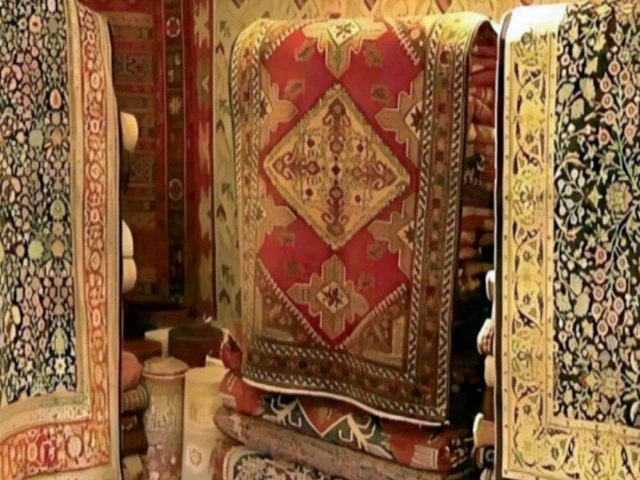
"This industry has a lot of potential, which, if utilised, can further increase exports."He said every kind of support was being given to the sector and would be expanded.
"Every single dollar is extremely valuable for Pakistan," he said, adding that export promotion was being given special priority.
He also said the industry must move towards innovation and the gap between the public and private sectors must be bridged.The remarks come at a time when the sector needs a push.
According to UN Comtrade data, Pakistan's exports of carpets and other textile floor coverings were about $57 million in 2024.
That is a small amount when seen against the country's total exports of $30.1 billion in the last fiscal year, and against textile exports of $17.9 billion.Data from the Pakistan Bureau of Statistics shows carpet and rug exports fell by more than 20% in 2025-26, even as some other export categories grew.Yet the product has a long history behind it.
Carpet weaving in this region is closely linked to the Mughal era, when rulers brought skilled weavers from Persia and Central Asia and encouraged the craft in royal workshops.
Lahore became one of the main centres, and the city still has many of the factories and exporters in the trade today.Pakistani carpets are knotted by hand, one row at a time, on looms that can take weeks or even months to finish a single large piece.
Weavers use wool, silk or a mix of both.
The most popular styles include Persian-inspired floral patterns, Bukhara designs with repeating rows of geometric shapes, and Afghan and tribal patterns in deep red and brown shades.
Because each piece is made by hand, no two carpets are exactly alike, which is a major reason why buyers abroad pay higher prices for them than for machine-made rugs.The industry also supports many households, particularly in the rural parts of Punjab, where weaving skills are passed from one generation to the next.
Unlike many other export items, handmade carpets depend mostly on local labour and local raw material, so a large part of the money earned from them stays in the country.Exporters say the opportunity is there, but they need support in areas such as marketing, modern designs and easier travel for foreign buyers.
"We are hopeful that large-scale export deals at the exhibition will strengthen this industry," said Senior Vice Chairman of the Pakistan Carpet Manufacturers Association, Khawaja Mir Mudassir, at the event.
"The interest foreign buyers have shown in Pakistani products has boosted our morale," he added.Chadhar, however, said that the authorities were aware of the challenges facing the industry, including visa-related problems raised at the event, and that efforts were underway to resolve them as soon as possible.The three-day exhibition has drawn a large number of buyers from the United States, Germany, Turkiye, China, Russia, Sweden and other countries.