
 Pakistan · World · Independent Digital Newsroom
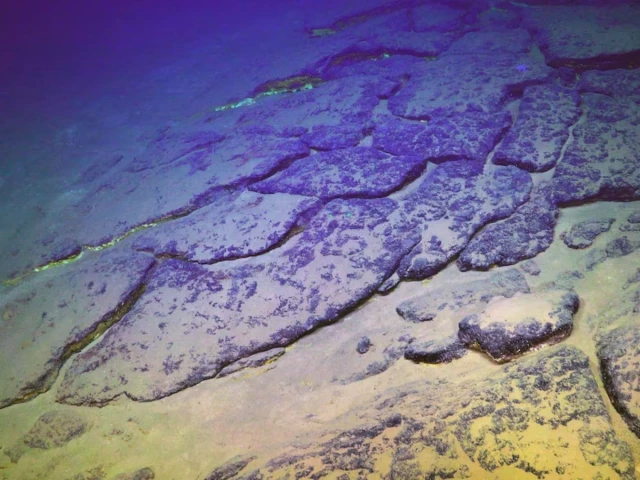
They used the ROV to study the trench walls around the deepest-known point of seabed on Earth, called the Challenger Deep.The ROV observed and collected pyroclastic rocks, telltale evidence of an explosive volcanic eruption composed of ejected rock fragments and volcanic glass."The key findings are the discovery of recent igneous activity near the trench," said geologist Robert Stern, a professor emeritus at the University of Texas at Dallas and a….
The trench is the surface manifestation of a subduction zone, the boundary where one plate dives beneath another plate.The surface above the subduction zone typically has big volcanoes, but these are generally located about 125 to 185 miles (200 to 300 km) from the trench.
The pyroclastic rocks that the researchers discovered were in the trench itself.The ROV explored along 340 miles (550 km) of a geological structure called a forearc that is part of the upper plate between the trench and a line of volcanoes on the seafloor, near the Challenger Deep."The ROV was our principal research tool used for looking at and collecting samples from the seafloor down to 6,500 meters (4 miles),"….
"We had a total of 10 dives, 7 of which were in the forearc around the Challenger Deep.
The other 3 were in shallower waters near Guam because of weather conditions."The rocks collected by the ROV contained broken pieces of rock and volcanic glass cemented in a relatively strong matrix of finer-grained material."This is unmistakably the product of a volcanic eruption.
We did not see any eruption, and we have not yet found the vents from which the pyroclastic rocks erupted," Stern said.The age of the rocks is not yet known, but they appear to be recent, in geological terms, Stern said.The researchers are trying to understand how these explosive eruptions occurred at such depths, considering the vast water pressure at the volcanic sites."The intense pressures at the depths that these….
Evidence of deepest explosive volcanic eruption found in Pacific trench Reuters | Updated 3 minutes ago | Researchers deployed the Jason/Medea ROV to explore walls near the Mariana Trench's deepest point.