


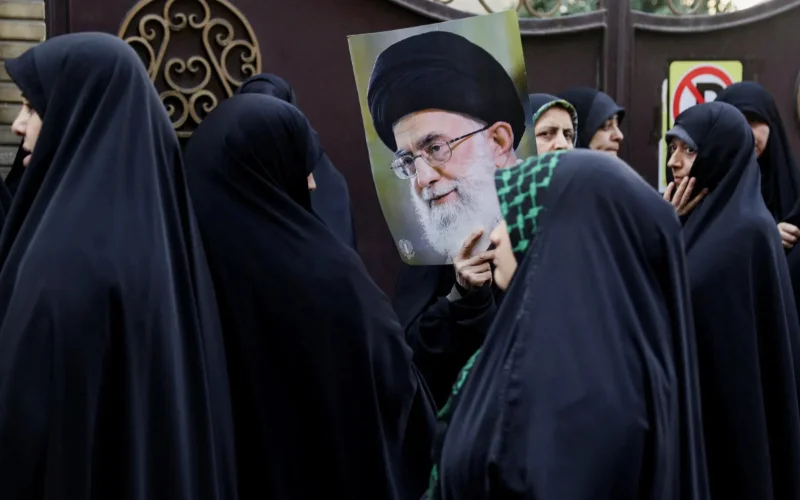
Over two weeks of widespread protests have erupted across Iran, marking the most significant domestic challenge to the Islamic Republic in years. Initially sparked by economic grievances, the demonstrations have evolved into calls for fundamental political change, questioning the rule of Supreme Leader Ayatollah Ali Khamenei, who has been in power since 1989 and is now 86.
According to rights groups, the authorities’ crackdown has left hundreds dead, but the Supreme Leader’s hold on power remains firm. The protests began at Tehran’s bazaar on December 28 and quickly spread to other cities, echoing previous waves of unrest following the death of Mahsa Amini in 2022 and disputed elections in 2009.
An imposed internet blackout has hampered efforts to gauge the full scale of the unrest, making it difficult to assess the scope of demonstrations nationwide.
Economic and Political Drivers
Iran’s economic situation has deteriorated over recent years due to decades of sanctions, inflation, and infrastructure problems. Recent U.S. and Israeli military actions against Iran’s nuclear facilities further exacerbated economic pressures, leading to currency devaluation and rising living costs.
Unlike past protests focused solely on economic conditions, the current wave includes political demands. Citizens from both the middle and lower classes are calling for reform, including an end to theocratic rule.
While President Masoud Pezeshkian, seen as more reform-oriented than his predecessor, offered small financial assistance to ease public grievances, the Supreme Leader has taken a hardline stance, deploying security forces to restore order and accusing protesters of acting on foreign influence.
Russia-Iran Relations and Limitations
Iran has strengthened its ties with Russia over decades, particularly through military cooperation in Syria and support for Russia in its war in Ukraine. Last year, both countries signed a 20-year strategic partnership agreement.
However, analysts caution that this partnership is not a military alliance. Iran cannot rely on Russia to intervene in the event of an attack by the U.S. or Israel. Russia’s focus remains on Ukraine, and it has shown reluctance to jeopardize relationships with other Middle Eastern powers.
The idea of a coordinated anti-Western “CRINK” axis involving China, Russia, Iran, and North Korea is considered exaggerated. While these countries cooperate economically and politically to varying degrees, they lack the joint military coordination or institutional alignment to form a cohesive bloc.
The Possibility of U.S. Intervention
U.S. President Donald Trump has signaled a readiness for strong action against Iran if the regime violently suppresses protests. Potential intervention would likely involve targeted aerial strikes rather than a full-scale ground operation, aiming for symbolic impact and diplomatic leverage rather than occupation.
However, military action carries high risks. Analysts warn it could escalate violence, worsen civilian suffering, and destabilize the region, while public opinion in the United States is largely opposed to direct military involvement. Even regional powers such as Saudi Arabia have urged restraint to avoid broader economic and security consequences.
Trump’s approach appears driven more by a desire to assert global influence and project strength than by a consistent foreign policy principle. His rhetoric positions him as a “world policeman,” particularly regarding Iran, but practical implementation may be limited to sanctions and shows of force.
Global and Geopolitical Implications
Iran’s current unrest has implications beyond its borders. The possible weakening or collapse of the regime could disrupt Russia’s strategic position in the Middle East, undermining its narrative of an anti-Western alliance. It also plays into U.S. geopolitical ambitions, echoing a modern “domino theory” aimed at expanding American influence in strategically important regions.
Yet, analysts emphasize that the survival of the Iranian regime will depend primarily on internal dynamics economic pressures, public dissatisfaction, and the government’s ability to maintain control rather than external military intervention.
Iran stands at a critical juncture. Widespread economic hardship and political dissent have converged, sparking protests that could reshape the country’s political landscape. While outside powers like the United States, Israel, and Russia have stakes in the situation, the outcome will largely be determined by domestic forces.
As the protests continue, Iran’s future remains uncertain: the regime could consolidate power through repression, adapt through reform, or face long-term destabilization. Meanwhile, the international community watches closely, weighing the risks of intervention against the consequences of inaction.
