


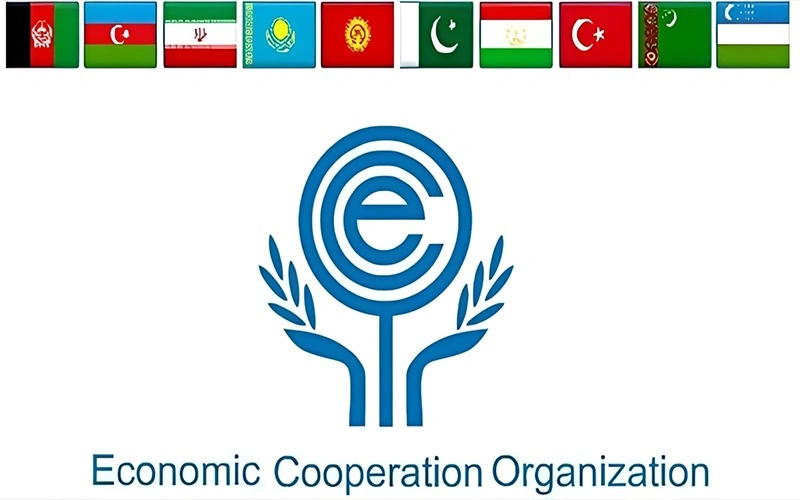
ISLAMABAD: A market of more than 500 million people is still trading far below its potential, prompting ECO business leaders and officials to push for faster connectivity, easier trade and stronger private-sector ties across the region.
At a high-level meeting of the ECO Chamber of Commerce and Industry (ECO-CCI), FPCCI President and ECO-CCI President Atif Ikram Sheikh called for practical steps to remove trade barriers, simplify customs procedures and improve business mobility among member countries.
Sheikh said the region’s strategic location and abundant resources provide significant opportunities for trade and investment, but weak connectivity and regulatory hurdles continue to limit intra-regional commerce.
He called for the revival of regional road and rail links, including the ECO Train, as well as stronger business-to-business engagement. He also proposed an ECO-CCI Action Agenda for 2026-27, with specific initiatives assigned to member chambers and mechanisms to monitor progress.
Sheikh urged ECO members to move beyond conventional trade and develop joint production and regional value chains in agriculture and food processing, textiles, minerals, energy, engineering, pharmaceuticals and information technology.
Read More: Iranian business leaders call for new era of economic cooperation with Pakistan
He also called for greater support for small and medium-sized enterprises, women entrepreneurs and tourism, along with regular ECO trade exhibitions and B2B forums to connect businesses across member countries.
ECO Secretary-General Ambassador Asad Majeed Khan said intra-regional trade remains constrained by tariff and non-tariff barriers, customs and logistical bottlenecks, limited business-to-business interaction and payment-related challenges.
Majeed Khan briefed participants on recent ECO initiatives involving trade facilitation, the Economic Cooperation Organization Trade Agreement, customs cooperation, transportation and business mobility.
He emphasized the role of ECO-CCI and national chambers in sharing trade information, creating business linkages and identifying commercial opportunities. He also encouraged the organization of a major ECO Trade Fair or Expo and stronger institutional capacity for ECO-CCI.
Representatives of national chambers from Afghanistan, Azerbaijan, Iran, Kazakhstan, Kyrgyz Republic, Pakistan, Tajikistan, Türkiye, Turkmenistan and Uzbekistan shared recommendations for expanding economic cooperation.
They called for regular regional exhibitions, sector-specific B2B meetings, stronger trade and investment promotion, improved transportation and visa facilitation, and closer engagement among business communities.
The meeting focused on turning regional economic potential into measurable trade and investment opportunities through stronger connectivity, practical trade reforms and greater private-sector cooperation.
