

Close Menu

    Subscribe to Updates

    Get the latest creative news from FooBar about art, design and business.

    What's Hot

    NICVD completes 500 free pediatric heart rhythm procedures

    August 7, 2026

    NICVD completes 500 free pediatric heart rhythm procedures

    August 7, 2026

    Bilawal strongly rejects ‘system failure’ narrative, calls for reform

    August 7, 2026
    Facebook X (Twitter) Instagram
    • Home
    • Politics
    • News
    • Magazines
    Facebook X (Twitter) Instagram
    Login
    22Media22Media
    Subscribe
    • Home
    • News
      • Pakistan News
      • World News
      • Amazing News
      • Only On 22
    • Sports
    • Bussiness
    • Innovation
      • Health & Sciences
      • Technology
    • Culture
      • Crime & Justice
      • Entertainment
    • Politics
    • Magazines
    • Weather
    • Video
    • Live
    22Media22Media
    Home»Innovation»Health & Sciences»Ebola had ‘big head-start’ but response catching up: WHO
    Health & Sciences

    Ebola had ‘big head-start’ but response catching up: WHO

    22febdm@gmail.comBy 22febdm@gmail.comJune 3, 2026No Comments4 Mins Read
    Facebook Twitter Pinterest LinkedIn Tumblr Email
    Share
    Facebook Twitter LinkedIn Pinterest Email

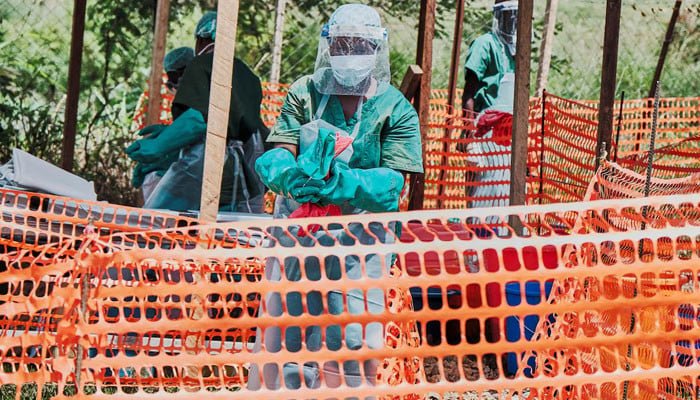
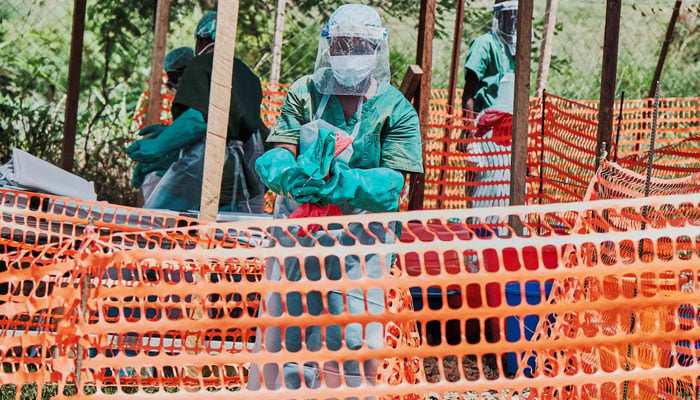
    Medical team from the Alliance for International Medical Action, an international NGO, set up a treatment centre for the Ebola response, as agencies intensify efforts to contain a new Ebola outbreak caused by the Bundibugyo virus strain, in Rwampara outside Bunia, Ituri province, Democratic Republic of Congo, May 29, 2026. — Reuters
    Medical team from the Alliance for International Medical Action, an international NGO, set up a treatment centre for the Ebola response, as agencies intensify efforts to contain a new Ebola outbreak caused by the Bundibugyo virus strain, in Rwampara outside Bunia, Ituri province, Democratic Republic of Congo, May 29, 2026. — Reuters

    The Ebola outbreak raging in central Africa had a “big head-start”, the World Health Organisation chief acknowledged Wednesday, but insisted efforts to rein in the deadly virus were making progress.

    The outbreak, which was declared on May 15 in the northeastern Democratic Republic of Congo, has so far been confirmed to have infected 359 people, including 61 who have died.

    But the actual numbers could be far higher, with the virus believed to have been spreading under the radar for some time before it was detected.

    “The outbreak had a big head-start and we’re still behind,” WHO chief Tedros Adhanom Ghebreyesus told reporters at the UN health agency’s headquarters in Geneva, but insisted that “we’re catching up”.

    Tedros, who had just returned from a trip to DRC, where he travelled to the outbreak’s epicentre in Ituri province, said he had been “very encouraged by the level of commitment I saw everywhere I went”.

    But challenges remain, he said, warning that “the virus is ahead of us… we need to move faster”.

    It has been clear from the start that the difficulties would be daunting, with the outbreak concentrated in Ituri, where decades of armed conflicts have forced millions of people from their homes and into crowded camps.

    Ebola patient visited UAE

    The region’s insecurity, limited testing capacity, lagging contact tracing and mistrust among some of the population are among the challenges facing the response, Tedros said.

    On top of that, no vaccine or approved treatment exists for Bundibugyo, the rare strain of Ebola behind the current outbreak.

    Ebola, which is passed on through close contact and bodily fluids, has killed more than 15,000 people in Africa over the past 50 years.

    The current outbreak — the 17th to hit the DRC — has to date seen 344 confirmed Ebola cases across three of the country’s provinces, including 60 deaths, said the WHO.

    The UN health agency also tallied 116 suspected cases of the disease.

    Fifteen cases, including one death, have also been reported in neighbouring Uganda, including a Congolese resident who had arrived there after first travelling to the United Arab Emirates, Tedros said.

    “WHO is working with public health authorities in Uganda and the UAE to gather additional information, assess the risk of exposure during travel, and to facilitate contact tracing,” he said.

    Speed up contact tracing

    The agency has said the risk from the outbreak is “very high” at the national level, “high” at the regional level, and “low” at the global level.

    Tedros stressed Wednesday that while the WHO recommends exit screening at airports, ports and border crossings in affected countries to prevent the spread of the virus, broader limits were unhelpful.

    “Blanket travel restrictions imposed by some countries are disrupting supply chains and hindering the response,” he warned.

    “We ask countries that have imposed blanket travel restrictions to lift them.”

    Reining in the outbreak would instead centre on significantly bolstering and speeding up the response on the ground, including by decentralising laboratory testing in Ebola hotspots, Tedros said.

    At present, only around 45% of known contacts of Ebola cases have been followed up, the WHO chief said.

    “To get ahead of the outbreak, we need to get that number up to above 90%.”

    Abdi Rahman Mahamud, the WHO’s emergency alert and response director, told reporters that so far, more than 1,400 tests had been conducted.

    But decentralisation across five priority locations — Mongbwalu, Beni, Aru, Nyakunde and Tchomia — should soon make it possible “to do 1,000 tests a day”.

    Share. Facebook Twitter Pinterest LinkedIn Tumblr Email
    22febdm@gmail.com
    • Website

    Related Posts

    Australia confirms first mass death of seabirds from H5N1 bird flu

    August 3, 2026

    Health experts urge Pakistan to conduct first nationwide HIV survey

    July 28, 2026

    Finance minister-led committe approves prices of 52 life-saving drugs

    July 25, 2026
    Add A Comment
    Leave A Reply Cancel Reply

    Demo
    Our Picks
    • Facebook
    • Twitter
    • Pinterest
    • Instagram
    • YouTube
    • Vimeo
    Don't Miss
    Politics

    NICVD completes 500 free pediatric heart rhythm procedures

    By 22febdm@gmail.comAugust 7, 20260

    KARACHI: National Institute of Cardiovascular Diseases (NICVD) has completed 500 successful pediatric electrophysiology procedures, marking…

    NICVD completes 500 free pediatric heart rhythm procedures

    August 7, 2026

    Bilawal strongly rejects ‘system failure’ narrative, calls for reform

    August 7, 2026

    Armenian Apostolic Church leader faces trial as feud with PM deepens | Courts News

    August 7, 2026

    Subscribe to Updates

    Get the latest creative news from SmartMag about art & design.

    22Media
    Facebook Instagram YouTube WhatsApp
    • Home
    • Politics
    • News
    • Magazines
    © 2026 22Media. Designed by AleemSoft Hub.

    Type above and press Enter to search. Press Esc to cancel.

    Sign In or Register

    Welcome Back!

    Login to your account below.

    Lost password?