

Close Menu

    Subscribe to Updates

    Get the latest creative news from FooBar about art, design and business.

    What's Hot

    Contaminated water putting Gaza families at risk | Newsfeed

    August 7, 2026

    Tommy Detamore’s wife mourns ‘love of my life’ after country star’s death

    August 7, 2026

    Govt cuts petrol and diesel prices

    August 7, 2026
    Facebook X (Twitter) Instagram
    • Home
    • Politics
    • News
    • Magazines
    Facebook X (Twitter) Instagram
    Login
    22Media22Media
    Subscribe
    • Home
    • News
      • Pakistan News
      • World News
      • Amazing News
      • Only On 22
    • Sports
    • Bussiness
    • Innovation
      • Health & Sciences
      • Technology
    • Culture
      • Crime & Justice
      • Entertainment
    • Politics
    • Magazines
    • Weather
    • Video
    • Live
    22Media22Media
    Home»News»Amazing News»Dancing turtles show how animals use magnetic field as a map
    Amazing News

    Dancing turtles show how animals use magnetic field as a map

    22febdm@gmail.comBy 22febdm@gmail.comFebruary 12, 2025No Comments3 Mins Read
    Facebook Twitter Pinterest LinkedIn Tumblr Email
    Share
    Facebook Twitter LinkedIn Pinterest Email

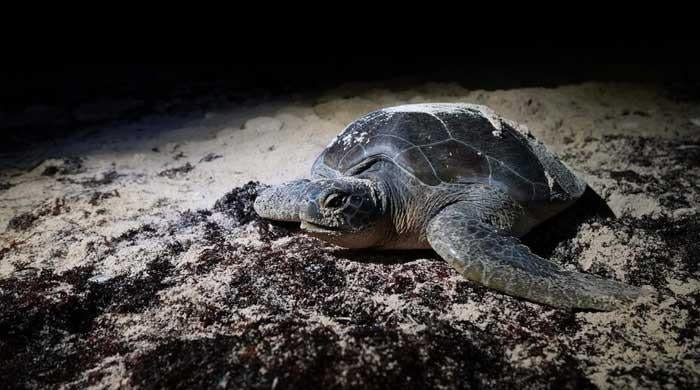
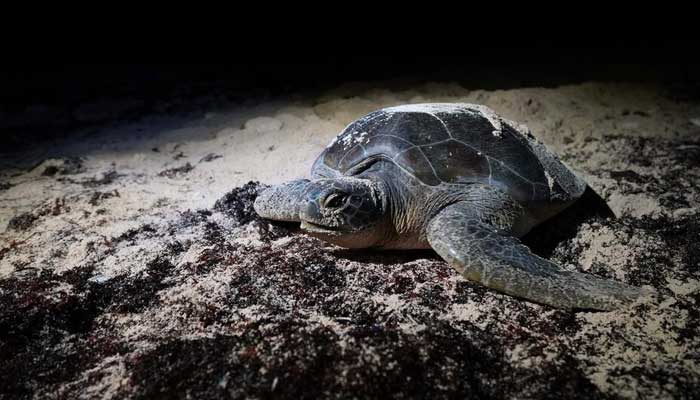
    A green sea turtle returns to the sea after laying eggs on the beach in Guanahacabibes Peninsula, Cuba, June 28, 2022. — Reuters
    A green sea turtle returns to the sea after laying eggs on the beach in Guanahacabibes Peninsula, Cuba, June 28, 2022. — Reuters

    PARIS: Dancing turtles have proved for the first time that some animals use Earth’s magnetic field to create a personal map of their favourite spots, scientists said on Wednesday.

    Some animals that migrate across the globe — such as birds, salmon, lobsters and sea turtles — are known to navigate using the magnetic field lines that stretch from Earth’s north to south pole.

    Scientists knew the animals used this magnetic information as a compass to establish where they were. Now they increasingly believe the turtles are also able to plot a magnetic map featuring important places such as nesting or feeding spots.

    This would require the migratory animals to “learn the magnetic coordinates of the destination,” according to a study in the journal Nature led by Kayla Goforth of the University of North Carolina.

    The study said the research provides the first “direct evidence that an animal can learn and remember the natural magnetic signature of a geographical area”.

    Exactly how they manage this remains unknown.

    The researchers found that the turtles’ talent for map-making was separate from their inner compass, suggesting that the two forms of “magnetoreception” work in different ways.

    For the experiment, the scientists put young loggerhead turtles in a tank surrounded by a magnetic coil that replicated the magnetic field of the Atlantic Ocean.

    ‘Turtle dance’

    Every day over two months, the scientists changed the magnetic field of the tank between the North American coast and the Gulf of Mexico.

    The turtles however were only fed when they received the magnetic information of one of the areas.

    When the turtles anticipated food, they flapped around, opening their mouths and spinning in circles in the water.

    The researchers filmed this behaviour, dubbed the “turtle dance”.

    The turtles danced with the most enthusiasm in the tank they knew would give them with food.

    This was “strong evidence” that turtles can learn the magnetic signatures of “specific geographical areas,” the researchers said.

    Even when tested four months later, the turtles still knew where they should dance.

    No one knows exactly how animals tune into this magnetic information.

    One theory is that some can detect the magnetic field’s influence during a chemical reaction between light-sensitive molecules.

    But when the researchers tried to mess with this process by using what is called radiofrequency fields, the turtles kept on dancing on their spot, undisturbed.

    A separate experiment testing the turtles’ inner compasses was more successful.

    In a tank replicating the magnetic conditions of the West African archipelago Cape Verde, the radiofrequency emissions seemed to scramble the turtles’ compasses, sending them off in random directions.

    The researchers concluded that “a reasonable working hypothesis is that the compass sense relies on chemical magnetoreception, whereas the map sense relies on an alternative mechanism.”

    This hypothesis is backed up by signs that other migratory animals such as birds and amphibians may also have dual magnetic field receptors.

    Share. Facebook Twitter Pinterest LinkedIn Tumblr Email
    22febdm@gmail.com
    • Website

    Related Posts

    Indonesia traps monkey to end rampage that wounded 18 people

    August 7, 2026

    ‘We can see your washing’: NZ politician joins meeting from bathroom

    August 5, 2026

    Britain’s Royal Mint strikes gold in electronic waste

    August 4, 2026
    Add A Comment
    Leave A Reply Cancel Reply

    Demo
    Our Picks
    • Facebook
    • Twitter
    • Pinterest
    • Instagram
    • YouTube
    • Vimeo
    Don't Miss
    World News

    Contaminated water putting Gaza families at risk | Newsfeed

    By 22febdm@gmail.comAugust 7, 20260

    NewsFeedGaza’s damaged water infrastructure is leaving families struggling to access safe drinking water. Contaminated wells,…

    Tommy Detamore’s wife mourns ‘love of my life’ after country star’s death

    August 7, 2026

    Govt cuts petrol and diesel prices

    August 7, 2026

    DR Congo releases 15 prisoners to M23 rebels as part of Doha peace process | Conflict News

    August 7, 2026

    Subscribe to Updates

    Get the latest creative news from SmartMag about art & design.

    22Media
    Facebook Instagram YouTube WhatsApp
    • Home
    • Politics
    • News
    • Magazines
    © 2026 22Media. Designed by AleemSoft Hub.

    Type above and press Enter to search. Press Esc to cancel.

    Sign In or Register

    Welcome Back!

    Login to your account below.

    Lost password?