


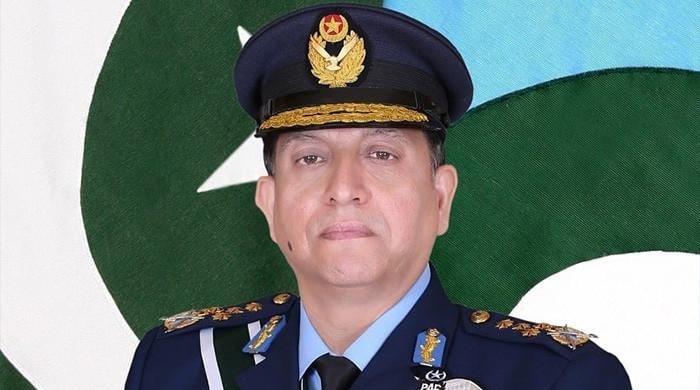
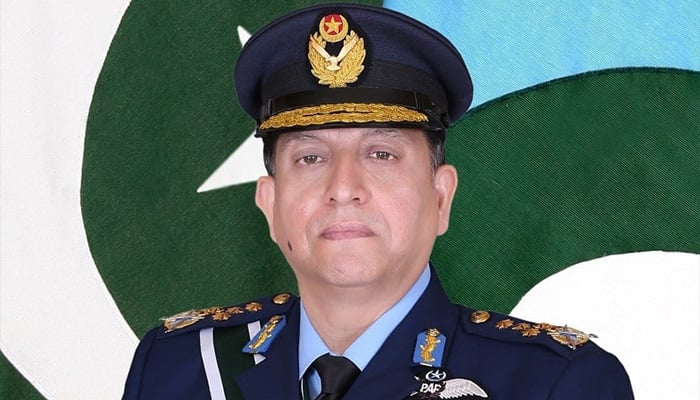
ISLAMABAD: During the air operation against Indian aggression, Air Chief Marshal Zaheer Ahmed Baber Sidhu spoke directly to the pilots via radio and commanded: “Kill them, kill them, don’t let them enter even an inch into Pakistan.”
He was speaking directly to pilots of the 15 Squadron — a unit he once led himself — as they soared into combat in the early hours of May 7.
Inside the highly secure and secret command center of the Pakistan Air Force (PAF), the mood shifted dramatically as officers watched Indian Rafale jets being struck over Bithanda. The room erupted with chants of “Allahu Akbar.”
It was a pivotal moment in a rapidly escalating confrontation between two nuclear-armed neighbors.
Following the April 22 Pahalgam terror attack in Indian-administered Kashmir — which India blamed on Pakistan — the PAF had remained on high alert.
Sources close to ongoing operations told The News that the Air Chief had taken personal command of the situation, operating from PAF’s most classified nerve center and sleeping little for four consecutive days.
According to multiple senior PAF officials and an operational log reviewed by this correspondent, Air Chief Marshal Sidhu called in his top leadership on May 6 after receiving credible intelligence about an impending Indian strike. With the specter of a broader military escalation looming, Pakistan shifted swiftly from surveillance to active defense.
The night of May 6-7 marked a critical juncture. Nearly 80 Indian aircraft – including 32 Rafales, 30 Su-30s equipped with BrahMos missiles, and a mix of MiG variants – took off from at least 12 airfields near the Pakistan border, according to Pakistani defense sources. In response, PAF scrambled roughly 40 J-10 and other fighters – Chinese-made jets now central to Pakistan’s air defense strategy.
PAF works in close coordination with Pakistan Military and its intelligence services thus they already have some intelligence that Indian planes will embark on , so , “ Our pilots were already in the air to , give them a , “welcome” , said one official.
Indian fighters reportedly attempted multiple incursions into Pakistani airspace but failed to penetrate. However, when missile strikes targeted civilian facilities in Azad Jammu and Kashmir and Sheikhupura, Pakistan initiated what officials described as “Offensive Counter Air Operations.”
Only after an Indian projectile was detected within Pakistani airspace did Sidhu authorize full engagement. In the ensuing aerial combat, five Indian aircraft were reported downed — three Rafale jets, one MiG-29, and one Su-30.
Inside the command center, confirmation of these kills sparked scenes of celebration, underscoring the religious and nationalistic fervor that often accompanies South Asia’s volatile military theater.
But the air battle did not end there. On May 9 and 10, the Pakistani response transitioned into a broader strategic phase under the codename Operation Bunyan-um-Marsoos – an Arabic term meaning “Wall of Steel.” The doctrine guiding the operation was “de-escalation through escalation,” with the aim of inflicting a calibrated but decisive blow to Indian military infrastructure while avoiding civilian casualties.
National leadership, according to sources, authorized the response at a time of its own choosing, emphasizing proportionality. The targeting strategy was precise: only Indian military installations involved in offensive operations were selected, avoiding urban or civilian zones.
Over a span of five to six hours, PAF targeted 26 installations, including 15 airfields, in retaliation for the Indian strike on three PAF bases earlier in the week. Every mission – from takeoff to weapon delivery and safe return – was personally monitored by Air Chief Marshal Sidhu from the command center.
Pakistan’s offensive also included multi-domain operations, integrating cyber, space, and electronic warfare capabilities to disrupt Indian communications, targeting systems, and early-warning networks. The coordination was described as highly synchronized, with maximum effect achieved through joint-service integration.
Despite the scale of the response, Pakistani leadership maintained tight control to prevent further escalation. Surveillance of India’s Defensive Counter Air (DCA) activity continued until a ceasefire was mutually declared.
India has not yet acknowledged the reported aircraft losses or the extent of damage from Operation Bunyan-um-Marsoos. However, global diplomatic actors have since intensified calls for restraint and dialogue between the two nations.
This detailed account provides a rare glimpse into Pakistan’s military command operations and highlights the delicate, high-stakes calculations behind every move in South Asia’s increasingly contested airspace.
The Pakistan Air Force, through its precision, leadership, and operational excellence, has not only demonstrated its own strategic brilliance but also redefined the combat credibility of Chinese-made fighter jets. In doing so, it has challenged the long-standing Western and American dominance in global military aviation – giving new color, confidence, and credibility to a rising aerospace order.
