

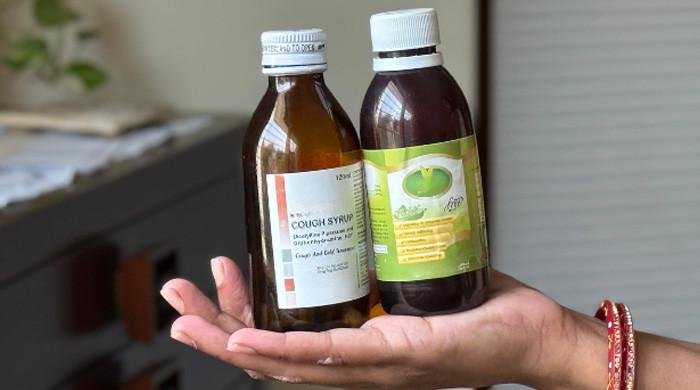
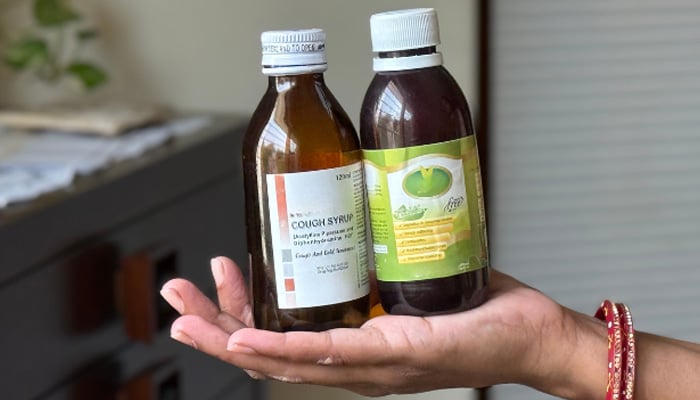
When 23 children died in India’s Madhya Pradesh after consuming contaminated cough syrup in early September, the news barely registered across the border.
In Pakistan — where self-medication is rampant and syrup bottles are household staples — the tragedy strikes dangerously close to home.
Many in Pakistan remain unaware that those sweet, over-the-counter syrups can be fatal. In the recent Indian case, the children — all under six — died of kidney failure after consuming syrup laced with diethylene glycol (DEG), a toxic solvent found at 500 times the permissible limit.
Investigations revealed the manufacturer, Sresan, had sourced industrial-grade propylene glycol from local chemical and paint dealers instead of certified pharmaceutical suppliers. With no qualified chemist overseeing production, the syrup went untested — and deadly.
This isn’t the first such incident. In 2022, Indian-made syrups caused the deaths of at least 70 children in The Gambia and 18 in Uzbekistan. Between December 2019 and January 2020, at least 12 children died in Indian Illegally Occupied Jammu and Kashmir (IIOJK) after taking similarly contaminated syrup.
The prescribing doctor in India was the first to be arrested, followed by the suspension of the drug inspector and deputy director. The manufacturer, who had been absconding since September, has now been caught.
“It shows that even doctors can get caught in legal and ethical trouble, even when unaware of a drug’s quality issues,” said Professor Mishal Khan of the London School of Hygiene & Tropical Medicine.
“The tragedy is a warning for Pakistan — weak regulation hurts everyone: doctors, pharma companies, and patients alike.”
A 2024 study by Khan found that approximately 40% of Karachi doctors accepted incentives in return for prescribing medicines from a fake pharmaceutical company without any checks on the company’s manufacturing standards or medicine quality. Antibiotics and cough syrups were among the medicines they agreed to promote.
As Pakistan enters its flu season, Karachi’s hospitals are filling up. “Between 50 to 70% of children who visit our clinics have respiratory tract infections,” said Dr Wasim Jamalvi of Dr Ruth K M Pfau, Civil Hospital Karachi.
And with the flu comes a predictable companion: cough syrup.
“If a child is brought for consultation for fever, cough and cold, parents feel a prescription is incomplete without a cough syrup,” said Dr. D.S. Akram, a senior pediatrician, who stopped prescribing them two decades ago. “Cough syrups don’t work — they just make the children drowsy or irritable,” she said.
Jamalvi agrees, “We don’t recommend syrups for under-fives, but parents still give them — they’re easily available over the counter.”
Self-medication culture
In Pakistan, cough syrups — often called sherbet — are viewed as harmless cures.
“I swear by this syrup a doctor gave me years ago,” said Mohammad Yusuf, a 31-year-old houseboy. “One spoon at night and I sleep better.”
Two weeks ago, when Rakhi Matan’s children, aged 10 and 13, came down with the flu, she reached for a bottle of leftover cough syrup from last year. “It saved me the doctor’s fee — he’d have prescribed the same thing,” she said.
Such casual self-medication is common — and hard to control.
Dr Qaiser Sajjad, former secretary general of the Pakistan Medical Association, said regulating cough syrup sales is nearly impossible with thousands of quacks operating in the city. Medical store worker Majid Yusufzai agreed, admitting syrups are sold freely without prescriptions and “entire families share the same bottle”.
Health experts say Pakistan’s culture of self-prescription — reinforced by weak enforcement and cheap access to medicines — makes the system vulnerable to similar disasters.
Dr Obaidullah Malik, heading the Drug Regulatory Authority of Pakistan (Drap), told IPS that Pakistan imported the majority of the raw materials (for several drugs, including cough syrups) from India and China.
With over 100,000 drug manufacturing companies, India, referred to as the ‘pharmacy of the world’, is known for affordable generic drugs. But recent deaths have cast a long shadow on its safety standards.
Tighter drug oversight
“It is of great concern,” said Malik, adding that scrutiny of domestic quality control was enhanced after it received a global alert from the WHO on October 13, of three substandard cough syrups manufactured in India.
“Thankfully, the contaminated syrups were never exported to Pakistan,” confirmed Malik. “There’s no evidence of illegal shipments either — but we’re staying vigilant to ensure a tragedy like India’s doesn’t happen here.”
“Drap has made it mandatory for all pharmaceuticals, including herbal and nutraceutical manufacturers as well as importers, to pre-test additives such as glycerin, propylene glycol, and sorbitol — either in their own laboratories or through public sector facilities like the Central Drugs Laboratory (CDL) in Karachi or the 12 provincial drug testing,” said Malik.
The authority is double-checking vendor credentials and certifications and instructed field teams to step up sampling and testing — both of raw materials coming in and the finished syrups.
Recently, it trained pharma company reps from Nepal, Gambia, Sierra Leone, Maldives, and Sri Lanka on a quick detection method called Thin Layer Chromatography (TLC), which helps spot contamination early — saving time, cutting costs, and improving safety checks nationwide.
There are between 700 and 800 pharmaceutical companies across Pakistan, but only about 300 are members of the Pakistan Pharmaceutical Manufacturers Association — leaving much of the industry operating with little oversight.
Yet, despite its fledgling state compared to India’s, Pakistan’s pharma sector is eager to expand into global markets. Khan cautioned that the recent scandal over unsafe medicines could jeopardise those ambitions before they even take off.
To avoid a similar crisis and protect its reputation abroad, Pakistan’s regulator has stepped up oversight at home.
“Since November 2023, Drap has recalled 63 finished products contaminated with diethylene glycol (DEG) and ethylene glycol (EG), identified 44 impurities, and issued 13 alerts about contaminated raw materials,” said Drap’s CEO.
As Karachi’s clinics continue to fill up this flu season, syrup bottles are flying off shelves — often with no pharmacist in sight. “It’s just a syrup,” said Yusuf. He does not know, but for dozens of families across the border, that sweet bottle brought irreversible loss.
Zofeen Ebrahim is an independent journalist. She posts on X @zofeen28
This article was originally published in the Inter Press Service news agency’s UN Bureau. It has been published on Geo.tv with permission.
