


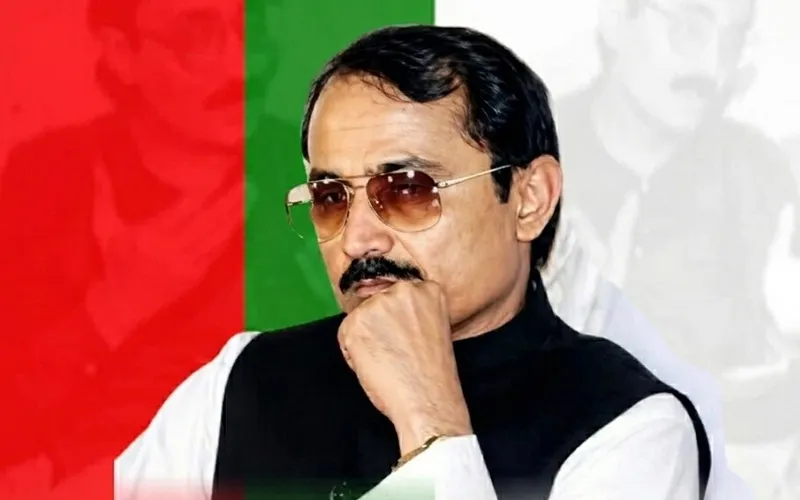
The 33rd death anniversary of Azeem Ahmed Tariq founding chairman of the Mohajir Qaumi Movement (MQM), is being observed today reflecting on a defining phase in Karachi’s political history that significantly influenced the city’s urban political landscape.
Azeem Ahmed Tariq aged 46 at the time was killed in the early hours of April 30–May 1, 1993, at his residence in Block 15, FB Area, Karachi.
Reports from the period state that he was shot by unidentified armed men while asleep in the presence of his family and security personnel. The incident remains one of the most debated and unresolved political cases of that era.
His political journey began in 1978 with the All Pakistan Mohajir Students Organization (APMSO) which later evolved into MQM in 1984. The party quickly rose as a powerful political force in urban Sindh achieving electoral success in local and national politics despite sustained political pressure and repeated security operations.
A major shift occurred on June 19, 1992 when a large-scale security operation was launched against MQM. During this period, much of the party leadership, including elected representatives such as ministers, senators, mayors, and assembly members, went underground.
Karachi’s political environment became highly volatile, marked by arrests, allegations of excesses, and intense media scrutiny. Within this context Azeem Ahmed Tariq spent 162 days in hiding alongside senior party leadership.
On November 28, 1992, after nearly five months, he re-emerged publicly at a press conference held at a private residence on Tipu Sultan Road, Karachi. His emotional appearance attracted significant attention.
During the briefing, he reportedly cited serious health concerns, including heart-related complications, and stated that his return was aimed at ensuring community stability and maintaining peace in Karachi.
Following his reappearance, several MQM leaders and workers gradually returned to public life, and political activity resumed to some extent. However, the overall situation in Karachi remained tense, with intermittent incidents of violence and factional clashes continuing in various areas.
During this phase, the party also underwent internal restructuring, including the formation of a 12-member coordination committee to manage organizational affairs in the absence of centralized leadership. Despite these developments, Azeem Ahmed Tariq did not return to the party headquarters after coming out of hiding.
His active public phase lasted 154 days completing a total span of 316 days across both phases of his political engagement during this critical period.
Shortly before his death he is reported to have stated that he would not go underground again under any circumstances. His killing on April 30–May 1, 1993 brought an abrupt end to a politically significant chapter in Karachi’s history.
His final months remain a subject of political and historical study, reflecting a period marked by instability, transition, and shifting power dynamics in urban Sindh.
