


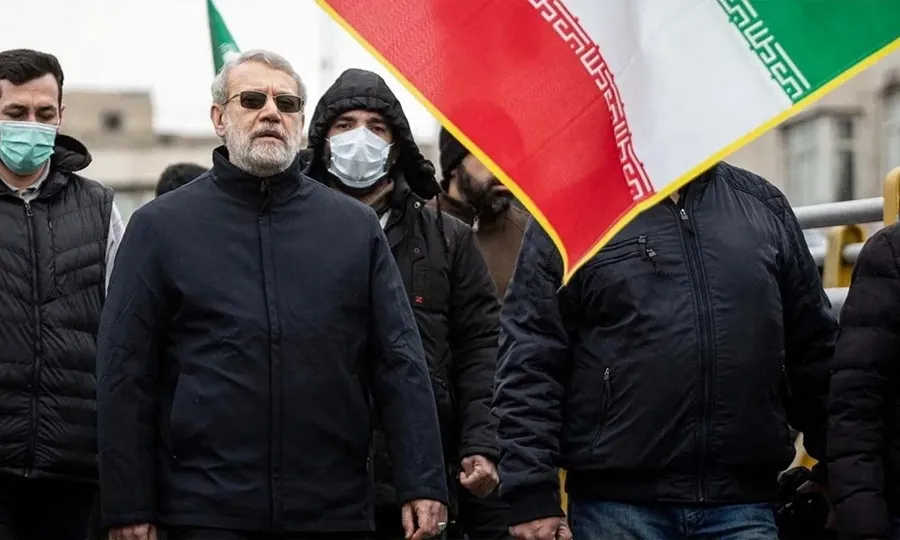
Iran has officially acknowledged the death of its top national security official Ali Larijani, according to state media reports on Tuesday. Larijani is now being described as the highest‑ranking Iranian official to be killed by Israel since the reported assassination of Supreme Leader Ayatollah Ali Khamenei on the opening day of the conflict.
Israel’s Defence Minister Israel Katz publicly asserted on Tuesday that Larijani had been eliminated, though for some time Tehran had not issued confirmation of his demise.
As head of Iran’s Supreme National Security Council (SNSC), Larijani was widely viewed by analysts as one of the few figures capable of filling the leadership void created by Khamenei’s death.
Even after Khamenei’s son Mojtaba was designated supreme leader, Larijani remained a central force in Iranian politics and was seen by many outside observers as the de facto authority in the Islamic Republic.
Born in Najaf in 1958, Larijani entered public service as the deputy minister of labour and social affairs. In 1994, he was named director of Islamic Republic of Iran Broadcasting, a post he held for ten years. In 2005, Larijani was appointed secretary of the SNSC, placing him at the forefront of Tehran’s nuclear diplomacy.
In recent months, he had been leading Iran’s efforts to negotiate a new nuclear understanding with the United States.
Although Larijani was not included in the newly formed three‑member leadership council established after Khamenei’s death, power in Tehran is widely thought to still be concentrated within the SNSC. Reports suggest that the council had already marginalized Mojtaba Khamenei after last June’s disastrous 12‑day war with Israel.
Larijani’s influence had also eclipsed that of the sitting president, Pezeshkian, as he not only took charge of foreign policy initiatives but also wielded significant domestic authority. He emerged as one of the most vocal proponents within the regime for the use of lethal force to suppress the mass protests that erupted late last year amid worsening economic conditions.
How influential was Larijani?
Larijani’s ascendancy occurred despite the fact that he was not on the list of clerics that Khamenei had identified as potential successors. The supreme leader had left behind a shortlist of three religious figures, reflecting the formal requirement that the nation’s top post be held by a cleric.
Nonetheless, experts saw Larijani not only as a credible contender for Iran’s highest office, but also as someone who could have pushed the country toward a more heavily militarised form of governance.
In 1996, he was appointed Khamenei’s representative to the SNSC and later became its secretary and chief negotiator on nuclear issues, engaging in talks with Britain, France, Germany and Russia from 2005 to 2007.
Larijani also ran for president in 2005 but was defeated by Mahmoud Ahmadinejad, with whom he later clashed over nuclear policy. Larijani was subsequently barred from running in the 2021 and 2024 presidential elections.
He was an early and prominent supporter of the landmark 2015 nuclear agreement with global powers, a deal that collapsed three years later after then‑US President Donald Trump withdrew the United States from the treaty.
