



By Chaudhry Muhammad Akmal, FCMA
Pakistan’s export performance has weakened sharply, highlighting persistent structural challenges in the economy. Merchandise exports have declined significantly on a year-on-year basis, raising concerns about the sustainability of the country’s external sector.
In December 2025, exports fell over 20 percent, dropping to approximately $2.32 billion from $2.91 billion in December 2024. This marked the fifth consecutive month of contraction, bringing total exports for the first half of FY2025–26 (July–December) down to $15.18 billion, compared with $16.63 billion in the same period last year. The trade deficit widened to about $19.2 billion during this half-year, reflecting deep structural issues rather than short-term volatility (PBS, Ministry of Commerce).
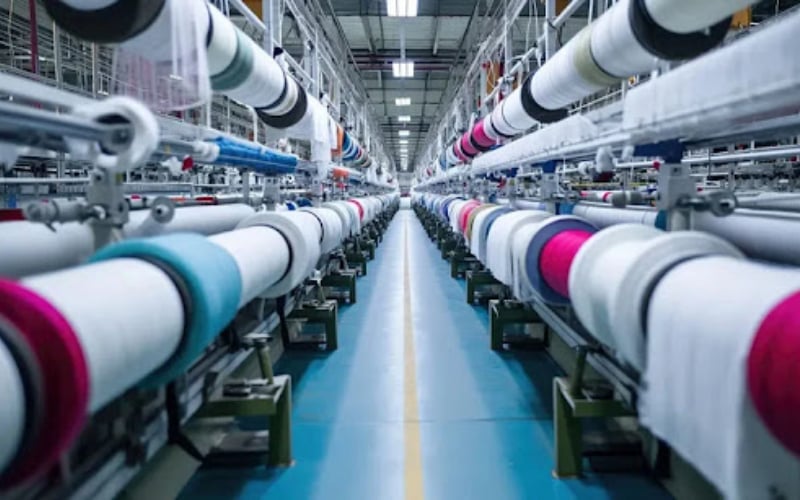
The textile sector, historically the backbone of Pakistan’s exports, contributed over 50 percent of total export earnings. In the first half of FY2025–26, textile and apparel exports amounted to roughly $9.19 billion, down from $9.98 billion in the corresponding period last year.
Key items, including cotton yarn, fabrics, and garments, have seen declines. Cotton yarn exports contracted by double digits amid rising input costs and intense competition from regional rivals. Only large exporters with backward integration and strong capital buffers are able to survive, while small and medium-sized textile units face closures.
A major factor behind this decline is the collapse of domestic cotton production. National output has fallen from peaks of over 14 million bales to around 5–6 million bales annually due to poor seed quality, outdated farming practices, and limited research support.
Farmers are increasingly shifting to corn, a more profitable and lower-risk crop, further reducing domestic cotton supply. Consequently, the industry relies heavily on imports, driving up production costs and eroding competitiveness.
Agriculture-based exports have also been under pressure. Rice, Pakistan’s second-largest export commodity, saw volumes decline sharply in the first half of FY2025–26. According to PBS, rice export volumes fell by an estimated 25–30 percent, while export earnings dropped by over 30 percent year-on-year in certain months.
Floods in 2025 damaged crops in Punjab and Sindh at critical stages, sharply reducing exportable surplus. Rice exports now stand below previous levels of 5.5–5.7 million tonnes, which had earned around $3.6–3.8 billion in FY2024–25 (PBS). These trends underscore the vulnerability of Pakistan’s export base to climate shocks.
Distorted agricultural pricing policies further undermine production incentives. For example, wheat was purchased from farmers at an official procurement price of around Rs.2,300 per 40 kilograms, but market prices later exceeded Rs.4,000 per 40 kilograms. This disparity discourages investment in agriculture and reduces long-term export potential.
The services sector, often seen as a potential export driver, also presents challenges. According to PBS (Nov 2025), services exports stood at $3,034.6 million for the first four months of FY2025–26, while services imports reached $4,195.8 million, resulting in a trade deficit of $1,161.2 million. This indicates that Pakistan is not only struggling with merchandise exports but also faces imbalances in the services account.
Information technology (IT) and IT-enabled services, frequently cited as success stories, are not immune to these challenges. Official IT export figures have yet to be fully released by PBS, but anecdotal estimates indicate annual IT exports of around $2.6–2.8 billion.
However, dependence on foreign software, platforms, and cloud services, coupled with internet slowdowns, regulatory uncertainty, and infrastructure limitations, has constrained the sector’s ability to scale and compete internationally.
Across all sectors, exporters face rising cost pressures. High interest rates, elevated energy tariffs, expensive fuel and fertilizers, and heavy taxation reduce competitiveness and discourage investment, particularly among small and medium enterprises (SMEs).
In this context, repeated calls to simply “increase exports” are disconnected from ground realities. Expecting higher overseas sales while raw material supply is shrinking, agricultural productivity is declining, services remain in deficit, and production costs are high is akin to asking someone to sell goods they do not have.
Sustainable export growth requires structural reform: reviving cotton and agricultural productivity, correcting distorted pricing policies, reducing input and financing costs, strengthening digital infrastructure, and ensuring policy stability. Until these fundamental issues are addressed, ambitious export targets will remain aspirational slogans rather than achievable outcomes.
