

Close Menu

    Subscribe to Updates

    Get the latest creative news from FooBar about art, design and business.

    What's Hot

    Netflix traps actor inside Billboard for ‘The Last House’

    August 9, 2026

    Hungary nominates former Supreme Court chief Andras Baka for presidency | Civil Rights News

    August 9, 2026

    Cardi B’s dance video from private party goes viral on social media

    August 9, 2026
    Facebook X (Twitter) Instagram
    • Home
    • Politics
    • News
    • Magazines
    Facebook X (Twitter) Instagram
    Login
    22Media22Media
    Subscribe
    • Home
    • News
      • Pakistan News
      • World News
      • Amazing News
      • Only On 22
    • Sports
    • Bussiness
    • Innovation
      • Health & Sciences
      • Technology
    • Culture
      • Crime & Justice
      • Entertainment
    • Politics
    • Magazines
    • Weather
    • Video
    • Live
    22Media22Media
    Home»Politics»China’s lab-grown fungus replaces chicken with meat-like protein
    Politics

    China’s lab-grown fungus replaces chicken with meat-like protein

    22febdm@gmail.comBy 22febdm@gmail.comDecember 11, 2025No Comments2 Mins Read
    Facebook Twitter Pinterest LinkedIn Tumblr Email
    Share
    Facebook Twitter LinkedIn Pinterest Email

    Mycoprotein, often referred to as “fungus-derived protein,” is already renowned for its minimal environmental impact. It requires significantly less land, produces fewer greenhouse gases, and contributes less to water pollution compared to conventional animal proteins.

    Moreover, its ability to replicate the texture and taste of meat has made it an increasingly popular alternative to traditional livestock farming.

    However, concerns persist about the environmental costs of cell-cultured or lab-grown meat, with some studies suggesting that large-scale production might ultimately be more resource-intensive than even beef.

    The groundbreaking research from China demonstrates substantial advancements in production efficiency. Compared to the unmodified variant, the engineered F. venenatum strain:

    • Consumes 44% fewer nutrients

    • Produces mycoprotein 88% faster

    • Reduces global warming potential by up to 61%, depending on the energy mix of the region

    Furthermore, the modified strain requires 70% less land than the amount used for chicken farming in China, while also decreasing freshwater pollution risk by 78%, as reported by China Science Daily.

    Liu Xiao, the lead researcher from Jiangnan University, stated: “These enhancements not only make the fungus more nutritious but also drastically lower its environmental footprint.”
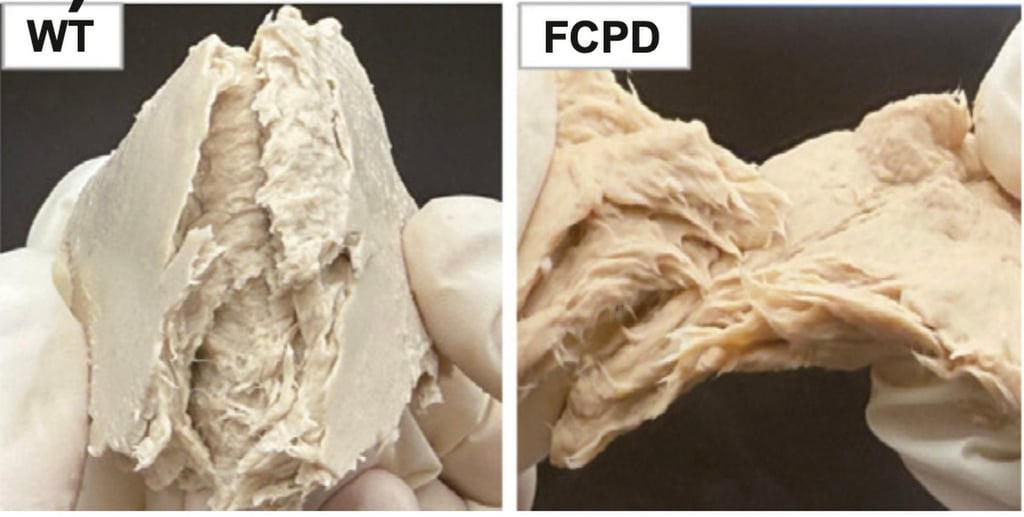
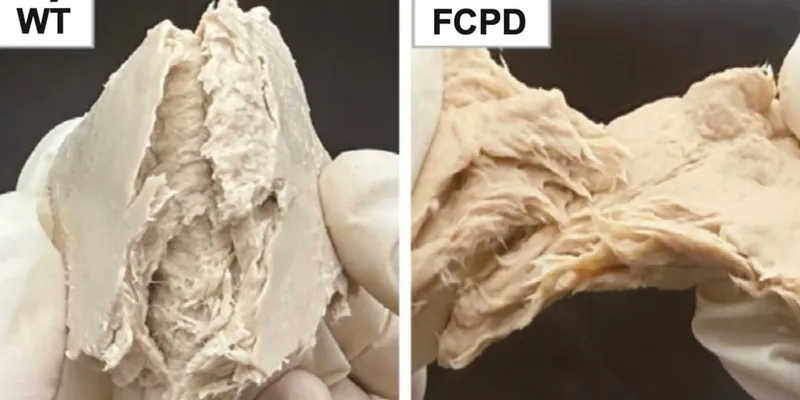
    The Jiangnan University researchers genetically modified the Fusarium venenatum fungus (left) to create an engineered strain that they say would be kinder to the environment. Photo: Handout

    Animal agriculture is responsible for nearly 40% of global agricultural land use and contributes to approximately 14.5% of global greenhouse gas emissions.

    With growing concerns about climate change, water scarcity, and the urgent need for sustainable protein sources, scientists are increasingly turning to alternative solutions. While plant-based, microbial, and insect proteins are gaining popularity, lab-grown meat remains contentious.

    A 2024 study from the University of California, Davis, found that large-scale cultured meat production could have a higher environmental impact than beef.

    Nevertheless, mycoproteins derived from F. venenatum show considerable promise and have already been approved for consumption in the U.S., Europe, and Australia. Leading brands like Quorn have long utilized them to create meat-like products such as nuggets, fillets, and mince.

    Traditional mycoprotein production requires large bioreactors and nutrient-dense media, a resource-intensive process with limited efficiency.

    By employing CRISPR/Cas9, the researchers enhanced the fungus’s metabolic pathways, improving protein digestion, boosting nutrient quality, and minimizing overall nutrient requirements.

    This innovation marks a significant leap toward more sustainable and efficient food production systems. The development of this genetically engineered fungus could play a pivotal role in shaping the future of alternative proteins, significantly reducing environmental impacts while meeting global food security needs.

    Share. Facebook Twitter Pinterest LinkedIn Tumblr Email
    22febdm@gmail.com
    • Website

    Related Posts

    Tom Holland reveals his childhood celebrity crush

    August 8, 2026

    Punjab announces 5,000 laptops for AJK students

    August 8, 2026

    Gold prices rise for fourth consecutive day in Pakistan

    August 8, 2026
    Add A Comment
    Leave A Reply Cancel Reply

    Demo
    Our Picks
    • Facebook
    • Twitter
    • Pinterest
    • Instagram
    • YouTube
    • Vimeo
    Don't Miss
    Entertainment

    Netflix traps actor inside Billboard for ‘The Last House’

    By 22febdm@gmail.comAugust 9, 20260

    Netflix traps actor inside Billboard for ‘The Last House’Forget trailers and giant posters — Netflix…

    Hungary nominates former Supreme Court chief Andras Baka for presidency | Civil Rights News

    August 9, 2026

    Cardi B’s dance video from private party goes viral on social media

    August 9, 2026

    Israeli settler attacks rise as West Bank residents lose land | Israel-Palestine conflict

    August 9, 2026

    Subscribe to Updates

    Get the latest creative news from SmartMag about art & design.

    22Media
    Facebook Instagram YouTube WhatsApp
    • Home
    • Politics
    • News
    • Magazines
    © 2026 22Media. Designed by AleemSoft Hub.

    Type above and press Enter to search. Press Esc to cancel.

    Sign In or Register

    Welcome Back!

    Login to your account below.

    Lost password?