


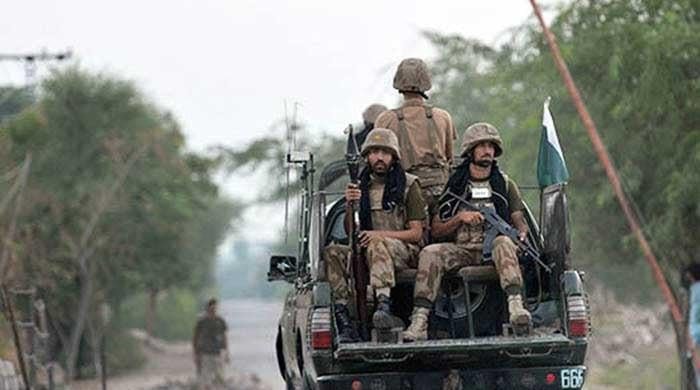
Last week, South Asia teetered on the edge of catastrophe as India and Pakistan engaged in four days of intense air strikes, reigniting fears of a nuclear showdown between these long-standing rivals.
This most severe escalation since the 1971 war prompted urgent international action. On May 10, a US-brokered ceasefire pulled both nations back from the brink, averting what could have been a devastating conflict. A 2019 study in Science Advances warned that a nuclear exchange between India and Pakistan could kill millions and trigger global climate disruptions. The fragility of this truce, marred by mutual accusations, misinformation and deep-seated mistrust, casts a shadow over the region’s stability.
The crisis began on April 22, 2025, when a terrorist attack in Pahalgam, Occupied Kashmir, claimed the lives of dozens of tourists. India, attributing the attack to Pakistan-based militants, launched Operation Sindoor on May 7. Rafale jets bombarded targets inside Pakistan, with Indian officials claiming surgical precision against terrorist infrastructure. Pakistan, however, presented a different narrative, showcasing bombed villages and alleging civilian deaths. The situation escalated further on May 9, when Indian media falsely reported that the Indian Navy had obliterated Karachi Port and other Pakistani cities – claims later debunked but which inflamed nationalist sentiments and eroded India’s credibility abroad.
Misinformation proved a potent weapon in this conflict, amplifying tensions and complicating de-escalation efforts. The fabricated reports of naval strikes on Karachi exemplify how unchecked narratives can drive public opinion and pressure governments into hardline stances. In an era where social media amplifies falsehoods, such distortions risk turning skirmishes into full-scale wars. All this only brings home the need for verifiable communication to counter the chaos sown by fake news.
The US stepped in as a critical mediator as the conflict spiralled. The conflict’s most alarming escalation came with India’s strike on Pakistan’s Nur Khan airbase in Rawalpindi – just 10 kilometres from Islamabad and near the Pakistani military headquarters. Within hours, Pakistan launched a large-scale counteroffensive.
According to the Pakistani military, it targeted 26 Indian military installations allegedly involved in strikes against Pakistani civilians and infrastructure. These included air force and army facilities in Suratgarh, Sirsa, Adampur, Bhuj, Naliya, Bathinda, Barnala, Harwara, Avantipur, Srinagar, Jammu, Mamoon, Ambala, Udhampur and Pathankot. Pakistan has claimed to have inflicted substantial damage.
Following the escalation, the Trump administration – initially hesitant to intervene – reversed course amid mounting fears of nuclear conflict. The talks culminated in a cessation of hostilities, marking a diplomatic breakthrough, highlighting America’s ability to defuse a looming crisis.
While Pakistan publicly praised US efforts, India downplayed Washington’s role. According to CNN, President Donald Trump announced the ceasefire on May 10, via Truth Social, crediting US diplomacy with stopping the violence and expressing hope for a long-term resolution, particularly on the Kashmir issue. Notably, the ceasefire was unconditional, and the Indus Waters Treaty remains suspended.
Despite this breakthrough, the ceasefire remains tenuous. Within hours of the agreement, India’s Foreign Secretary Vikram Misri accused Pakistan of drone incursions and shelling along the LoC – charges Pakistan vehemently denied. These tit-for-tat allegations highlight the enduring mistrust that plagues India-Pakistan relations. India’s insistence on treating Kashmir as a bilateral issue, rooted in the 1972 Simla Agreement, clashes with the reality of international involvement, adding another layer of complexity to the peace process. Meanwhile, Pakistan’s reliance on Chinese-supplied J-10 fighters – over 50 of which bolster its air force – signals a deepening strategic alignment with Beijing, a dynamic that unnerves New Delhi.
Former Indian Army Chief General Manoj Naravane, speaking in Pune on May 12, offered a sobering perspective on the conflict. He warned, “War is not romantic. It is not your Bollywood movie. It is very serious business… We should not cheer for it.” Naravane emphasised the profound human toll, particularly on civilians caught in the crossfire. He spoke of children enduring shelling, their trauma a burden “carried through generations”, and urged diplomacy as the “first choice” over military action. His words resonate with the stark warnings of experts, who estimate that a nuclear war between these nations could devastate global food supplies for a decade.
The 2025 clash exposed critical military disparities. India’s $86 billion defence budget far exceeds Pakistan’s $10 billion, yet its air defences remain outdated, with only 24 per cent modernised. Pakistan’s smaller but China-backed arsenal, including the agile J-10 fighters, exploited these gaps, striking Indian bases with precision. India’s lag in military modernisation contrasts with its ambitions as a regional power, while Pakistan’s dependence on China risks entangling it in broader geopolitical rivalries. Both nations’ nuclear capabilities – India with over 160 warheads and Pakistan with a similar arsenal – amplify the stakes, making de-escalation an urgent priority.
For the ceasefire to endure, India and Pakistan must move beyond temporary truces. Reviving trade, halted since 2019, could build economic ties that deter hostility. Bilateral talks, potentially facilitated by the US, are essential to address Kashmir and security concerns. International actors, including China, which signalled restraint through its Global Times editorial, could bolster stability. Without such steps, the US-brokered peace risks collapsing, reigniting a conflict with catastrophic potential.
The May 2025 India-Pakistan crisis is a timely reminder of South Asia’s volatility. US intervention averted immediate disaster, but the region’s peace hangs by a thread, threatened by misinformation, military brinkmanship, and unresolved grievances.
As General Naravane cautioned, war offers no romance – only suffering and loss. Sustained diplomacy, grounded in truth and mutual interest, is the only path to prevent a return to the abyss. In a world where fake news can ignite wars, both nations must prioritise restraint and dialogue to secure a future free from the spectre of annihilation.
The writer is former head of Citigroup’s emerging markets investments and author of ‘The Gathering Storm’.
Disclaimer: The viewpoints expressed in this piece are the writer’s own and don’t necessarily reflect Geo.tv’s editorial policy.
Originally published in The News
