
 Pakistan · World · Independent Digital Newsroom
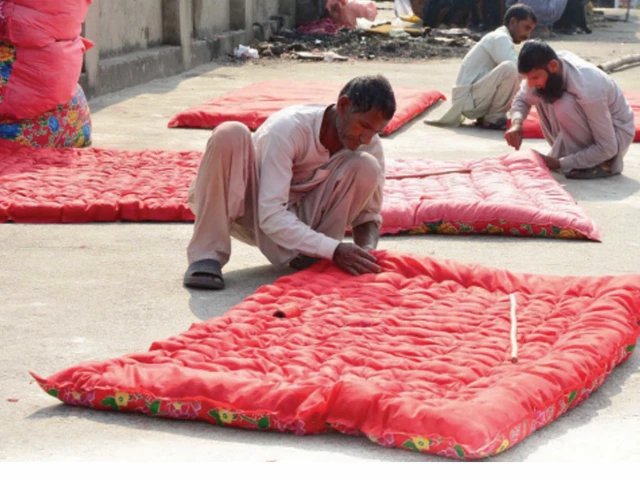
Elderly women in households would then stitch the quilts themselves using thick needles and thread.
Sewing a quilt was also a labour-intensive skill.With the arrival of winter, cotton fluffers would appear in neighbourhoods carrying their distinctive instruments, known as taant or kamaan, whose strings produced a characteristic ringing sound.
For generations, they softened old, hardened cotton, making it usable again to help people withstand the cold.The profession has almost disappeared from cities, while in remote villages it is also nearing extinction.
Only in a few areas can the sounds of cotton fluffing still be heard in the streets at the beginning of winter.The craftsman's kamaan (bow), also known as kamaanchah, is his most important tool.
Made from wood and animal gut, it is repeatedly struck with a heavy wooden stick.
The resulting vibrations separate the cotton fibres, making them soft and fluffy.Large machines have now replaced manual cotton fluffing in cities, completing the task within minutes.
However, these machines are also rapidly disappearing as cheap, lightweight polyester fibre has replaced cotton, reducing demand for traditional cotton quilts.The work lasts only two to three months during winter, prompting younger generations to abandon the profession and seek other livelihoods.These craftsmen are a beautiful part of the country's culture and winter traditions.
Their arrival once signalled that the days of biting cold had begun.
Traditional cotton-quilt making fades with modernisation Qaiser Shirazi | Updated 8 minutes ago | Ancient craft of cotton fluffing, home-stitched quilts disappear as polyester takes over.