


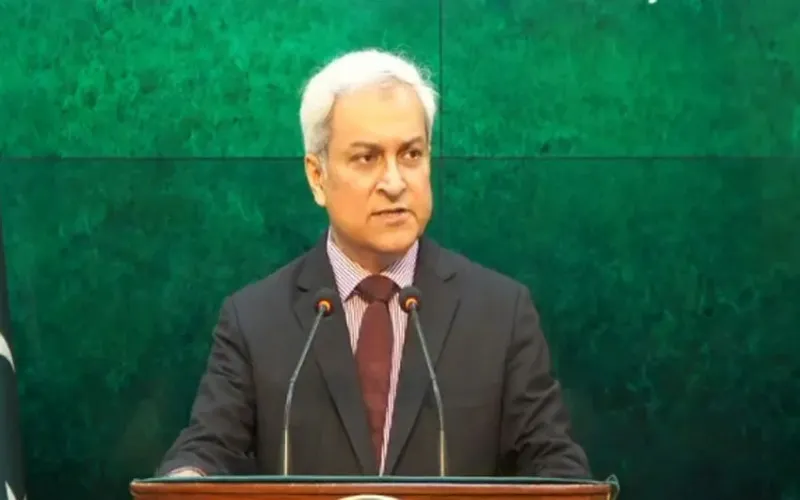
ISLAMABAD: Pakistan remains hopeful of a peaceful solution to rising tensions between the United States and Iran and will continue pushing for dialogue and diplomacy. Foreign Office spokesperson Tahir Andrabi said on Wednesday, as Islamabad steps up efforts to ease the regional crisis.
Tahir Andrabi said Pakistan had not given up on finding a diplomatic solution despite the recent escalation between Washington and Tehran. Pakistan has played an active role in efforts to reduce tensions.
In June, Islamabad helped facilitate the Islamabad Memorandum of Understanding. Earlier, Pakistan also helped broker a ceasefire between the United States and Iran in April.
🔴LIVE: Spokesperson’s Weekly Press Briefing 02-09-2026 at Ministry of Foreign Affairs, Islamabad https://t.co/KYEjSC3PXe
— Ministry of Foreign Affairs – Pakistan (@ForeignOfficePk) September 2, 2026
The April truce stopped the most intense fighting, but sporadic attacks, particularly around the Strait of Hormuz, have made efforts to secure a lasting peace deal more difficult.
Tahir Andrabi said Prime Minister Shehbaz Sharif had met Iranian President Masoud Pezeshkian on the sidelines of the Shanghai Cooperation Organisation (SCO) summit to discuss the worsening regional situation.
Shehbaz Sharif reaffirmed Pakistan’s support for resolving disputes through restraint, dialogue and diplomacy. He also described the Islamabad MoU as the most practical path toward lasting peace and stability in the region, Andrabi said.
🔴LIVE: Spokesperson’s Weekly Press Briefing 02-09-2026 at Ministry of Foreign Affairs, Islamabad https://t.co/KYEjSC3PXe
— Ministry of Foreign Affairs – Pakistan (@ForeignOfficePk) September 2, 2026
Deputy Prime Minister and Foreign Minister Ishaq Dar also held talks with Iranian Foreign Minister Abbas Araghchi, according to the spokesperson. The two officials had previously discussed the Middle East and Gulf situation during the Makkah summit in Istanbul.
Tahir Andrabi also highlighted Field Marshal Asim Munir’s recent visit to Tehran as part of Pakistan’s diplomatic efforts. Talks focused on reopening the Strait of Hormuz, easing regional tensions and finding a negotiated settlement.
“These were among the main issues discussed during the visit,” Andrabi said.
On the Indus Waters Treaty, Tahir Andrabi said India could not selectively accept or reject international decisions. He said a recent ruling by an international arbitration court in “The Hague” supported Pakistan’s position on the treaty.
Pakistan welcomed the decision and said India’s rejection of the ruling showed disregard for international law and the importance of honoring agreements.
“The decision on the Indus Waters Treaty is very clear,” Andrabi said, adding that India could not choose which international rulings to follow based on convenience.
The spokesperson also discussed the trilateral cooperation mechanism created under the Makkah Agreement. A committee meeting was held in Istanbul on Aug. 31, where Pakistan, Saudi Arabia and Türkiye agreed to cooperate on issues of mutual interest.
