


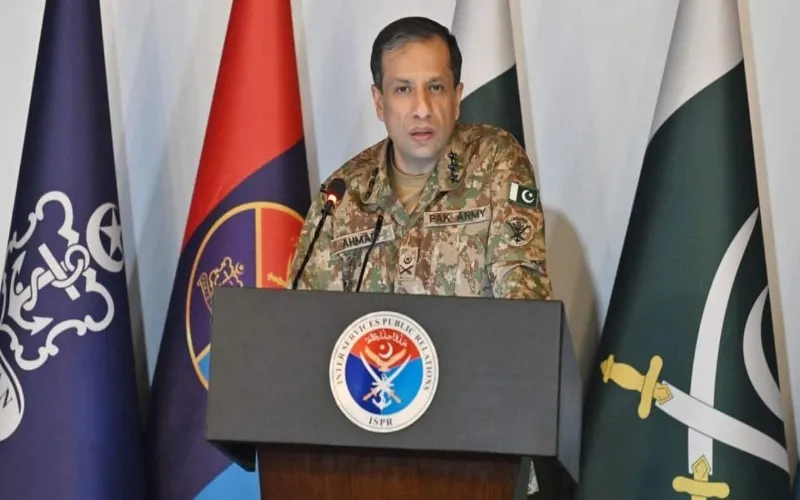
Pakistan’s armed forces have rejected India’s portrayal of Operation Sindoor as a military success, accusing New Delhi of using a highly dramatized documentary to present a favorable version of the May 2025 conflict.
The Inter-Services Public Relations (ISPR), the military’s media wing, stated that the documentary relied on selective interviews, emotional narration, and cinematic reconstruction to alter the sequence of events and rewrite history in India’s favor.
ISPR said India had still not accepted what Pakistan describes as its defeat more than a year after Marka-e-Haq, as Pakistan terms the May 2025 conflict. Instead, it argued, India was presenting a preferred version of events through a documentary featuring senior political and military leaders.
The media wing called the documentary factually inaccurate, overly dramatic, and internally contradictory. It said the production attempted to connect a speech by Pakistan’s army chief on April 16, 2025, with the Pahalgam attack on April 22, dismissing the link as a baseless conspiracy theory.
ISPR also challenged India’s explanation of Operation Sindoor. India later claimed that three alleged perpetrators of the Pahalgam attack were identified and killed on July 28, 2025—82 days after Operation Sindoor. ISPR questioned whom India claimed to have punished during the May 7 operation if the actual perpetrators were eliminated only months later.
The military further rejected India’s assertion of “100% mission success.” ISPR maintained that Pakistan’s armed forces halted Indian aggression during Marka-e-Haq and shot down eight military aircraft. Pakistan then launched Operation Bunyanum Marsoos, a counteroffensive that employed Fatah precision-guided rockets and missiles, Pakistan Air Force precision munitions, long-range loitering munitions, and precision artillery against 26 military targets, according to ISPR.
ISPR noted that statements by Indian military leaders in the documentary actually undermined its claim of a decisive victory. The media wing pointed out that the documentary acknowledged Pakistani missile, drone, and air activity, continued fighting along the Line of Control, and the activation of Indian air defense systems.
ISPR also disputed India’s account of how the fighting ended. It said the documentary acknowledged that hostilities ceased only after communication between the two directors general of military operations and an agreement to stop military action.
The ceasefire, ISPR added, was facilitated by the United States. Pakistan and India, both nuclear-armed, fought for four days in May 2025 after India struck targets inside Pakistan on May 7.
ISPR reaffirmed that Pakistan remains committed to regional peace and stability and that its armed forces are fully prepared to defend the country’s sovereignty and territorial integrity. It warned that any future Indian military action would receive a “firm, decisive and disproportionate response.”
