



- Hazara province demand has persisted since 2010: IPP president.
- IPP supports South Punjab and Bahawalpur provinces: Aleem.
- IPP President Aleem Khan urges politicians to take ownership.
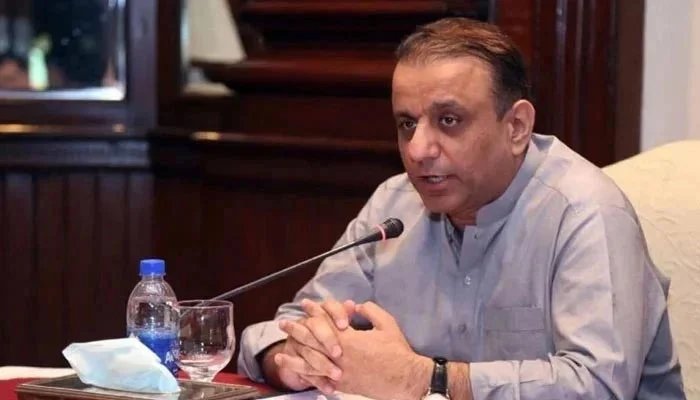
Istehkam-e-Pakistan Party (IPP) President Abdul Aleem Khan on Saturday backed the establishment of new provinces across the country, saying the people wanted administrative restructuring and that his party would raise its voice for new provinces at every forum.
In a statement, Aleem — who is also the federal minister for communications — said voices had been rising in the Khyber Pakhtunkhwa Assembly for a separate Hazara province since 2010, and that important political parties in KP supported its creation.
“The IPP stands with the demand for the Hazara province,” he said.
He also expressed support for the creation of South Punjab and Bahawalpur as separate provinces, noting that similar demands were being raised in Punjab and Sindh as well.
Aleem Khan said there is nothing wrong with dividing each of the four provinces into four administrative units, adding that current circumstances demanded a new working order across the country.
He called on politicians to take ownership of the new provinces issue rather than protecting their own political fiefdoms. “Instead of protecting their dominance, they will have to think about the problems of the people,” he said.
The minister described the matter as a national issue that should not be sacrificed for political expediency, saying that the IPP would continue to raise its voice for new provinces at every forum.
The debate over new provinces was triggered by Interior Minister Mohsin Naqvi, who said at an event last week that Pakistan’s existing governance system had “collapsed” and was no longer capable of addressing the country’s challenges, calling for administrative reforms including the creation of new administrative units.
PTI Chairman Barrister Gohar Khan had also backed the establishment of new provinces, saying the country needed them but that any such move must be backed by broad consensus and a two-thirds majority in the relevant assemblies.
Speaking on Geo News programme Capital Talk, he emphasised that new provinces were a necessity but required wide political agreement.
“The system we are living under has collapsed. Problems cannot be solved through it,” he said, adding that the country would continue to face the same challenges over the next decade unless fundamental reforms were introduced.
Later, Naqvi rejected the impression that he had issued a charge sheet against the government, saying he himself was part of the administration and would not indict his own government.
Speaking to Geo News exclusively, he said the existing system was not going anywhere and would complete its full constitutional term of five years.
Referring to his earlier remarks about governance, Naqvi said he still stood by his statement that the country’s system had been “completely destroyed,” clarifying that he was referring to the deterioration of the system over the past 80 years.
He said if the system had functioned properly over the decades, Pakistan would have made far greater progress. Naqvi rejected the impression that he had issued a charge sheet against the government, saying he himself was part of the administration and would not indict his own government.
Reactions
While the Pakistan Peoples Party (PPP) has flat-out rejected the idea, Naqvi’s own colleagues — including Defence Minister Khawaja Asif and PM’s adviser Rana Sanaullah — have also not shown any support for the notion.
Speaking to journalists earlier in the day, Sindh Chief Minister Murad Ali Shah firmly rejected the idea of dividing the province, saying the Constitution already provided a procedure for creating new provinces — requiring a two-thirds majority resolution from the provincial assembly concerned.
He said the Sindh Assembly had repeatedly and unanimously passed resolutions opposing any division of the province.
“If there is ever a change in this position — which does not appear likely — then the matter can be discussed,” he said.
Separately, Sanaullah distanced the government from Naqvi’s remarks, saying they “made no sense” and that he could not understand what the minister intended to convey.
“It is for Mohsin Naqvi to take responsibility for what he intended to say,” Sanaullah said, adding that Naqvi’s comments reflected his personal opinion.
“It appears he wanted to make a broader point by playing it down, but failed to express it properly. Once the statement was made, one part of what he said did not match another. I still do not understand what he was saying or why he said it,” he added.
