
 Pakistan · World · Independent Digital Newsroom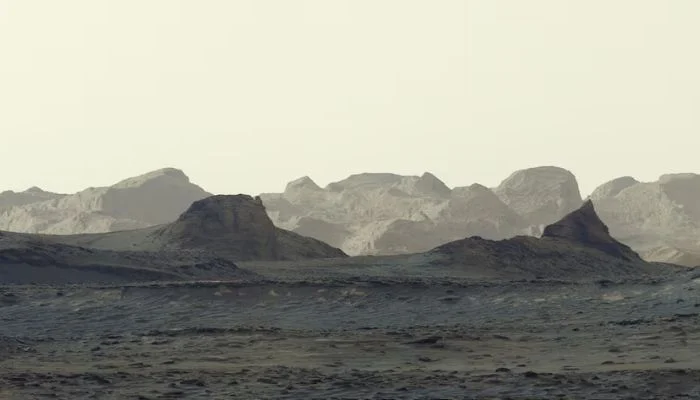
It is located about 10 miles across Mount Sharp’s northwestern reaches and believed to have formed roughly 3 billion years ago from wind-blown sediment, sand or volcanic ash, that hardened and was carved by wind into ridges.Planetary scientist Ashwin Vasavada of NASA's Jet Propulsion Laboratory in California, the Curiosity project scientist, said, “However, the yardang layer doesn't appear to be part of the continuous stack of layers that make up….
It's above what geologists call an unconformity: a gap in time where previous layers eroded down before new layers were deposited on top.”According to Vasvada, the US space agency is hopeful that Curiosity will reach the yardang layer in 2027 or 2028 and explore its geology using the instruments.Curiosity continues to study Martian geology, climate, and ancient water environments such as lakes and streams to determine if the planet once….
NASA Curiosity captures strange ‘wind-carved’ Mars landscape in dawn image October 7, 2026.