


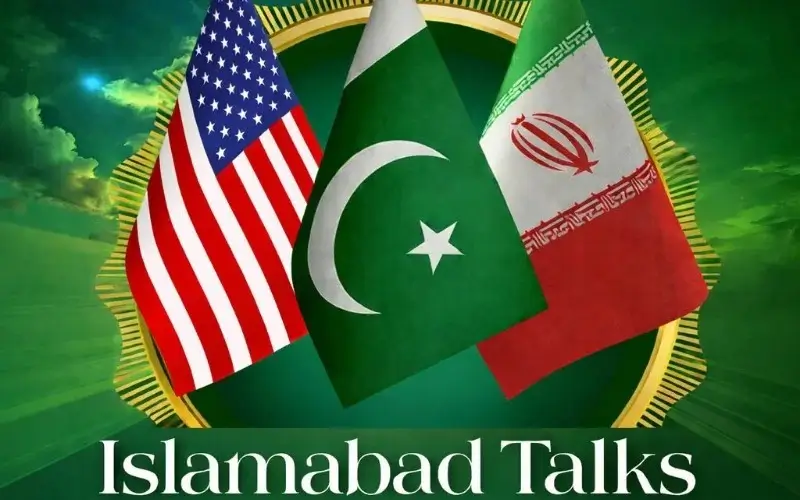
The present phase of tensions in West Asia continues to resist simple interpretation. What is visible is a pattern of pressure, interruption and recalibration rather than a clean diplomatic trajectory. Maritime friction around the Strait of Hormuz, intermittent signaling from both sides and a steady churn of conflicting reports have created an environment where perception is as contested as reality. Yet within this ambiguity, one development carries weight, representatives from both sides are now reportedly preparing to converge again in Islamabad for a second round of engagement.
That fact, in itself, is significant. It suggests that despite the strain, despite the rhetoric and despite the disruptions that appeared to stall momentum, the diplomatic channel has not collapsed. It has bent, perhaps sharply at times, but it has not broken. This distinction is critical. In crises of this magnitude, continuity of engagement, however uneven, is often the only reliable indicator that escalation is not yet the dominant logic.
The current environment must, therefore, be understood as one of structured instability. Communication exists, but without trust. Engagement proceeds, but without assurance. Public positions remain firm, yet private calculations appear to be evolving. The forthcoming round in Islamabad, if it proceeds as anticipated, will not represent a breakthrough in itself. Rather, it will signal that both sides still see value in testing the diplomatic route, even under pressure.
Within this context, Pakistan’s role has been one of disciplined facilitation. Its leadership has maintained engagement without rhetorical amplification, allowing space for dialogue to persist without being burdened by public expectations. The contribution associated with Pakistan’s efforts, reflects this approach, continuity over visibility, process over proclamation. It is not a role designed to claim outcomes, but to sustain the conditions under which outcomes remain possible.
It is equally important to recognize that the informational environment surrounding the crisis remains unsettled. Reports of disruptions, shifts in negotiating positions, or internal changes within delegations continue to circulate across media platforms. Some may eventually be substantiated, others may reflect tactical signaling or incomplete information. In such circumstances, analytical discipline requires that these claims be treated with caution. What matters more is the observable pattern, engagement has resumed directionally, even if unevenly.
The posture of the United States remains central to how this process evolves. Under Donald Trump, the negotiation style continues to blend assertive signaling with strategic pressure. Public remarks often emphasize strength, timelines and consequences. This approach aligns with a coercive bargaining framework, designed to compress space and accelerate decisions. However, its effectiveness depends on balance. When the tone leans excessively towards ultimatum, it risks constraining the very flexibility required for agreement.
This is particularly relevant at a moment when talks are re-emerging after disruption. For engagement to gain traction, the rhetorical environment must allow room for incremental adjustment. Diplomacy rarely advances through abrupt concessions, it moves through calibrated shifts that require political space on all sides. If public language continues to harden positions, it may slow the very process it seeks to accelerate.
The involvement of key figures such as Jared Kushner and Steve Witkoff reinforces a negotiation style that prioritises clarity and leverage. While this can introduce momentum, it also places a premium on precision, leaving less room for ambiguity, which is often necessary in bridging difficult gaps. The coming round in Islamabad will, therefore, test not only positions, but methods, whether pressure and engagement can be calibrated in a way that sustains movement rather than stalls it.
What, then, can reasonably be expected from this renewed phase? The most realistic outlook is one of incremental, uneven progress. Advances, if they occur, are likely to be partial, focused on narrowing differences rather than resolving them outright. Technical understandings may begin to take shape, even as political agreement remains distant. Periods of apparent movement may be followed by pauses or reversals, reflecting the complexity of the issues and the constraints on both sides.
This “incremental but uneven advancement” is not a sign of failure, it is characteristic of high stakes negotiations. History offers numerous examples where sustained engagement over time, rather than sudden breakthroughs, produced durable outcomes. The critical variable is not speed, but continuity. As long as both sides continue to return to the table, the process retains strategic value.
At the same time, risks remain embedded in the structure of the crisis. Maritime tensions, economic sensitivities and the potential for miscalculation have not diminished. Any incident, particularly in contested spaces, could disrupt momentum and reintroduce escalation dynamics. This reinforces the importance of maintaining disciplined communication alongside negotiation.
For Pakistan, the immediate significance of the upcoming talks lies in its ability to host and facilitate under conditions of strain. The fact that both sides are willing to engage again on its soil reflects a degree of confidence in its neutrality and its capacity to manage sensitive interaction. This is not a dramatic role, but it is a consequential one.
For the broader public, the appropriate lens is one of cautious expectation. There is justification for recognizing that the diplomatic process remains active and that Pakistan is contributing constructively to that process. At the same time, there must be an understanding that outcomes will not materialize quickly or cleanly. The issues at stake are too complex and the positions too entrenched, for a rapid resolution.
What can be anticipated, if the process holds, is a gradual shaping of possibilities. Points of contention may narrow, areas of tentative alignment may emerge, mechanisms for continued engagement may be refined. None of these developments will, in isolation, resolve the crisis. Together, however, they can begin to stabilize it.
The coming days, therefore, are less about decisive breakthroughs and more about testing durability, of channels, of methods and of intent. If the second round in Islamabad proceeds and sustains engagement, it will confirm that diplomacy remains viable, even under pressure. If it produces even modest alignment on specific issues, it will indicate that movement, however incremental, is still achievable.
In the final analysis, this moment is best understood not as a turning point, but as a stress test. A test of whether structured dialogue can endure in an environment saturated with pressure and uncertainty. A test of whether rhetoric can be moderated sufficiently to allow negotiation space. And a test of whether patient, methodical facilitation, of the kind quietly exercised by Pakistan’s leadership, can keep the process intact long enough for substance to emerge. It is in that narrow but vital space between disruption and continuation that the real work of diplomacy now resides.
