

Close Menu

    Subscribe to Updates

    Get the latest creative news from FooBar about art, design and business.

    What's Hot

    Babar Azam returns to ICC top 10 in Test rankings

    August 12, 2026

    Iran refutes Trump’s claim to ‘control’ Hormuz: What’s the latest in talks? | US-Israel war on Iran News

    August 12, 2026

    UK ‘joke’ candidate Binface pushes serious point about politics

    August 12, 2026
    Facebook X (Twitter) Instagram
    • Home
    • Politics
    • News
    • Magazines
    Facebook X (Twitter) Instagram
    Login
    22Media22Media
    Subscribe
    • Home
    • News
      • Pakistan News
      • World News
      • Amazing News
      • Only On 22
    • Sports
    • Bussiness
    • Innovation
      • Health & Sciences
      • Technology
    • Culture
      • Crime & Justice
      • Entertainment
    • Politics
    • Magazines
    • Weather
    • Video
    • Live
    22Media22Media
    Home»Politics»Blocked brain pathways may hint at early Alzheimer’s
    Politics

    Blocked brain pathways may hint at early Alzheimer’s

    22febdm@gmail.comBy 22febdm@gmail.comJanuary 12, 2026No Comments2 Mins Read
    Facebook Twitter Pinterest LinkedIn Tumblr Email
    Share
    Facebook Twitter LinkedIn Pinterest Email

    Singapore: Researchers at Nanyang Technological University (NTU) have warned that blockages in the brain’s drainage pathways may serve as an early warning sign of Alzheimer’s disease.

    The study found that the pathways surrounding blood vessels, filled with cerebrospinal fluid, help remove neurological waste.

    However, arterial stiffness and high blood pressure can disrupt this process, leading to waste accumulation in the vessels. When this occurs, the drainage pathways—known as perivascular spaces—expand.

    The researchers noted that enlarged perivascular spaces (EPVS) are more commonly observed in individuals showing early signs of Alzheimer’s.

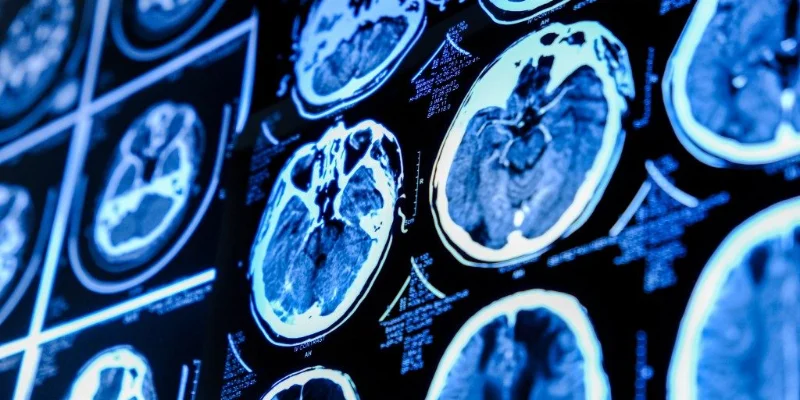
    Associate Professor Nagendran Kandiah, who led the study at NTU’s Lee Kong Chian School of Medicine, said these abnormal brain changes can be detected using standard MRI scans, commonly employed to evaluate memory and cognitive function. “EPVS identification could complement existing methods for early Alzheimer’s diagnosis without requiring additional tests or costs,” he explained.

    Co-author and NTU medical student Justin Ong highlighted the importance of early detection, saying it allows timely interventions to slow cognitive decline, memory loss, reduced processing speed, and mood changes.

    Previously, the link between EPVS and Alzheimer’s was unclear. NTU researchers compared EPVS with other established Alzheimer’s indicators and found a strong correlation.

    The study included 979 participants from diverse ethnic groups in Singapore, addressing a gap in research that often focuses on Western populations, whose findings may not apply universally.

    Professor Kandiah noted that the prevalence of the Alzheimer’s-linked APOE4 gene is approximately 50–60% in Caucasian dementia patients but less than 20% in Singaporean patients, underscoring the need for region-specific research.

    MRI scans revealed that individuals with mild cognitive impairment (MCI) were more likely to have EPVS. Analysis of seven Alzheimer’s biomarkers showed that among participants with EPVS, four biomarkers—including amyloid plaques and tau tangles—were elevated, indicating higher Alzheimer’s risk.

    While white matter damage is a common Alzheimer’s indicator, the study found that EPVS was more strongly associated with biomarkers in MCI patients, suggesting EPVS could serve as an early warning sign.

    “Although white matter damage is widely used in dementia assessment, our findings show that EPVS holds unique significance in detecting early Alzheimer’s changes,” Professor Kandiah said. He added that MRI could become a more accessible tool for timely diagnosis, potentially slowing disease progression before symptoms worsen.

    Researchers plan to continue monitoring the study participants to confirm whether EPVS can reliably predict dementia risk and the onset of Alzheimer’s disease.

    Share. Facebook Twitter Pinterest LinkedIn Tumblr Email
    22febdm@gmail.com
    • Website

    Related Posts

    US State Department calls for greater fiscal transparency in Pakistan

    August 12, 2026

    Lahore hospitals report surge in gastroenteritis cases amid cholera fears

    August 12, 2026

    Yemen campaign faces fresh scrutiny over civilian toll

    August 12, 2026
    Add A Comment
    Leave A Reply Cancel Reply

    Demo
    Our Picks
    • Facebook
    • Twitter
    • Pinterest
    • Instagram
    • YouTube
    • Vimeo
    Don't Miss
    Technology

    Babar Azam returns to ICC top 10 in Test rankings

    By 22febdm@gmail.comAugust 12, 20260

    LAHORE: Pakistan captain Babar Azam has returned to the ICC’s top 10 Test batting rankings…

    Iran refutes Trump’s claim to ‘control’ Hormuz: What’s the latest in talks? | US-Israel war on Iran News

    August 12, 2026

    UK ‘joke’ candidate Binface pushes serious point about politics

    August 12, 2026

    Arshad Nadeem to skip Diamond League for South Africa training after Glasgow debacle

    August 12, 2026

    Subscribe to Updates

    Get the latest creative news from SmartMag about art & design.

    22Media
    Facebook Instagram YouTube WhatsApp
    • Home
    • Politics
    • News
    • Magazines
    © 2026 22Media. Designed by AleemSoft Hub.

    Type above and press Enter to search. Press Esc to cancel.

    Sign In or Register

    Welcome Back!

    Login to your account below.

    Lost password?