



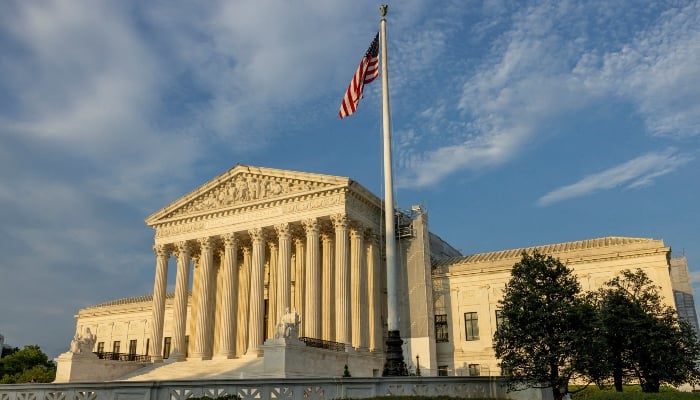
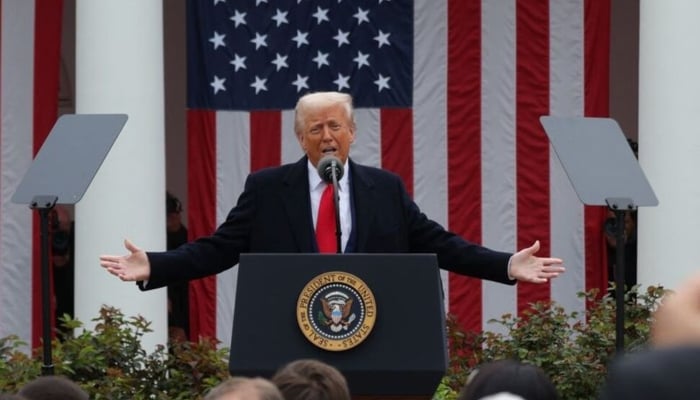
Donald Trump’s unprecedented expansion of the powers of the US presidency will be put to the test when the Supreme Court returns for its fall term on Monday.
“The crucial question will be whether it serves as a check on President Trump or just a rubber stamp approving his actions,” said Erwin Chemerinsky, dean of the University of California Berkeley Law School.
If past is prologue, the Republican leader is in line to notch up more legal victories from a conservative-dominated bench that includes three of his own appointees.
On the docket are voting rights, state bans on the participation of transgender athletes in girls’ sports and a religious freedom case involving a Rastafarian who had his knee-length dreadlocks forcibly shorn while in prison.
But the blockbuster case this term concerns Trump’s levying of hundreds of billions of dollars in tariffs on imports and whether he had the statutory authority to do so.
Lower courts have ruled he did not.
But the Supreme Court has overwhelmingly sided with Trump since he returned to office, allowing, for example, mass firing of federal workers, the dismissal of members of independent agencies, the withholding of funds appropriated by Congress and racial profiling in his sweeping immigration crackdown.
“You’ve seen the court go out of its way, really bend over backwards, in order to green-light Trump administration positions,” said Cecillia Wang, national legal director for the American Civil Liberties Union (ACLU).
‘Legal equivalent of fast food’
Many of those decisions have come on the controversial emergency or “shadow” docket, where the court hands down orders after little briefing, without oral arguments and with paltry explanation.
Samuel Bray, a University of Chicago law professor, described it as the “legal equivalent of fast food”, and the court’s three liberal justices have condemned the increasing use of the emergency docket.
Chemerinsky noted in an opinion piece in the Los Angeles Times that using the shadow docket, the six conservative justices have “repeatedly and without exception… voted to reverse lower court decisions that had initially found Trump’s actions to be unconstitutional.”
The high-stakes tariffs case, on the other hand, will involve full briefing and oral arguments and will be heard on November 5.
Trump invoked the International Emergency Economic Powers Act to unilaterally impose his extensive tariffs, bypassing Congress by claiming the country was facing an emergency due to the trade deficit.
“At least hundreds of billions of dollars or more are at stake and they may need to refund those billions of dollars if they lose in the Supreme Court,” said Curtis Bradley, a University of Chicago law professor.
Other high-profile cases involving the power of the president are to be heard in December and January when the court weighs in on Trump’s bid to fire members of the independent Federal Trade Commission and Lisa Cook, a governor of the interest-rate setting Federal Reserve Board.
Voting rights
On October 15, the Supreme Court will hear a voting rights case in which “non-African American” voters are contesting the creation of a second Black majority congressional district in Louisiana, claiming it is the result of unconstitutional racial gerrymandering.
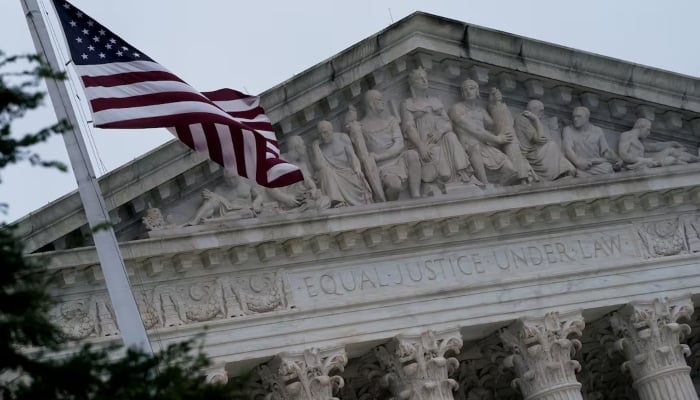
A victory for the plaintiffs in the case would deal a severe blow to a section of the Voting Rights Act that allows for creation of majority-minority districts to make up for racial discrimination.
“The stakes are incredibly high,” said the ACLU’s Sophia Lin Lakin. “The outcome will not only determine the next steps for Louisiana’s congressional map, but may also shape the future of redistricting cases nationwide.”
Another notable case on the docket concerns challenges to state laws in Idaho and West Virginia that ban transgender girls from taking part in girls’ sports.
A religious freedom case to be heard on November 10 has unusually brought together legal advocates on both the left and the right.
Damon Landor is a devout Rastafarian whose hair was forcibly cut while he was in prison in Louisiana.
He is seeking permission to sue individual officials of the Louisiana Department of Corrections for monetary damages for violating his religious rights.
The Supreme Court is generally hostile to approving damages actions against individual government officials, Bray said.
At the same time, he noted, the right-leaning court has tended to side with the plaintiffs in religious liberty cases.
