

Close Menu

    Subscribe to Updates

    Get the latest creative news from FooBar about art, design and business.

    What's Hot

    Arsenal vs Chelsea: Gunners stamp authority, but Blues are contenders too | Football News

    September 7, 2026

    PTI chief warns Sindh division without public consent would weaken federation

    September 7, 2026

    test

    September 7, 2026
    Facebook X (Twitter) Instagram
    • Home
    • Politics
    • News
    • Magazines
    Facebook X (Twitter) Instagram
    Login
    22Media22Media
    Subscribe
    • Home
    • News
      • Pakistan News
      • World News
      • Amazing News
      • Only On 22
    • Sports
    • Bussiness
    • Innovation
      • Health & Sciences
      • Technology
    • Culture
      • Crime & Justice
      • Entertainment
    • Politics
    • Magazines
    • Weather
    • Video
    • Live
    22Media22Media
    Home»News»World News»Lisbon funicular crash exposes safety flaws in city’s old charm
    World News

    Lisbon funicular crash exposes safety flaws in city’s old charm

    22febdm@gmail.comBy 22febdm@gmail.comSeptember 5, 2025No Comments3 Mins Read
    Facebook Twitter Pinterest LinkedIn Tumblr Email
    Share
    Facebook Twitter LinkedIn Pinterest Email

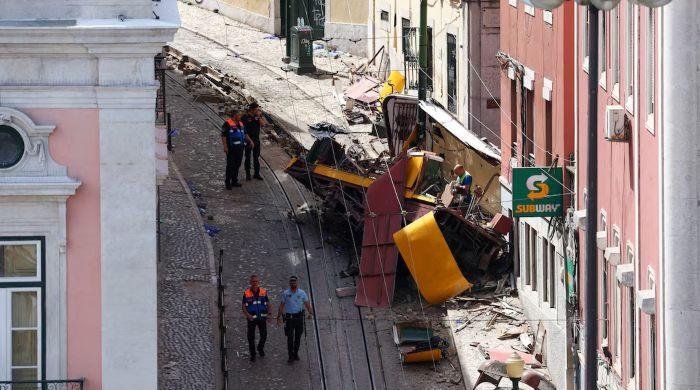
    A view shows the site of the accident after Gloria funicular railway car, a popular tourist attraction, derailed and crashed, resulting in multiple casualties, according to authorities, in Lisbon, Portugal, September 4. — Reuters
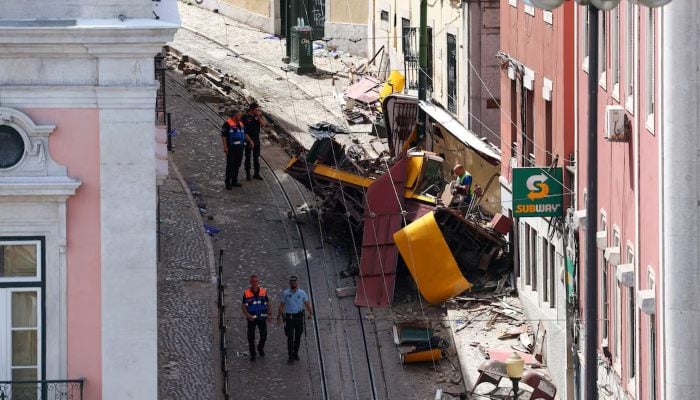
    A view shows the site of the accident after Gloria funicular railway car, a popular tourist attraction, derailed and crashed, resulting in multiple casualties, according to authorities, in Lisbon, Portugal, September 4. — Reuters

    LISBON: The death of at least 16 people in an historic cable car that derailed in Lisbon has exposed flaws in the “old charm” image of the Portuguese capital, which is brimming with tourists but runs on quaint but creaking infrastructure.

    In Wednesday’s crash, railcar left the track at a turn and hit a building just metres from its twin at the bottom of the steep 265-metre slope, leaving a mangled wreckage with bodies trapped inside. The traction cable linking them had snapped.

    Jorge Silva, vice-president of the Portuguese association of civil protection technical experts, said a car made of a more modern material, such as carbon fibre, rather than metal and wood — the same design used since 1914 when the line was electrified — would have made the crash less violent and deadly.

    “The pieces are rigid enough to withstand oscillation and normal service, but they’re not designed to withstand the impact in the event of a derailment, become twisted, leaving the passengers more exposed,” he said.

    Lisbon’s trams running up and down its steep hills also date back to the mid-20th century and have a similar structure, he said.

    “Investment should be made in renovating the carriages, using more modern materials, even if preserving their historic shape,” he said.

    Silva said an investigation would show to what extent the pendulum cable system played a role in the crash.

    The time-tested technology has had to cope with a tripling in the number of passengers on the “Gloria” funicular line in the past decade to more than 3 million people annually, as tourism booms.

    The two cars, each capable of carrying around 40 people, alternately climb the slope and descend as electric motors pull the cable linking them.

    Manuel Leal, leader of the Fectrans union, told local TV that workers had complained that problems with the tension of the cable had made braking difficult, but that it was too early to say if that was the cause of the crash.

    The municipal transport company Carris said all maintenance protocols have been carried out. Silva said more rigorous and frequent maintenance and inspection was likely to be needed to prevent future accidents with current heavier use.

    But modernisation attempts in the earthquake-prone city have also concerned engineers and architects, fearing a reoccurrence of the Great Lisbon Earthquake of 1755.

    Many houses in downtown Lisbon built not long after 1755 with then-pioneering interconnected internal structures and pillars to withstand quakes have lately been adapted in a way that could compromise their original anti-seismic structures, several engineering experts told Reuters.

    While newer houses built after 1958 must have seismic-resistant structures by law, no anti-seismic reinforcement is required for old buildings being renovated.

    Share. Facebook Twitter Pinterest LinkedIn Tumblr Email
    22febdm@gmail.com
    • Website

    Related Posts

    Arsenal vs Chelsea: Gunners stamp authority, but Blues are contenders too | Football News

    September 7, 2026

    India teams search for survivors after Delhi building collapse kills six | Housing News

    September 7, 2026

    Ten killed and dozens injured in Mexico fireworks blast | Religion

    September 7, 2026
    Add A Comment
    Leave A Reply Cancel Reply

    Demo
    Our Picks
    • Facebook
    • Twitter
    • Pinterest
    • Instagram
    • YouTube
    • Vimeo
    Don't Miss
    World News

    Arsenal vs Chelsea: Gunners stamp authority, but Blues are contenders too | Football News

    By 22febdm@gmail.comSeptember 7, 20260

    Arsenal’s pedigree as defending Premier League champions faced its first big test of the season,…

    PTI chief warns Sindh division without public consent would weaken federation

    September 7, 2026

    test

    September 7, 2026

    India teams search for survivors after Delhi building collapse kills six | Housing News

    September 7, 2026

    Subscribe to Updates

    Get the latest creative news from SmartMag about art & design.

    22Media
    Facebook Instagram YouTube WhatsApp
    • Home
    • Politics
    • News
    • Magazines
    © 2026 22Media. Designed by AleemSoft Hub.

    Type above and press Enter to search. Press Esc to cancel.

    Sign In or Register

    Welcome Back!

    Login to your account below.

    Lost password?