

Close Menu

    Subscribe to Updates

    Get the latest creative news from FooBar about art, design and business.

    What's Hot

    The real reason behind blue airplane seats

    September 2, 2026

    Denmark deploys conscripts to Greenland, fueling fresh Arctic tensions

    September 2, 2026

    AI beauty videos are transforming the beauty lifestyle into a growing skin risk

    September 2, 2026
    Facebook X (Twitter) Instagram
    • Home
    • Politics
    • News
    • Magazines
    Facebook X (Twitter) Instagram
    Login
    22Media22Media
    Subscribe
    • Home
    • News
      • Pakistan News
      • World News
      • Amazing News
      • Only On 22
    • Sports
    • Bussiness
    • Innovation
      • Health & Sciences
      • Technology
    • Culture
      • Crime & Justice
      • Entertainment
    • Politics
    • Magazines
    • Weather
    • Video
    • Live
    22Media22Media
    Home»News»World News»Sand, dust storms affect about 330 million people due to climate change: UN | Agriculture News
    World News

    Sand, dust storms affect about 330 million people due to climate change: UN | Agriculture News

    22febdm@gmail.comBy 22febdm@gmail.comJuly 12, 2025No Comments3 Mins Read
    Facebook Twitter Pinterest LinkedIn Tumblr Email
    Share
    Facebook Twitter LinkedIn Pinterest Email

    Nearly half the global population has also been exposed to dust levels exceeding WHO safety thresholds.

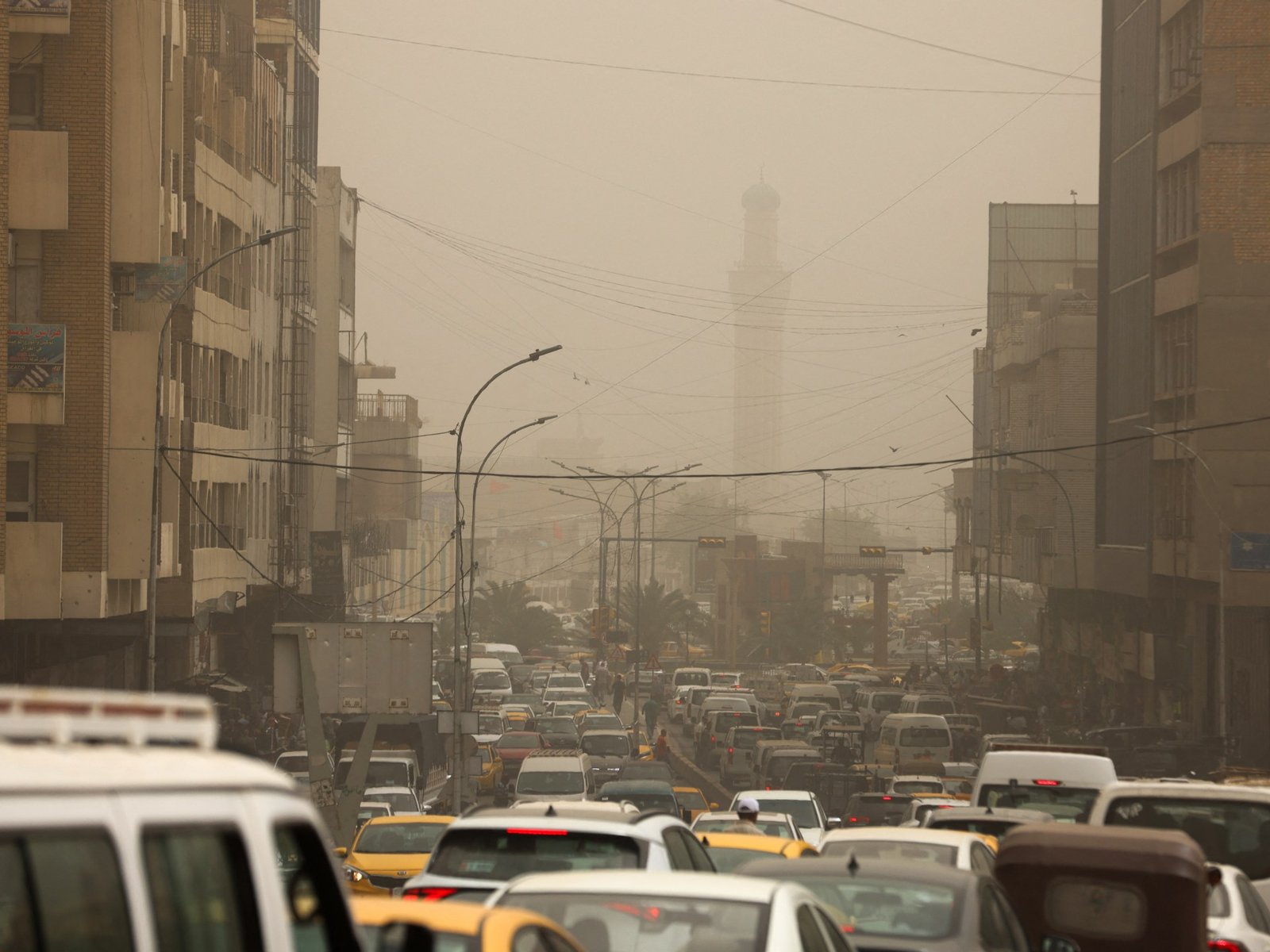
    A new report by the United Nations’ World Meteorological Organization (WMO) has found that sand and dust storms are leading to “premature deaths” due to climate change, with more than 330 million people in 150 countries affected.

    On Saturday, the UN General Assembly (UNGA) marked the International Day of Combating Sand and Dust Storms and its designation of 2025 – 2034 as the UN Decade on Combating Sand and Dust Storms.

    The storms “are fast becoming one of the most overlooked yet far-reaching global challenges of our time”, said Assembly President Philemon Yang. “They are driven by climate change, land degradation and unsustainable practices.”

    The secretary-general of WMO, Celeste Saulo, said on Thursday that sand and dust storms do not just mean “dirty windows and hazy skies. They harm the health and quality of life of millions of people and cost many millions of dollars through disruption to air and ground transport, on agriculture and on solar energy production.”

    Airborne particles from these storms contribute to 7 million premature deaths annually, said Yang, adding that they trigger respiratory and cardiovascular disease, and reduce crop yields by up to 25%, causing hunger and migration.

    “About 2 billion tonnes of dust are emitted yearly, equivalent to 300 Great Pyramids of Giza” in Egypt, Laura Paterson, the WMO’s UN representative, told the UNGA.

    More than 80% of the world’s dust comes from the deserts in North Africa and the Middle East, added Paterson, but it has a global effect because the particles can travel hundreds and even thousands of kilometres across continents and oceans.

    Rock formations stand in the Sahara desert outside the city center of Djanet, a southeastern Algerian oasis town in the Sahara desert,
    Rock formations stand in the Sahara Desert outside the city centre of Djanet, a southeastern Algerian oasis town, on July 5, 2025 [Audrey Thibert/AP]

    Undersecretary-General Rola Dashti, head of the UN Economic and Social Commission for Western Asia, told the assembly the storms’ economic costs are “staggering”.

    In the Middle East and North Africa, it costs $150bn, roughly 2.5% of gross domestic product (GDP), annually to deal with dust and sand storms, she said.

    “This spring alone, the Arab region experienced acute disruption,” Dashti said, citing severe storms in Iraq that overwhelmed hospitals with respiratory cases and storms in Kuwait and Iran that forced school and office closures.

    Dust from the Sahara Desert in Africa has travelled as far as the Caribbean and Florida, she said. For the United States, dust and wind erosion caused $154bn in damage in 2017, a quadrupling of the amount since 1995, according to a study in the scientific journal Nature.

    The WMO and World Health Organization also warned that the health burden is rising sharply, with 3.8 billion people – nearly half the global population – exposed to dust levels exceeding WHO safety thresholds between 2018 and 2022, up from 2.9 billion people affected between 2003 and 2007.

    Share. Facebook Twitter Pinterest LinkedIn Tumblr Email
    22febdm@gmail.com
    • Website

    Related Posts

    Nigerian anticorruption agency sacks 40 staff over misconduct allegations | Corruption News

    September 2, 2026

    At least 21 die in bus accident in Egypt’s South Sinai

    September 2, 2026

    How indie cinema is beating Hollywood in 2026 | Arts and Culture

    September 2, 2026
    Add A Comment
    Leave A Reply Cancel Reply

    Demo
    Our Picks
    • Facebook
    • Twitter
    • Pinterest
    • Instagram
    • YouTube
    • Vimeo
    Don't Miss
    Weather

    The real reason behind blue airplane seats

    By 22febdm@gmail.comSeptember 2, 20260

    NEW YORK: The next time you settle into a blue airplane seat, there is more behind…

    Denmark deploys conscripts to Greenland, fueling fresh Arctic tensions

    September 2, 2026

    AI beauty videos are transforming the beauty lifestyle into a growing skin risk

    September 2, 2026

    Bus crash on Egypt’s Red Sea coast kills 22, injures 28

    September 2, 2026

    Subscribe to Updates

    Get the latest creative news from SmartMag about art & design.

    22Media
    Facebook Instagram YouTube WhatsApp
    • Home
    • Politics
    • News
    • Magazines
    © 2026 22Media. Designed by AleemSoft Hub.

    Type above and press Enter to search. Press Esc to cancel.

    Sign In or Register

    Welcome Back!

    Login to your account below.

    Lost password?