

Close Menu

    Subscribe to Updates

    Get the latest creative news from FooBar about art, design and business.

    What's Hot

    Mount Etna eruption disrupts flights at Catania Airport

    August 9, 2026

    Wildfire forces thousands of evacuations in Western Canada | Weather News

    August 9, 2026

    Pakistan wins three medals at International Nuclear Science Olympiad

    August 9, 2026
    Facebook X (Twitter) Instagram
    • Home
    • Politics
    • News
    • Magazines
    Facebook X (Twitter) Instagram
    Login
    22Media22Media
    Subscribe
    • Home
    • News
      • Pakistan News
      • World News
      • Amazing News
      • Only On 22
    • Sports
    • Bussiness
    • Innovation
      • Health & Sciences
      • Technology
    • Culture
      • Crime & Justice
      • Entertainment
    • Politics
    • Magazines
    • Weather
    • Video
    • Live
    22Media22Media
    Home»News»Amazing News»Bite marks reveal gladiator’s fatal encounter with a lion in ancient Britain
    Amazing News

    Bite marks reveal gladiator’s fatal encounter with a lion in ancient Britain

    22febdm@gmail.comBy 22febdm@gmail.comApril 24, 2025No Comments3 Mins Read
    Facebook Twitter Pinterest LinkedIn Tumblr Email
    Share
    Facebook Twitter LinkedIn Pinterest Email

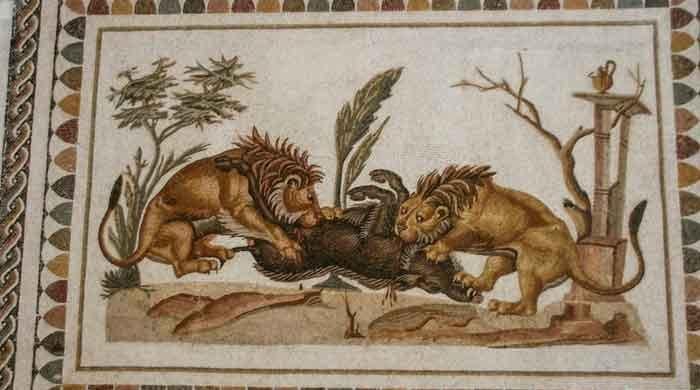
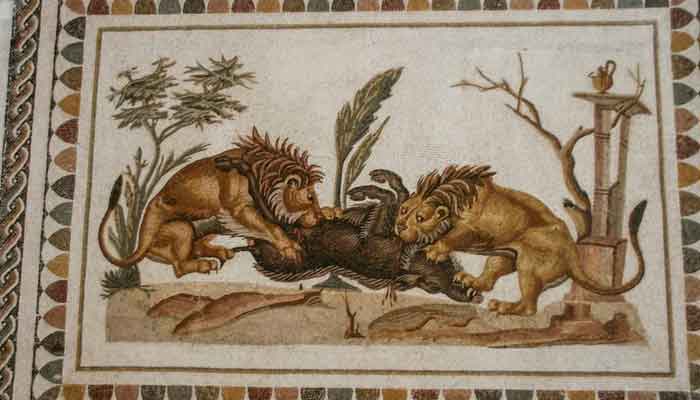
    An ancient Roman mosaic depicting a scene of two lions attacking a boar, is on display at the El Jem archaeological museum in El Jem, Tunisia, December, 2011. — Reuters
    An ancient Roman mosaic depicting a scene of two lions attacking a boar, is on display at the El Jem archaeological museum in El Jem, Tunisia, December, 2011. — Reuters

    In Rome’s Colosseum and other amphitheaters in cities scattered across the sprawling ancient Roman Empire, gladiatorial spectacles were not merely human-versus-human affairs. Gladiators also were pitted against animals.

    While there are depictions of these contests in ancient mosaics and texts, actual forensic evidence has been elusive, until now. Scientists have determined that bite marks on the pelvis of a man buried in what is believed to be a cemetery for gladiators near the English city of York, known at the time as Eboracum, were made by a big cat, probably a lion.

    The man, estimated to be 26 to 35 years old at the time of death, appears to have lived during the 3rd century AD, when Eboracum was an important town and military base in the north of the Roman province of Britannia. The bite marks provide clues as to his suspected demise in the arena.

    “Here we can see puncture and scalloping, indicative of large dentition piercing through the soft tissues and into the bone,” said forensic anthropologist Tim Thompson of Maynooth University in Ireland, lead author of the study published on Wednesday in the journal PLOS One.

    “We don’t think that this was the killing wound, as it would be possible to survive this injury, and it is in an unusual location for such a large cat. We think it indicates the dragging of an incapacitated individual,” Thompson said.

    The discovery illustrates how gladiatorial spectacles, often presented by emperors and other luminaries, that included wild animals were not limited to the empire’s major cities but extended into its furthest-flung provinces.

    This man’s skeleton represents the first known direct physical evidence of human-animal combat from ancient Roman times, the researchers said.

    Wild animals used in such spectacles included elephants, hippos, rhinos, crocodiles, giraffes, ostriches, bulls, bears, lions, tigers and leopards, among others. For instance, archaeologists in 2022 announced the discovery of the bones of bears and big cats at the Colosseum.

    “Predatory animals – above all big cats but also sometimes other animals, for example bears – were pitted as combatants against specialist gladiators, known as venatores,” said study co-author John Pearce, a Roman archaeologist at King’s College London.

    Large and aggressive animals also were pitted against each other – a bull and bear, for instance – and often chained together, Pearce said. Simulated hunts were staged in arenas as well, with humans against animals and animals against other animals, Pearce said.

    Animals sometimes were used as agents of execution for captives and criminals – known in Latin as damnatio ad bestias – in which the victim was bound or defenseless, Pearce said.

    Share. Facebook Twitter Pinterest LinkedIn Tumblr Email
    22febdm@gmail.com
    • Website

    Related Posts

    Nocturnal ‘coffee frog’ discovered in Costa Rica

    August 8, 2026

    Indonesia traps monkey to end rampage that wounded 18 people

    August 7, 2026

    ‘We can see your washing’: NZ politician joins meeting from bathroom

    August 5, 2026
    Add A Comment
    Leave A Reply Cancel Reply

    Demo
    Our Picks
    • Facebook
    • Twitter
    • Pinterest
    • Instagram
    • YouTube
    • Vimeo
    Don't Miss
    Technology

    Mount Etna eruption disrupts flights at Catania Airport

    By 22febdm@gmail.comAugust 9, 20260

    The volcano has experienced frequent eruptions throughout its history, which stretches back around 500,000 years.…

    Wildfire forces thousands of evacuations in Western Canada | Weather News

    August 9, 2026

    Pakistan wins three medals at International Nuclear Science Olympiad

    August 9, 2026

    Fire extinguished at Aramco refinery in Jazan, says Saudi Arabia

    August 9, 2026

    Subscribe to Updates

    Get the latest creative news from SmartMag about art & design.

    22Media
    Facebook Instagram YouTube WhatsApp
    • Home
    • Politics
    • News
    • Magazines
    © 2026 22Media. Designed by AleemSoft Hub.

    Type above and press Enter to search. Press Esc to cancel.

    Sign In or Register

    Welcome Back!

    Login to your account below.

    Lost password?