


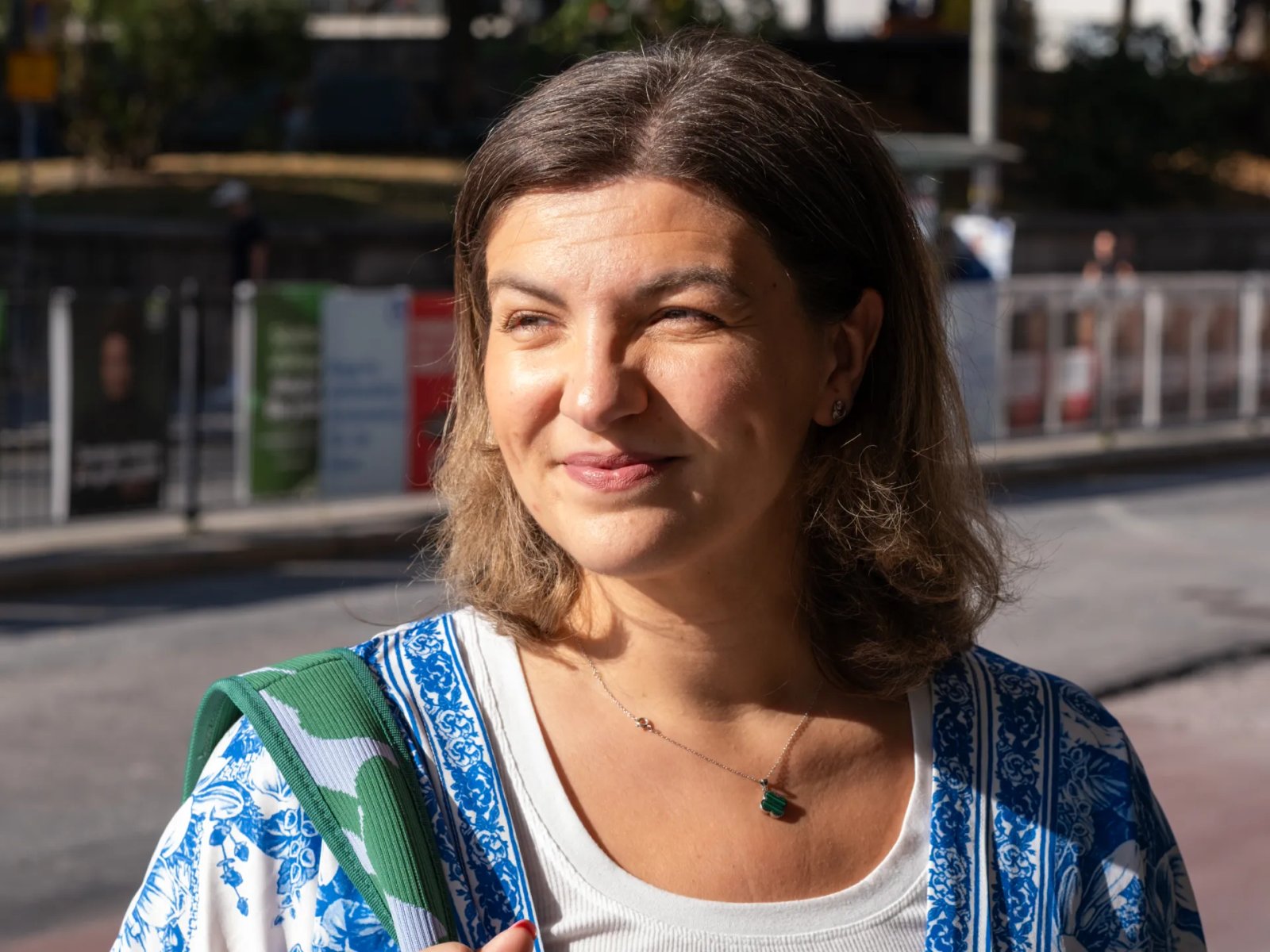
Stockholm, Sweden – When Neira Tokalija, a 39-year-old therapist, saw the slogans of Sweden’s far-right party plastered wall-to-wall across Stockholm Central Station, she felt a familiar sense of fear.
As a child, Tokalija had fled Bosnia and Herzegovina with her family after ethnic cleansing campaigns targeting Bosniaks.
Recommended Stories
list of 3 itemsend of list
After seeing dozens of campaign posters and installations across Central Station by the Sweden Democrats (SD), a party with neo-Nazi roots, “it made me feel like it doesn’t matter how much I try as a second-generation immigrant; I’ll never be Swedish enough”, she said.
SD had spent about $100,000 on the station campaign with posters that read “If you commit crimes, live off benefits, don’t learn Swedish or misbehave, you’re not welcome”.
The campaign came weeks before Sweden’s general election on September 13. The SD, which is polling second, could enter government for the first time if the right-wing bloc wins.
The tone of the campaign’s messaging, which ran for one week in mid-August, Tokalija said, evoked a deep historical trauma.
‘Do you miss Mogadishu?’
SD also ran several separate campaigns across various Swedish transport networks.
In western Sweden, the party ran provocative advertisements on buses that read: “Do you miss Mogadishu? The repatriation grant will help you get home.”
The grant, which has been around since the 1980s and was introduced by a Social Democratic government, offered refugees about $1,000 to resettle in their country of origin.
But this year the centre-right coalition government, working with SD, introduced an increase to approximately $36,000 per adult.
About 20 bus drivers with roots in Somalia called in sick in protest.
The public transport operator Vasttrafik removed the posters after the protest, stating that the drivers had been afraid of harassment, and citing risk to the working environment and vandalism.
Zina al-Dewany, a political commentator and editorial writer for the Swedish newspaper Aftonbladet, told Al Jazeera the plan was to shock.
SD often runs campaigns designed to “provoke a bit too much”, but when they are forced to take them down, the party says it is the “victim”, she said.
After the bus campaign was removed, SD MP Tobias Andersson issued a statement, saying the decision constituted censorship and “election sabotage”.
Normalisation of SD
For decades, Sweden’s political establishment had treated SD as a political pariah.
But after the 2018 general election, a political deadlock prompted right-wing parties to rethink their alliances.
In the following years, meetings between SD and the Christian Democrats and the Moderate Party took place, and in October 2022, the Liberals opened the door to the SD; four right-wing party leaders signed a landmark 62-page contract, known as the Tido Agreement, establishing Sweden’s current coalition government.
In May 2026, another boundary was broken when Simona Mohamsson, the leader of the Liberals and minister for education and integration, announced that her party would allow SD to participate in a future government.
Mohamsson, born in Germany to a Palestinian father and a mother from Lebanon, moved to Sweden when she was eight and is known for her antiracism activism.
After her announcement, Akesson offered a handshake. Mohamsson embraced him, a moment that sent political shockwaves across Sweden.

‘Bad vibes’
Many of the staff members who had worked during the SD’s weeklong campaign in the cafes and shops dotted around Central Station believed the audacious campaign was a consequence of years of normalisation.
Ester, a barista, said its scale surprised her, while her colleague Aya said it created “bad vibes” at the station for the week.
The government’s focus on repatriation, coming amid a spate of scandals that dominated Swedish headlines this year, does not sit well with them, they said.
In February, the Swedish Migration Agency ordered an eight-month-old boy born in the country, Emanuel, to be deported alone to Iran while the rest of his family kept their permits.
Around the same time, teenagers who had grown up in Sweden were being told to leave on turning 18 while their parents stayed – a practice the government ultimately suspended in March and moved to reform in June.
One man, who wished to remain anonymous, was working at the station throughout the campaign, collecting money for a charity providing aid to Palestinians in Gaza. He said, although the campaign upset him, he had taken heart from some of the responses.
Angry members of the public had sparked heated debates with the SD representatives at one of their stands inside the station, often centred around its views on Islam and its staunch support for Israel.
Frustrated after the debates, several people handed over large donations to the charity. During the week, it collected far more than usual, the charity worker said.
Al-Dewany also sees some hope. She said the SD has reached a stage of “peak populism”, meaning the party has hit its ceiling. Its focus on immigration while the government was mired in repatriation scandals has started to cost it voters rather than win them, she believes.
Polls in late August put SD on 18 to 19 percent, down from 20.5 percent in 2022.
Tokalija, whose partner and co-parent is from Mozambique, said she was welcomed with “Swedish warmth” and curiosity about other cultures when she first arrived.
Although she still feels this spirit lives on among large sections of today’s society, the rhetoric has changed around immigrants, who are too often painted as “money-seekers”.
Society now demands that families like hers “fully adapt”, she added, stripping away their multicultural and Muslim identities, and leaving a choice between total assimilation and total exclusion, a choice she said mirrors the fascist ideologies she once fled.
